

A team dynamics assessment workflow is a structured, repeatable process that evaluates how team members interact, collaborate, and align with shared goals to drive higher performance and cohesion. Unlike a one-time survey or annual review, this process integrates both qualitative and quantitative data to give leaders a full picture of group health. The industry term for this practice is team performance evaluation, and the most effective versions combine behavioral assessments, pulse surveys, and structured development planning. When you run this workflow consistently, you build a team that communicates better, resolves tension faster, and moves toward shared goals with greater clarity.
What does a team dynamics assessment workflow require?
A successful team dynamics assessment workflow starts with three non-negotiable prerequisites: psychological safety, a shared definition of high performance, and genuine team buy-in. Without psychological safety, team members give guarded answers, and your data becomes unreliable. Without a shared definition of high performance, you have no baseline to measure against.
Once those conditions exist, you need the right tools. The four core categories for any collaborative team assessment are health surveys, behavioral and psychometric assessments, data dashboards, and qualitative feedback mechanisms. Each serves a different purpose, and each fits a different budget and timeline.

| Tool category | Implementation time | Typical cost | Primary focus |
|---|---|---|---|
| Pulse health surveys | 1–2 days | Low (under $50/user) | Team morale and engagement |
| Behavioral assessments (e.g., DISC) | 1–2 days | $29–$39/user | Communication style and behavior |
| Consultant-led evaluations | Several weeks | $300+/user | Deep structural diagnosis |
| Qualitative feedback (1:1s, retros) | Ongoing | Staff time only | Root causes and interpersonal dynamics |
Assessment tool costs vary widely, from lightweight digital options to full consultant engagements. That range means you can start small and add depth as your team matures. A quarterly cadence works well for most teams: it balances responsiveness with enough time between cycles to see real change.
Pro Tip: Run a short, five-question pulse survey at the start of each quarter. Surveys that take three minutes or less get significantly higher completion rates, which means cleaner data for your analysis.
Behavioral assessments like the DISC model are especially useful for group dynamics analysis because they reveal how individual communication styles interact under pressure. That layer of insight is hard to get from metrics alone.
How do you execute a step-by-step team dynamics assessment workflow?
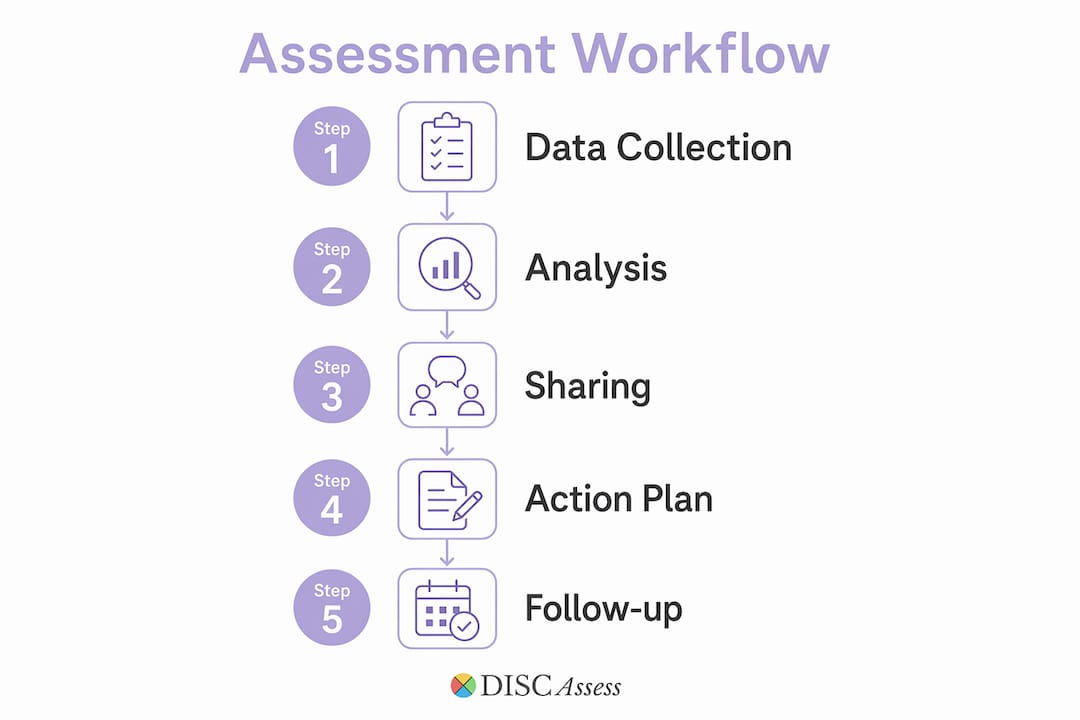
A well-run team performance evaluation process follows a clear sequence. Skipping steps, especially early ones, produces data that teams distrust and leaders misread.
-
Prepare and frame the process. Before collecting a single data point, explain why you are running the assessment. Frame it as a development tool, not a performance review. A pre-assessment diagnosis phase establishes safety and defines what high performance means for your specific team, which prevents defensiveness and improves data quality.
-
Collect quantitative and qualitative data. Use pulse surveys for quantitative signals and skip-level 1:1s or direct observation for qualitative depth. Qualitative data from 1:1s often reveals root causes that dashboards miss entirely. Run data collection in week one of your quarterly cycle.
-
Synthesize findings across three layers. Analyze delivery metrics, decision quality, and team health as separate but connected layers. A team can hit its delivery targets while quietly burning out. Week two of your cycle belongs to synthesis.
-
Share results with the team. Present findings openly and invite the team to interpret the data together. Combining metrics with team interpretation during the sharing phase improves both accuracy and buy-in. This is week three.
-
Build specific, time-bound development plans. A team assessment must conclude with time-bound development actions to maintain psychological safety and engagement. Vague commitments dissolve within weeks. Name the behavior, the owner, and the deadline.
-
Install a regular operating cadence. Pulse checks between formal assessments keep the team honest about progress. Retrospectives at the end of each sprint or month catch small problems before they compound.
-
Review progress quarterly and iterate. A quarterly review cycle with defined weekly phases, covering data collection, synthesis, sharing, and planning, creates the rhythm that turns assessment into culture rather than a one-off event.
Pro Tip: Treat week four of each cycle as action-planning time, not reflection time. The goal is a written plan with names and dates attached, not a conversation that fades by Friday.
Personality assessments improve team collaboration at every stage of this workflow because they give team members a shared language for discussing behavior without blame. That shared language makes the sharing and planning phases significantly more productive.
What are the common pitfalls in a team evaluation workflow?
Most team dynamics assessment workflows fail not because the tools are wrong but because the process breaks down at predictable points. Knowing where those breaks happen lets you prevent them.
-
Skipping the diagnosis phase. Leaders who jump straight to surveys without framing the purpose create distrust. Team members assume the data will be used against them, so they answer defensively. Framing the process as developmental and promoting psychological safety are critical to genuine participation.
-
Over-relying on metrics. Dashboards show what happened, not why. Over-reliance on dashboards misses subtle interpersonal or communication issues that only surface through conversation and observation.
-
Comparing your team to other teams. Cross-team comparisons breed resentment and distort your analysis. Track your own team's trajectory over time. That is the only comparison that produces useful insight.
-
Neglecting follow-up. An assessment without a development plan is just a survey. Team underperformance is frequently systemic, rooted in poor goal clarity, resource gaps, or structural issues rather than individual failings. Your follow-up plan must address those system-level causes.
"A team assessment that ends with data and no action plan is worse than no assessment at all. It signals to the team that their input doesn't matter, and it makes the next assessment harder to run."
The fix for most of these pitfalls is the same: triangulate your data sources, maintain transparency about how results will be used, and measure both leading indicators (like psychological safety scores) and lagging indicators (like delivery velocity). Neither type alone tells the full story.
How do you sustain a team dynamics assessment workflow over time?
Sustaining a workflow for team evaluation requires embedding it into your team's operating rhythm, not treating it as a special project. Quarterly or biannual formal cycles, paired with monthly pulse checks, give you the balance between depth and responsiveness. Embedding assessment into a regular cadence with actionable follow-up drives sustained improvement and cultural change.
Engage the whole team in periodic reflection. When team members help interpret the data and shape the development plan, they own the outcomes. That ownership is what turns a workflow into a culture.
Pro Tip: Use lightweight digital tools integrated with your existing collaboration platforms to maintain visibility between formal assessments. Some tools monitor response patterns in Slack or Microsoft Teams and flag communication delays before they become real problems.
Align your assessment process with your organization's broader goals each quarter. As organizational priorities shift, your definition of high performance should shift with them. A workflow that stays static while the organization evolves quickly becomes irrelevant. Review your assessment questions and success criteria at the start of each new planning cycle to keep the process meaningful.
Key Takeaways
A team dynamics assessment workflow produces lasting results only when it combines psychological safety, structured data collection, and time-bound development planning in a repeatable quarterly cycle.
| Point | Details |
|---|---|
| Establish safety first | Frame every assessment as a development tool before collecting any data. |
| Combine data types | Pair pulse surveys with qualitative 1:1s to surface root causes dashboards miss. |
| Follow a quarterly cycle | Use a four-week rhythm: collect, synthesize, share, and plan each quarter. |
| Build time-bound plans | Every assessment must end with named owners, specific behaviors, and clear deadlines. |
| Sustain with pulse checks | Monthly lightweight check-ins maintain momentum between formal assessment cycles. |
What I've learned from running team assessments the hard way
The most common mistake I see leaders make is treating the assessment as the destination. They run the survey, review the scores, and feel like they've done the work. They haven't. The assessment is the starting line, not the finish line.
The second thing I've learned is that psychological safety is not a soft prerequisite. It is the technical requirement that determines whether your data is real or performative. I've seen teams where every survey score looked healthy while the team was quietly falling apart. The scores were healthy because people were afraid to be honest. When you build genuine safety first, the scores get messier and more useful.
I also believe strongly that behavioral insights like DISC belong in every team assessment workflow, not as a standalone event but as a recurring reference point. When a team knows each member's communication tendencies, the sharing phase of the workflow becomes a conversation instead of a confrontation. People stop taking feedback personally and start seeing patterns in how the team operates as a system.
The teams I've seen grow the most are the ones where the leader treats assessment as an ongoing coaching practice, not an annual obligation. Consistency matters more than perfection. A simple, honest quarterly process beats an elaborate annual review every time.
— Tres
How Discassess supports your team assessment process
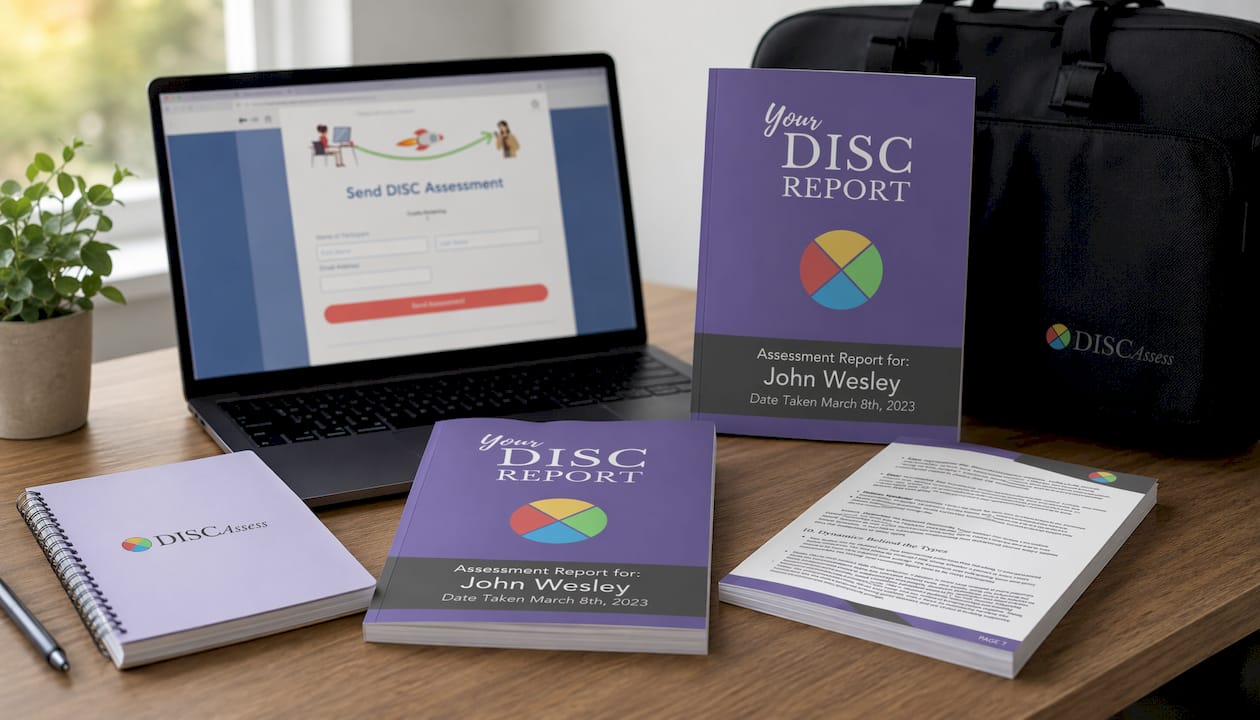
Discassess offers DISC-based assessment tools built specifically for teams that want real insight without a complex setup. The DISC Group Package gives team leaders an admin account with assessment credits, making it straightforward to run a collaborative team assessment across your entire group. For individual team members or coaches starting out, the individual DISC assessment delivers a detailed behavioral report in one to two days. Discassess is backed by Prism Counseling & Coaching, with over a decade of experience helping small teams, nonprofits, and leadership groups use personality insights to improve communication and cohesion. If you want to add behavioral data to your workflow today, the online DISC report is a practical first step.
FAQ
What is a team dynamics assessment workflow?
A team dynamics assessment workflow is a structured, repeatable process that collects and analyzes data on how team members interact, communicate, and align with shared goals. It combines surveys, behavioral assessments, and development planning into a regular cycle.
How often should you run a team dynamics assessment?
A quarterly cadence works best for most teams, with a four-week cycle covering data collection, synthesis, sharing, and action planning. Monthly pulse checks between formal cycles maintain momentum and catch issues early.
What tools work best for assessing team dynamics?
The most effective approach combines pulse health surveys, behavioral assessments like DISC, and qualitative feedback from 1:1s. Lightweight tools cost as little as $29–$39 per user and deliver results within one to two days.
Why do team assessment workflows fail?
Most workflows fail because leaders skip the pre-assessment framing phase, over-rely on metrics without qualitative context, or fail to build a follow-up development plan. Without a time-bound action plan, assessment data produces no lasting change.
How does DISC fit into a team performance evaluation process?
DISC gives team members a shared language for discussing communication styles and behavioral tendencies without blame. That shared language makes the data-sharing and development-planning phases of any team performance evaluation significantly more productive.