

Strong workplace relationships are the foundation of every high-performing team. An improving workplace relationships checklist gives business leaders and team members a concrete, repeatable system to build trust, reduce conflict, and increase collaboration. Research confirms that psychological safety tied to clear communication norms is the strongest predictor of long-term team performance. This checklist translates that insight into daily habits, communication standards, feedback practices, and personality-based tools that any team can apply starting today.
1. Build daily relational deposits with your colleagues
Relational deposits are small, consistent actions that strengthen trust over time. Greeting a colleague by name, offering specific praise, or checking in briefly before a meeting each count as deposits. Three to five positive interactions daily are the recommended baseline for building strong workplace bonds. That number is achievable even in a busy schedule, and the cumulative effect on team cohesion is significant.
Active listening is one of the most powerful deposits you can make. Paraphrase what a colleague says before responding. Maintain eye contact during in-person conversations. Put your phone face-down during one-on-one discussions. These small signals communicate respect and attention, which are the raw materials of trust.

Pro Tip: In hybrid or remote environments, replace hallway greetings with a brief, personal opening message at the start of a video call or a short "good morning" in your team chat channel. The medium changes, but the relational intent stays the same.
2. Define your team's communication norms clearly
Clear communication norms prevent the friction that comes from mismatched expectations. The most effective norms specify which channel to use, who needs to receive which information, and how quickly a response is expected. Clarity of communication expectations reduces over-communication and prevents the "always-on" burnout that drains team energy.
A practical starting point is defining response windows by channel. Chat messages warrant a response within four hours during working hours. Email responses belong within 24 hours. Urgent matters get a phone call or a flagged message. Teams that adopt these windows can eliminate 30–50% of recurring meetings by shifting routine updates to asynchronous formats.
Reserve synchronous meetings for decisions that require real-time discussion, sensitive conversations, or creative problem-solving. Routine status updates, project progress notes, and announcements belong in written, asynchronous channels. This protects everyone's focus time and reduces meeting fatigue.
Pro Tip: Post your team's communication norms in a shared document and review them every quarter. Norms drift over time, and a brief reset conversation prevents old habits from creeping back in.
3. Document decisions to prevent repeated conversations
Undocumented decisions are one of the most common sources of workplace friction. When a team agrees on a direction but no one writes it down, the same conversation resurfaces weeks later with different memories of what was decided. Shared decision logs with clear reasoning and ownership prevent confusion and repeated discussions.
A decision log does not need to be complicated. A shared document or project management tool entry with three fields works well: the decision made, the reasoning behind it, and the person responsible for follow-through. This format creates transparency and accountability without adding bureaucratic overhead.
The habit of documenting decisions also shortens onboarding time for new team members. They can read the log and understand the context behind current practices without needing to ask multiple people the same questions.
4. Use the SBI model for feedback conversations
The Situation-Behavior-Impact (SBI) model is a validated framework for giving feedback that people actually receive well. SBI grounds every comment in observable facts rather than personality judgments, which makes the feedback easier to hear and act on. The SBI model increases receptivity and helps resolve interpersonal conflicts within 24–48 hours when applied consistently.
The three components work as follows. Describe the situation where the behavior occurred. Name the specific behavior you observed, not your interpretation of it. Explain the impact that behavior had on you, the team, or the project. This structure keeps the conversation objective and forward-looking.
"Feedback given with clarity and care is one of the most generous things a colleague can offer. When you describe what you saw and how it affected the work, you give the other person something they can actually change."
Balance developmental feedback with positive reinforcement. Acknowledging what someone does well is not just encouragement. It reinforces the behaviors you want to see more of, which shapes team culture over time.
5. Address conflict early and with empathy
Interpersonal tension left unaddressed compounds quickly. A small misunderstanding in week one becomes a pattern of avoidance by week four. The most effective approach is to address friction within 24–48 hours, privately, and with a posture of curiosity rather than accusation.
Start by owning your part in the dynamic. Even if you believe the other person is primarily responsible, acknowledging your own contribution to the tension lowers defensiveness and opens the door to honest dialogue. Use "I noticed" and "I felt" language rather than "you always" or "you never."
When conflict involves more than two people or has escalated beyond a direct conversation, bring in a neutral facilitator or your HR team. Engaging outside support is not a sign of failure. It is a sign that you take the relationship seriously enough to get it right.
6. Build psychological safety through leadership behavior
Psychological safety is the belief that you can speak up, share an idea, or admit a mistake without being punished. Leadership actions like publicly recognizing effort, scheduling regular check-ins, and addressing uncivil behavior directly are the primary drivers of this culture.
Specific practices that build psychological safety include:
- Sharing your own failures or uncertainties in team meetings to model vulnerability.
- Asking for input before announcing decisions, especially on matters that affect daily work.
- Responding to new ideas with curiosity before critique.
- Addressing dismissive or disrespectful behavior in the moment, not after the meeting.
- Scheduling one-on-one check-ins monthly to maintain relational awareness with each team member.
Teams with high psychological safety produce more creative solutions and retain employees longer. The connection between safety and performance is not theoretical. It shows up in meeting participation, idea generation, and willingness to flag problems early.
7. Schedule relationship-building activities intentionally
Relationship-building activities work best when they are planned, not accidental. Waiting for relationships to develop organically in a busy work environment means many colleagues never move past surface-level familiarity. Intentional activities create shared experiences that accelerate trust.
Effective options include structured peer recognition programs, team retrospectives that include a personal reflection component, and cross-functional project pairings that expose people to colleagues outside their immediate group. Even a 15-minute virtual coffee chat scheduled monthly between two team members who rarely interact produces measurable relational gains over a quarter.
The key is consistency. A single team-building event once a year does not build relationships. Weekly or monthly touchpoints, even brief ones, create the ongoing contact that relationships require to grow.
8. Use personality frameworks to tailor your approach
Not every colleague responds to the same communication style, feedback approach, or recognition method. Personality frameworks like DISC help teams understand behavioral tendencies and adapt their interactions accordingly. DISC identifies four primary behavioral styles: Dominance, Influence, Steadiness, and Conscientiousness. Each style has distinct preferences for how information is delivered, how conflict is handled, and how recognition lands.
A team member with a high Dominance style values directness and results-focused feedback. A colleague with a high Steadiness style needs more relational warmth and time to process change. Knowing these preferences removes guesswork from difficult conversations and makes feedback more effective. You can explore how DISC applies to specific personality types to see how these differences play out in real team dynamics.
| DISC Style | Communication preference | Feedback approach |
|---|---|---|
| Dominance | Direct, brief, results-focused | Lead with outcomes and impact |
| Influence | Enthusiastic, relational, big-picture | Acknowledge effort and energy first |
| Steadiness | Warm, patient, step-by-step | Deliver feedback gently with clear next steps |
| Conscientiousness | Precise, data-driven, thorough | Use facts and specific examples |
Discassess offers accessible DISC assessments designed for small businesses, nonprofits, and teams that want practical results without a certification requirement. The platform provides detailed reports that translate assessment results into specific communication and feedback guidance your team can use immediately.
Key Takeaways
Building healthy workplace relationships requires consistent daily habits, clear communication norms, structured feedback, and personality-aware approaches that together create lasting team trust and cohesion.
| Point | Details |
|---|---|
| Daily relational deposits | Aim for 3–5 positive interactions daily to build trust over time. |
| Communication norms | Define response windows by channel to reduce friction and meeting overload. |
| SBI feedback model | Use Situation-Behavior-Impact to give feedback that people receive and act on. |
| Psychological safety | Leadership behavior, not policy, is the primary driver of team safety and openness. |
| Personality-aware communication | DISC assessments help teams tailor feedback and communication to individual styles. |
What I've learned about checklists and real team change
Most leaders I've worked with treat relationship-building as something that happens between the real work. That assumption is the single biggest obstacle to team performance I've seen. Relationship quality is not a soft metric. It determines whether people flag problems early, collaborate across functions, and stay with an organization when a better offer comes along.
The checklist approach works because it makes invisible behaviors visible. When you write down "greet three colleagues before 10:00 AM" or "document today's project decision in the shared log," you create accountability for actions that most teams assume are happening but rarely track. The specificity is the point.
What I've also found is that communication norms deliver the fastest return. Teams that define their channel rules and response windows in a single 30-minute meeting report less anxiety, fewer interruptions, and more focused work within the first two weeks. The investment is minimal. The payoff is immediate.
The hardest part is sustaining the habits past the first month. That's where personality tools like DISC earn their place. When you understand why a colleague communicates the way they do, you stop taking their style personally and start adapting to it. That shift, from frustration to curiosity, is where real team culture begins. Discassess makes that shift accessible for teams of any size, without requiring a consultant or a certification program.
— Tres
How Discassess supports your team's relationship goals
Building stronger workplace relationships starts with understanding the people on your team. Discassess provides affordable, practical DISC personality assessments designed for small businesses, nonprofits, and leadership teams who want real results without complexity.
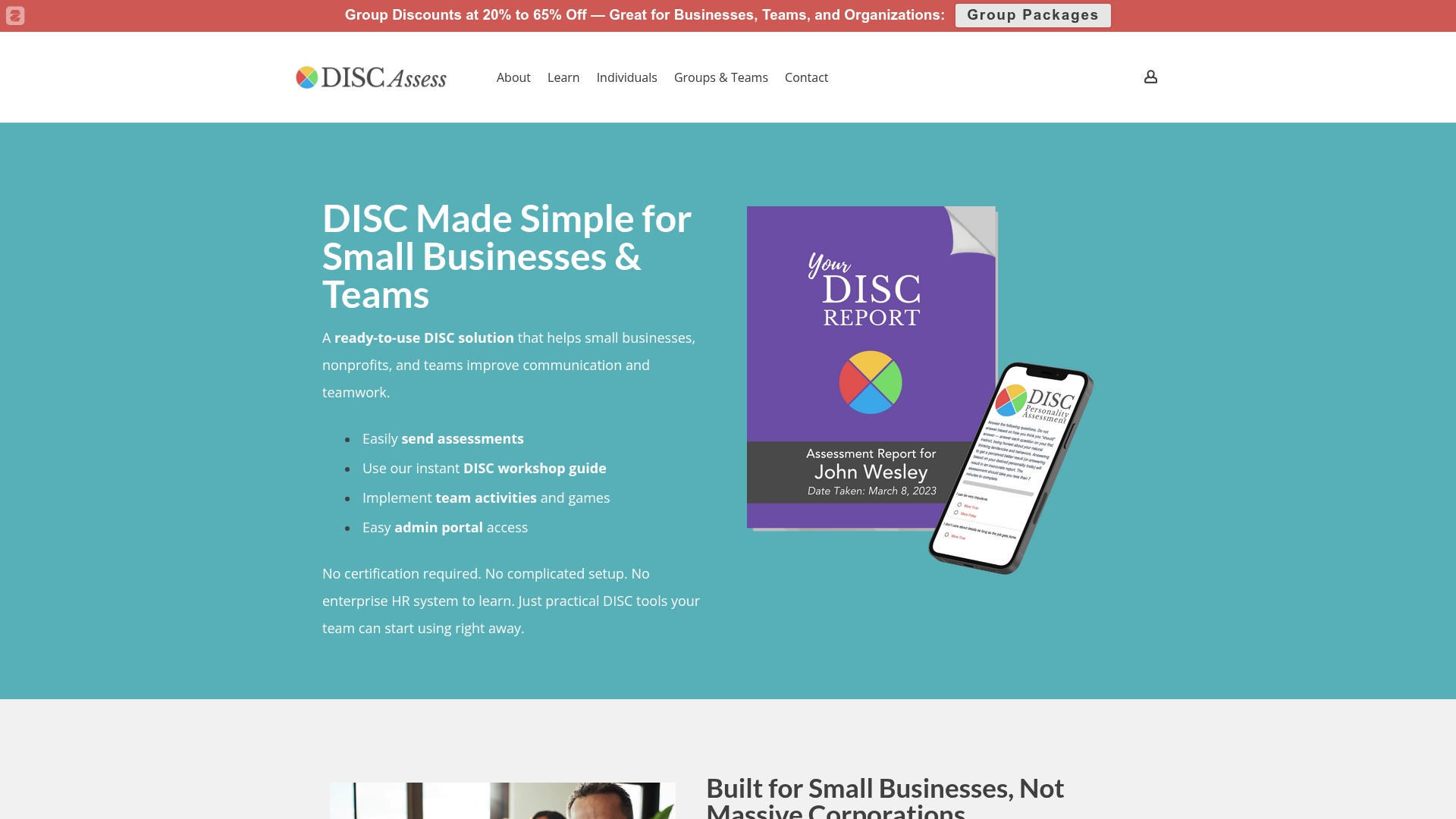
Each assessment delivers a detailed report with specific guidance on communication preferences, feedback styles, and conflict tendencies. Team leaders can use the admin demo account to explore the platform before committing, and group packages make it easy to assess an entire team at once. For teams that want a guided experience, live group training sessions help translate assessment results into immediate, practical changes in how your team communicates and collaborates.
FAQ
What is an improving workplace relationships checklist?
An improving workplace relationships checklist is a structured list of daily habits, communication practices, and feedback behaviors that teams use to build trust and reduce conflict. It turns relationship-building from an abstract goal into a measurable, repeatable process.
How many positive interactions should I aim for each day?
Three to five positive interactions daily, such as greetings, specific praise, or brief check-ins, are the recommended baseline for maintaining strong workplace bonds.
What is the SBI feedback model?
The SBI model stands for Situation, Behavior, and Impact. It structures feedback around observable facts rather than personal judgments, which increases receptivity and helps resolve conflict faster.
How does DISC help improve work relationships?
DISC identifies four behavioral styles and their communication preferences, allowing team members to adapt how they deliver feedback, handle disagreements, and recognize colleagues. This reduces misunderstandings and makes interactions more effective.
How do communication norms reduce workplace conflict?
Defined response windows and channel-specific rules remove the ambiguity that causes most workplace friction. Asynchronous communication norms also reduce meeting overload, which lowers stress and improves focus across the team.
Recommended
- DISC Personality Assessment | Prism Counseling & Coaching - DISC Assess | Affordable, Professional DISC Assessments for Small Businesses
- DISC Admin Account - DISC Assess | Affordable, Professional DISC Assessments for Small Businesses
- How to Use the DISC Personality Assessment with Employees - DISC Assess | Affordable, Professional DISC Assessments for Small Businesses
- Christian DISC® Admin Account - DISC Assess | Affordable, Professional DISC Assessments for Small Businesses