
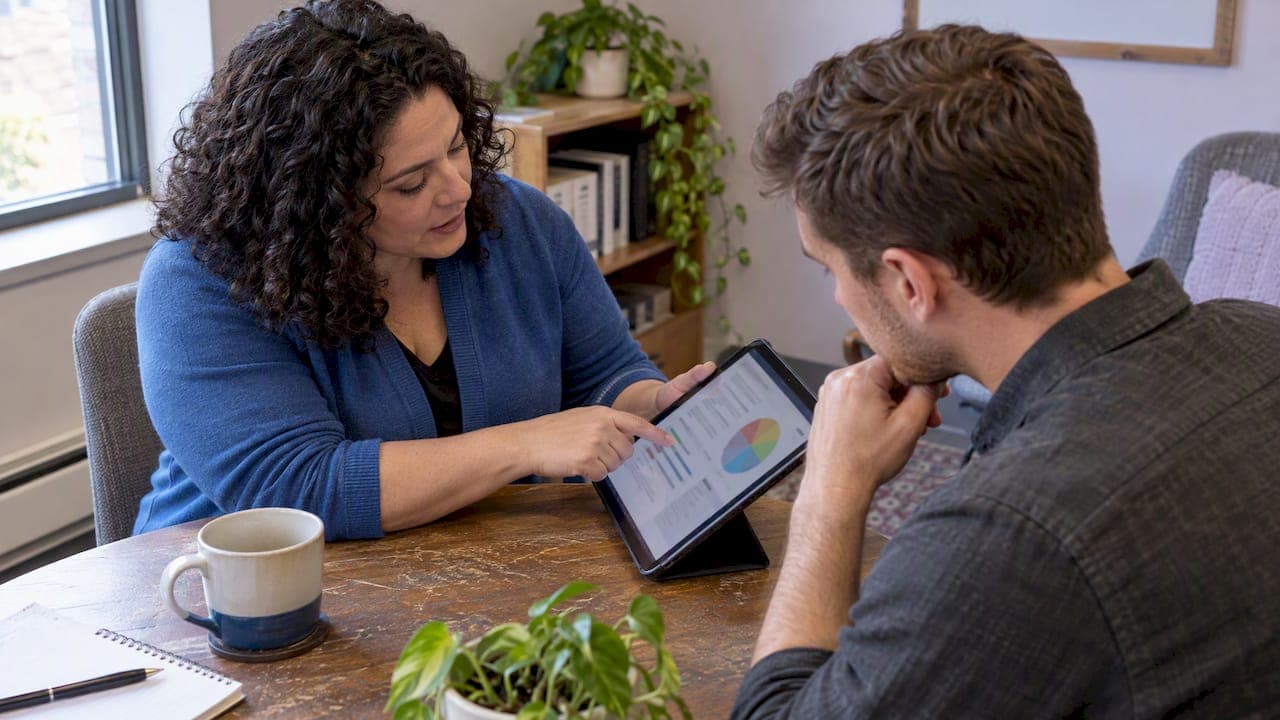
A sales personality assessment identifies the selling-style traits that predict how someone typically approaches prospecting, closing, and account work, useful for self-awareness, coaching, and, with proper validation, hiring decisions. Shorter instruments run about 10 to 15 minutes, while comprehensive profiles take 45 to 60 minutes. For hiring use, we recommend pairing any assessment with job-relevant evidence rather than relying on it alone.
TL;DR:
- Short assessments take 10 to 15 minutes, while comprehensive profiles take 45 to 60; longer tests add breadth, not necessarily greater accuracy.
- For hiring, employers must use validated assessments tied to the role and assess adverse impact; vendor documentation does not replace job analysis or employer responsibility.
- Match profiles to roles: outbound teams with heavy call volume need persistence and consistent follow through, while enterprise sellers need patience and consultative questioning.
- Translate scores into observable habits and coaching actions, such as discovery checklists for forceful sellers or closing practice for sellers who prioritize relationships.
- Most sellers blend styles, so managers should build complementary teams rather than hiring everyone to match one supposedly ideal profile.
Table of Contents
- Common Sales Personality Types and How Each One Shows Up on the Job
- How Sales Assessments Work: Formats and Realistic Timing
- Using Assessments for Hiring Versus Coaching: Validity and Legal Context
- Preparing for a Sales Personality Assessment: Advice for Candidates and Employers
- Turning Trait Scores Into Observable Behaviors and Coaching Actions
- Why a Small-Team-Focused DISC Option Can Work in Practice
- Comparing Sales Personality Assessment Models and Tools
- Customizing Assessments for Different Sales Roles and Industries
- Integrating Results Into CRM and Sales Training Programs
- Examples of Improved Sales Performance Tied to Assessment Use
- Common Pitfalls and Misunderstandings to Avoid
- Responsible Use Starts With Development, Not Labels
- Getting Started With DISC Assess
- FAQ
- Sources
Common Sales Personality Types and How Each One Shows Up on the Job
Most sales personality frameworks sort people into a handful of recognizable styles, and recognizing them helps you understand both your own habits and the people around you.
- Hunter or closer: thrives on new business, moves quickly through a pipeline, and prefers a brisk call cadence with little hand-holding after the sale closes.
- Consultant or problem-solver: leads with discovery questions, slows down to understand a prospect's situation, and builds proposals around a specific pain point rather than a standard pitch.
- Networker or relationship builder: invests time in long-term rapport, favors warm introductions over cold outreach, and tends to hold onto accounts for years.
- Strategist or process-oriented seller: works methodically through a defined sales process, documents everything in the CRM, and performs best when a territory or account plan is clearly mapped out.
These labels describe tendencies, not fixed identities. Many sellers show a blend, perhaps a hunter's drive paired with a strategist's discipline for follow-up, and that mix often matters more for team composition than any single dominant trait. A sales team built entirely of hunters can struggle with account retention, while a team of consultants may close new logos too slowly. Thinking in terms of complementary styles, rather than ranking one style above another, tends to produce stronger team results.
How Sales Assessments Work: Formats and Realistic Timing
Assessment formats vary more than most buyers expect, and the format shapes what the results can tell you.
- Self-report questionnaires ask you to rate statements about your own tendencies, offering the quickest path to a trait profile.
- Forced-choice formats require picking between equally appealing or unappealing options, which can reduce the temptation to answer in a socially desirable way.
- Situational judgment items present a sales scenario and ask what you would do, giving a closer look at applied judgment rather than self-description.
- AI-assisted or gamified approaches are newer entrants, and the Society for Industrial and Organizational Psychology recommends extra scrutiny of internal structure and criterion selection before relying on these for hiring.
A useful benchmark: short, sales-focused assessments typically run 10 to 15 minutes, while comprehensive instruments with competency or aptitude sections can take 45 to 60 minutes. The extra time generally buys a wider set of measured constructs and a more detailed coaching report, not necessarily a more accurate core personality read. A standard report typically includes trait scores, a behavioral summary written in plain language, notes on role fit, and a handful of coaching prompts tied to the results.
Using Assessments for Hiring Versus Coaching: Validity and Legal Context
The stakes attached to an assessment change what level of evidence you need behind it. Using a result to guide a coaching conversation with an existing employee carries little risk: the worst outcome is a conversation that misses the mark. Using the same instrument to screen job applicants is a different matter entirely, because an employment decision invites legal scrutiny if the test disproportionately screens out a protected group.
The Uniform Guidelines on Employee Selection Procedures describe three recognized validation strategies:
- Criterion-related validity ties test scores statistically to actual job performance data.
- Content validity shows the test items directly sample the knowledge, skills, or behaviors the job requires.
- Construct validity demonstrates that the test measures the underlying trait it claims to measure, often through its relationship to other established measures.
The EEOC's guidance on employment tests places responsibility squarely on the employer: a test must be job-related, and if it produces adverse impact against a protected group, the employer needs to show the test is justified or consider an alternative with less impact. Vendor materials can describe how an instrument was built, but they do not transfer that legal responsibility.
A test's documentation from its publisher is a starting point, not a substitute for the employer's own job analysis and validation record.
Preparing for a Sales Personality Assessment: Advice for Candidates and Employers
Honest, consistent answers produce the most useful results, whether you are taking the test for self-insight or as part of a hiring process.
- Answer based on your actual tendencies rather than how you think a "good salesperson" should answer.
- Get a reasonable night's sleep beforehand, since fatigue affects attention and consistency on longer instruments.
- Take the assessment in a quiet, distraction-free setting so your responses reflect your real habits rather than a rushed guess.
- Avoid memorized scripts or coached answer patterns, since the EEOC and most testing practitioners note that inconsistent or coached responses undermine the validity the employer is relying on.
- If you are hiring, pair the assessment with a structured interview and, where practical, a short job sample exercise, and document the intended use against your job analysis.
Pro Tip: Treat the assessment as one data point among several, never the single factor that decides a hire or a development plan.
Turning Trait Scores Into Observable Behaviors and Coaching Actions
A score on a report means little until it is translated into something you can actually watch for or act on. High persistence, for example, often shows up as a disciplined follow-up routine, multiple touchpoints before giving up on a lead, and a tendency to keep pushing past early rejection. High empathy or people-orientation tends to show up as consultative, open-ended questioning during discovery calls rather than a jump straight to pitching.
A few sample coaching prompts tied to common traits:
- For a seller high in dominance but low in patience: build in a mandatory discovery checklist before any proposal goes out.
- For a seller high in steadiness but low in assertiveness: practice a specific closing script to reduce hesitation at the final step.
- For a seller high in conscientiousness but low in relationship warmth: pair them with networking-style colleagues on key accounts.
Our earlier piece on personality and team building goes deeper on using profiles to compose complementary teams rather than hiring a roster of similar styles. The goal is development, not diagnosis: a single low score is a conversation starter, not a verdict on someone's ceiling as a salesperson.
Why a Small-Team-Focused DISC Option Can Work in Practice
We built our platform with small businesses, nonprofits, and coaching practices in mind, and our work is backed by more than a decade of experience through Prism Counseling & Coaching. Rather than requiring certification or enterprise contracts, we focus on immediate usability for leadership teams and small office staff.
- Individual assessments and group admin accounts let a single manager run and read reports without outside facilitation.
- Membership and training options support organizations that want to roll DISC out across a whole team, not just one hire.
- Our resources on nonprofit staff development show how small organizations apply these tools beyond the sales floor.
Comparing Sales Personality Assessment Models and Tools
Several families of instruments show up repeatedly in sales hiring and development conversations, each with a different emphasis. Trait-based models, including DISC-style frameworks, sort people into a small number of behavioral dimensions and are prized for their simplicity and quick interpretation. Competency-based instruments measure specific sales skills, such as objection handling or discovery technique, often through situational judgment items rather than self-description. Aptitude-focused tools lean on cognitive measures and are backed by research showing cognitive aptitude contributes meaningfully to sales performance, alongside factors like selling-related knowledge and adaptiveness.
No single model captures everything a sales role requires. A trait-based tool like a DISC assessment gives a fast, accessible read on communication style and behavioral tendencies, which makes it a practical starting point for small teams without a dedicated HR function. A longer competency or aptitude battery adds more predictive detail but costs more time and often requires a trained interpreter to use the results responsibly. Our comparison guide for team assessment tools walks through how different packages and membership structures fit different team sizes. The right choice usually comes down to what decision the results need to support: a quick coaching conversation calls for a lighter tool, while a high-volume hiring pipeline justifies a more rigorous, validated instrument.

Customizing Assessments for Different Sales Roles and Industries
A single generic sales profile rarely fits every role equally well. Inside sales representatives working high-volume call queues often benefit from a profile weighted toward persistence and structured follow-up, while field sales representatives managing long enterprise cycles tend to lean on relationship-building and patience. Account management roles, which focus on retention rather than net-new business, often reward a different blend entirely, closer to the consultant or networker style than the pure hunter.
Industry context matters too. A technical sales role selling complex software may call for added weight on problem-solving and discovery skill, since the buyer's questions tend to be detailed and specific. A retail or transactional sales environment may place more value on energy, resilience, and quick rapport building, since the sales cycle is short and volume-driven. Rather than treating one assessment report as a universal scorecard, it helps to decide ahead of time which behavioral dimensions matter most for the specific role, then read the report through that lens. A manager hiring for a long-cycle enterprise account executive role should weigh patience and consultative questioning more heavily than raw call volume, for example, while a manager staffing a high-volume outbound team should look first at persistence and resilience under rejection.

Integrating Results Into CRM and Sales Training Programs
An assessment report that sits in a file folder does little good. The practical value comes from connecting trait data to the systems a sales team already uses every day. Many managers add a short behavioral summary to a rep's CRM profile so that notes from one-on-ones, deal reviews, and coaching sessions all reference the same baseline language, whether that's "high dominance, needs discovery discipline" or "strong relationship builder, needs closing confidence."
Training programs benefit from the same connection. Rather than running identical onboarding for every new hire, a training lead can group reps by style and target specific skill gaps: a session on structured closing techniques for relationship-oriented sellers, or a session on discovery questioning for hunters who tend to pitch too early. Over time, pairing CRM activity data (call volume, deal velocity, win rate by stage) with behavioral profiles can reveal patterns worth discussing in coaching, such as a strategist-style rep who moves deals slowly but closes at a high rate once they reach proposal stage. The goal is not to replace sales training curriculum with personality labels, but to use the labels as a sorting mechanism that makes coaching time more targeted.
Examples of Improved Sales Performance Tied to Assessment Use
Sales performance is shaped by more than any single trait. Research synthesizing multiple determinants of sales performance points to selling-related knowledge, adaptiveness, cognitive aptitude, and work engagement as meaningful contributors, alongside personality factors. That finding matters for how we should expect assessments to perform: a personality profile captures one piece of a larger picture, not the whole explanation for why one rep outperforms another.
In practice, teams that see the clearest gains tend to use assessment data as a coaching lever rather than a one-time diagnostic. A manager who identifies that half their team skews heavily toward relationship-building style might deliberately add structured closing training to shore up the common gap, rather than assuming the trait itself is the ceiling. A manager building a new territory team might intentionally pair a strategist-style rep with a hunter-style rep so the account plan gets built and the new business still gets chased. These are modest, process-level changes, but they come directly from reading a group's behavioral tendencies and adjusting coaching or team structure in response, which is a more realistic path to improvement than expecting a single report to transform results on its own.
Common Pitfalls and Misunderstandings to Avoid
A few recurring mistakes undercut the value of sales personality assessments, and most of them come from asking the tool to do more than it was built for.
The first is treating a trait score as a fixed ceiling on someone's potential rather than a snapshot of current tendencies that coaching can shift. The second is using an unvalidated instrument for a hiring decision, which creates legal exposure under the standards the EEOC applies to employment tests and leaves an employer without documentation if the decision is ever challenged. The third is stacking every candidate against one "ideal" profile, which tends to produce homogeneous teams that struggle when the market shifts and a different style becomes more valuable. The fourth is skipping the behavioral translation step entirely: a report full of trait labels with no connection to observable actions or coaching prompts is far less useful than a shorter report that clearly maps scores to on-the-job behavior. Our partner resource on building emotional intelligence into leadership coaching offers a useful parallel: the data only helps when someone translates it into a specific, repeatable coaching habit.
Responsible Use Starts With Development, Not Labels
In my view, the real value of a sales personality assessment shows up when it opens a coaching conversation rather than closes one. I'd rather see a manager pair a report with a structured interview and a short job sample than lean on a score alone, and I'd rather see a candidate answer honestly than try to guess the "right" profile. Coaching someone to beat a test defeats the purpose of taking it.
— Tres
Getting Started With DISC Assess
If you want a practical starting point, we offer several ways to put this into action. Our Individual Assessment gives one person a fast, affordable read on their selling style, while a Group Admin Account lets a manager run and track assessments across a whole team from one dashboard.

- Take the Classic DISC Assessment (Non-Faith Version) with Report for a straightforward behavioral profile, or choose the Christian DISC® Assessment (Faith Version) with Report if a faith-integrated framing fits your team better.
- Add an Unlimited Membership if you plan to assess new hires or run team workshops on an ongoing basis.
- Pair any assessment with our Live Group Training or Self-Guided Group Training to walk a team through what the results mean together.
Visit Discassess to pick the option that matches your team's size and start building a shared language around how your people actually sell.
FAQ
How to pass a sales personality test?
There is no "passing" a well-built sales personality assessment, since it measures tendencies rather than right and wrong answers. The most reliable approach is answering honestly and consistently, since coached or inconsistent responses undermine the validity the results depend on.
What are the five qualities of a salesperson?
Qualities commonly associated with strong sales performance include persistence, adaptability, consultative listening, resilience under rejection, and disciplined follow-up. Research on sales performance also points to selling-related knowledge and work engagement as meaningful contributors alongside these behavioral traits.
What are ten qualities of a bad salesman?
Traits commonly linked to weak sales performance include poor listening, inconsistent follow-up, overpromising, low resilience to rejection, weak discovery skills, disorganization, and an inability to adapt pitch style to the buyer. Rather than treating these as a fixed checklist, it is more useful to think of them as behavioral gaps that targeted coaching can address.
What are the four personality types in sales?
Many sales frameworks describe four broad styles: the hunter or closer, the consultant or problem-solver, the networker or relationship builder, and the strategist or process-oriented seller. Most sellers show a blend of these styles rather than fitting neatly into just one.
Sources
- Employment Tests and Selection Procedures | U.S. Equal Employment Opportunity Commission
- eCFR :: 29 CFR Part 1607 -- Uniform Guidelines on Employee Selection Procedures (1978)
- Considerations and Recommendations for the Validation and Use of AI-Based Assessments for Employee Selection | SIOP (2023)
- Meta-analysis of sales performance determinants (EUR research)
- Richardson — Assessments and sales consulting services