
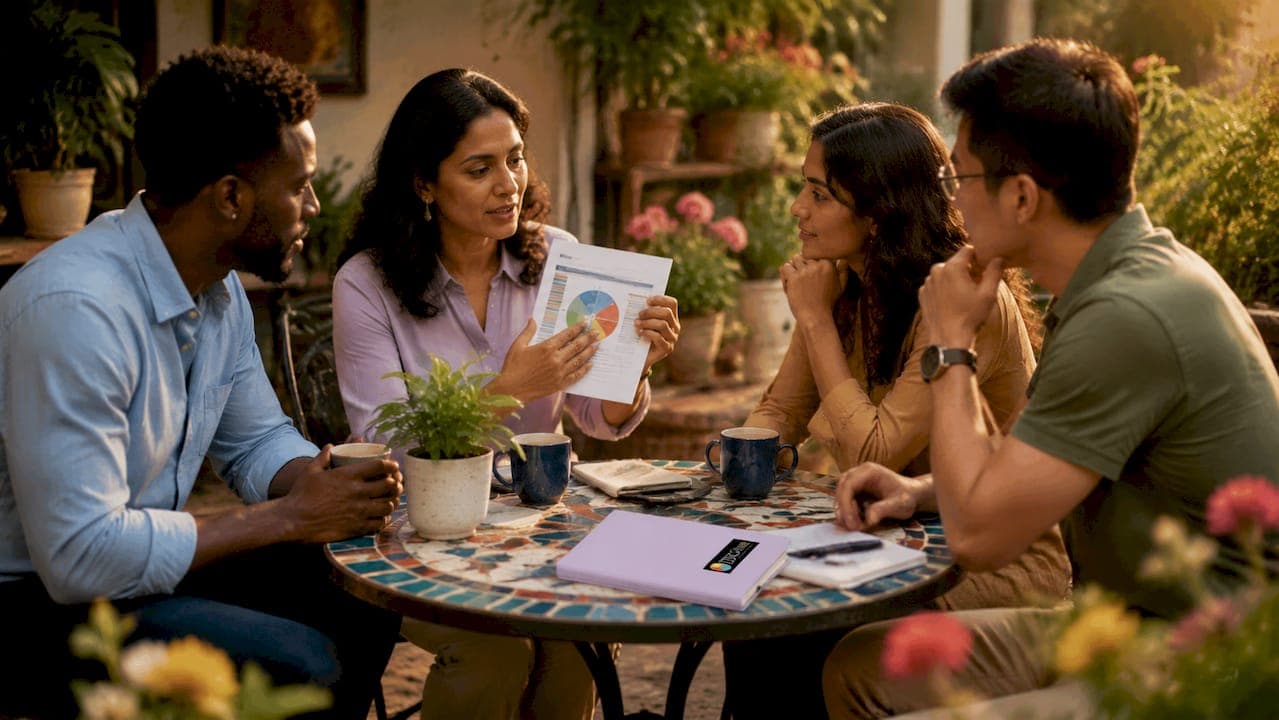
Why small teams benefit most from personality tools
Small teams feel every personality clash immediately. When your entire group is five or eight people, one unresolved communication breakdown does not stay in the background. It slows decisions, strains trust, and drains the energy everyone needs to move forward together. Personality tools give small teams a way to name what is happening beneath the surface, before friction becomes a fracture.
Here is what makes these tools particularly valuable for smaller groups:
- Hidden imbalances surface quickly. Small teams often suffer from affinity bias, repeatedly hiring people who think and communicate similarly, which quietly limits creativity and problem-solving range.
- Personality tools create a shared language. Instead of "they are difficult," your team learns to say "they have a different communication style." That shift builds empathy rather than blame.
- Psychological safety becomes measurable. Research shows that high-safety teams exceed sales targets by 17%, while low-safety teams miss them by 19%. Personality tools, used well, lay the groundwork for that safety.
- Hiring becomes intentional. When you understand your team's existing behavioral profile, you can hire for complementary strengths rather than comfortable familiarity.
- Conflict becomes workable. Knowing that a colleague's directness comes from a Dominance-style personality, not personal hostility, changes how you respond in the moment.
The goal is not to label anyone permanently. It is to give your team a map of how each person is wired, so you can work with those tendencies rather than against them.
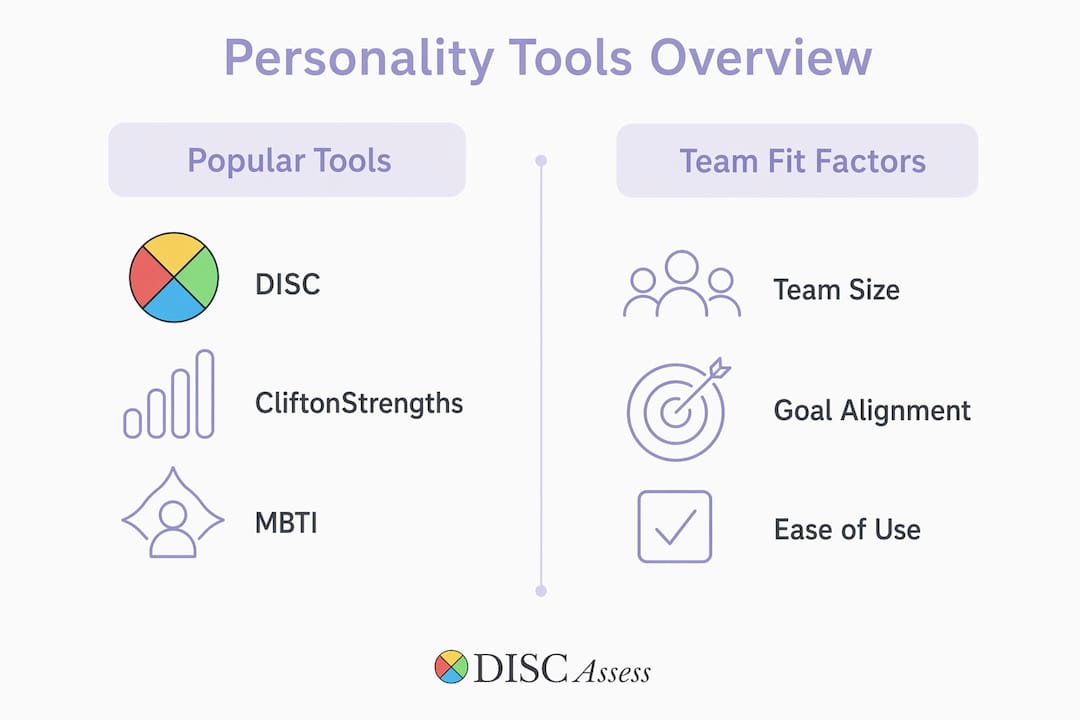
Popular personality assessment tools suited for small teams
Several well-established frameworks exist, each measuring something slightly different. Knowing which tool fits your team's needs saves time and produces more useful results.
- DISC measures four behavioral styles: Dominance, Influence, Steadiness, and Conscientiousness. It focuses on how people act and interact at work, making it one of the most practical starting points for small teams. Personality assessments for teams built on DISC are especially accessible for leaders without formal HR training.
- Myers-Briggs Type Indicator (MBTI) organizes personality into 16 types across four preference pairs, capturing how people perceive situations, make decisions, and respond emotionally. It goes deeper into inner complexity than DISC, which makes it a strong follow-up tool once a team has some assessment experience.
- Enneagram identifies nine personality types rooted in core motivations and fears. It is particularly useful for teams exploring why people behave the way they do under stress, not just what they do.
- CliftonStrengths Assessment (formerly StrengthsFinder) highlights each person's top talent themes across 34 categories. Rather than mapping weaknesses, it directs energy toward what each team member naturally does best.
- Big Five Personality Traits (also called OCEAN: Openness, Conscientiousness, Extraversion, Agreeableness, Neuroticism) is the most scientifically studied model. Research confirms that higher agreeableness and conscientiousness correlate with better team performance, though the effect is modest.
- Hogan Personality Inventory is designed specifically to predict workplace performance and leadership potential. It is more commonly used in leadership development contexts than in general team-building.
- Keirsey Temperament Sorter groups personality into four broad temperaments and links them to communication style and social behavior. It offers an accessible entry point for teams that want a broad-strokes picture before going deeper.
No single tool is universally best. The right choice depends on your team's size, goals, and how much time you can invest in facilitation.
How personality tools improve team communication and collaboration
The most immediate payoff from personality assessments is better communication. When team members understand each other's natural styles, conversations shift from guesswork to clarity.
- Individual preferences become visible. Some people process information best in writing before a meeting; others think out loud in real time. Knowing this prevents the frustration of misread silence or what feels like interruption.
- A common language replaces personal judgment. Teams that use a shared framework can say "I need more detail before I decide" without it sounding like resistance. The framework normalizes different working rhythms.
- Managers can adapt their approach. A leader who understands that one team member scores high on Conscientiousness will know to provide structure and data, while a high-Influence colleague may need more relational check-ins. Personality assessments improve team collaboration most when leaders apply insights at the individual level.
- Misunderstandings decrease. Workplace incivility often starts with misread intent. When behavioral motivations are named and understood, the same action reads differently.
- Conflict gets depersonalized. Disagreements become about approach and priority, not character. Teams that can say "our styles are clashing here" move through conflict faster than those who take it personally.
- Psychological safety grows. Personality tools are most effective when psychological safety already exists or is being actively built. The two reinforce each other: safety encourages honest self-disclosure, and honest self-disclosure deepens safety.
The real transformation happens when assessment results move from a report into a living conversation. Data alone does not change how a team works. Facilitated dialogue does.
Benefits and potential drawbacks of personality tools in small teams
Personality tools carry genuine promise, and real risks. Understanding both helps you use them well.
Benefits:
- Engagement and retention improve. Organizations using personality assessments report 15% increases in employee engagement and 25% reductions in turnover by aligning roles to personality strengths.
- Career growth pathways become clearer. When people understand their natural tendencies, they can pursue roles and responsibilities that fit, rather than burning out trying to be someone they are not.
- Team culture deepens. A shared appreciation for different working styles builds respect. Teams that celebrate complementary differences tend to collaborate more generously.
- Blind spots get mapped. Rather than searching for perfectly balanced individuals, teams benefit more from mapping collective blind spots and assigning roles based on what the group as a whole covers and what it lacks.
Drawbacks:
- Misuse creates distrust. When employees sense that assessment results are being used to evaluate performance or limit opportunities, they may game their answers. The tool then produces misleading data and cultural damage.
- Over-labeling is a real risk. Telling someone "you are a high-S, so you resist change" flattens a complex person into a category. Assessments are snapshots, not permanent verdicts.
- Privacy and ethics require attention. Collecting personal psychological data carries responsibility. Teams need clear policies on who sees results, how they are stored, and what they are used for.
- Personality grows. Personality traits change with age, with people generally becoming more conscientious and less neurotic over time. A one-time assessment can become outdated, which is why periodic reassessment matters.
The distinction between developmental and evaluative use is the most important one to get right. Used for growth and team learning, these tools build something lasting. Used as a gatekeeping mechanism, they erode the trust they were meant to build.
How to implement personality tools effectively in your small team
Getting the most from a personality assessment requires more than distributing a link and reading the results. Here is a practical path forward:
- Choose a scientifically grounded tool. Look for assessments with documented reliability and validity. DISC, MBTI, and the Big Five all meet this standard. Avoid tools with no research backing, regardless of how polished they look.
- Set clear expectations before anyone takes the assessment. Explain why you are doing this, what the results will and will not be used for, and who will have access. Transparency at this stage prevents suspicion later.
- Protect privacy from the start. Results should be shared voluntarily, not posted publicly or included in performance files. Each team member owns their own data.
- Facilitate a group session after results are in. Reading a report alone rarely changes behavior. A guided conversation where team members share what resonated and what surprised them is where the real learning happens. For guidance on training leaders to use assessments well, structured facilitation frameworks make a measurable difference.
- Translate insights into team agreements. After discussion, create concrete norms: "When we disagree on direction, we will each state our reasoning before deciding" or "We will send agendas 24 hours before meetings." These agreements turn self-awareness into changed behavior.
- Apply insights to conflict resolution. When tension arises, return to the shared language. Naming the style difference at play removes some of the emotional charge and opens a path to resolution.
- Schedule reassessments periodically. People grow, roles shift, and team composition changes. Revisiting assessments every year or two keeps the data current and signals that growth is expected, not just measured once.
- Never use results as performance judgments. An assessment score is not a performance review. Conflating the two is the fastest way to destroy the psychological safety these tools are meant to build.
Pro Tip: Frame the first assessment session as a team learning experience, not an evaluation. Open by sharing your own results first. When leaders go first, it signals that vulnerability is safe, and the whole conversation shifts.
Why Discassess is a strong fit for small teams
Discassess was built with small teams and small businesses in mind, and that focus shows in how the platform is structured. Most enterprise-level assessment platforms assume you have an HR department, a certification, and a budget to match. Discassess assumes you are a team leader who wants practical insight without the overhead.
- Affordability and accessibility. Discassess offers individual assessments, group packages, and unlimited membership options, so you can start with one person or roll out across your whole team without a large upfront commitment.
- No certification required. You do not need to be a trained psychologist or HR professional to use the platform. The reports are written to be understood and applied directly by managers and team leaders.
- Group management features. The admin portal lets you manage multiple assessments, track completion, and access group-level insights, which is particularly useful when you are coordinating a team rollout.
- Detailed, practical reports. Each report goes beyond a personality label to explain behavioral tendencies, communication preferences, and practical suggestions for working with each style.
- Backed by real counseling experience. Discassess is supported by Prism Counseling & Coaching, with over a decade of experience applying personality frameworks in real organizational and ministry contexts.
- Immediate application. The platform includes resources designed to help teams move from assessment results to actual team agreements and behavior changes, not just self-awareness.
- Faith-aligned options available. For Christian organizations, churches, and faith-based nonprofits, Discassess offers a Christian DISC® version that frames personality insights within a spiritual growth context, connecting behavioral tendencies to discipleship and the fruit of the Spirit.
Pro Tip: If your team is new to personality tools, start with the DISC Group Package. It gives every member a report and gives you a group-level view of your team's behavioral profile, which is where the most useful conversations begin.
What workplace personality tests actually are
Workplace personality tests are structured self-report tools that measure how people tend to think, communicate, and behave in professional settings. They are not intelligence tests, and they do not measure skill or aptitude. What they measure is pattern: how someone typically responds to pressure, processes information, approaches conflict, or prefers to collaborate.

The purpose is practical. Organizations use these assessments to break down communication barriers, address conflict, adapt management styles, and tailor coaching to individual personalities. A well-designed assessment gives both leaders and team members a vocabulary for tendencies that were previously invisible or misread. That vocabulary is what makes the difference between a team that talks around problems and one that talks through them.
Personality tests are not about putting people in boxes. They are meant to create a clear roadmap so your team can see how each person communicates, works, and interacts, and then use that understanding to build something better together.
Real-world impact: what personality tools look like in practice
Consider a small marketing team of six people. The team lead is a high-D (Dominance) style: direct, fast-moving, and focused on results. Two team members are high-C (Conscientiousness): they want data, process, and time to think before committing to a direction. Without a shared framework, the lead reads their hesitation as resistance. The high-C members read the lead's pace as recklessness. Meetings end in frustration, and decisions get delayed or made unilaterally.
After completing DISC assessments and a facilitated session, the team creates a simple agreement: major decisions get a 48-hour review window so the high-C members can analyze before the group commits. The lead gets faster buy-in because the team feels heard. The high-C members contribute more confidently because their process is respected. The conflict did not disappear. It became workable.
This pattern repeats across industries. A small nonprofit discovers through CliftonStrengths that no one on the team naturally leads in the "Executing" talent domain, which explains why projects consistently stall at the implementation stage. They adjust hiring priorities accordingly. A church leadership team uses the Enneagram to understand why their most passionate advocate and their most cautious planner keep talking past each other, and they restructure their planning process to use both perspectives intentionally.
The impact of personality tools on small team performance is most visible not in the assessment itself but in the conversations and agreements that follow it.
How to choose the right personality tool for your team
Selecting a personality tool is not a one-size-fits-all decision. A few practical criteria will narrow the field quickly.
Start with your goal. If you want to improve day-to-day communication and working style awareness, DISC is the most direct path. If you want to explore leadership development or deeper motivational patterns, the Enneagram or MBTI may serve you better. For strengths-focused team building, CliftonStrengths is purpose-built for that conversation.
Consider your team's experience level. Teams new to personality tools benefit from simpler frameworks with clear, practical language. DISC and the Keirsey Temperament Sorter both fit that description. More experienced teams can handle the nuance of the Big Five or the Hogan Personality Inventory.
Check for scientific validity. The role of psychometric testing in professional settings depends on tools that have been tested for reliability and validity across populations. Ask whether the tool has peer-reviewed research behind it before committing.
Factor in facilitation support. A tool is only as useful as the conversation it generates. Look for platforms that provide facilitation guides, group reports, or access to trained coaches who can help your team process results together.
Match the tool to your team's size and budget. Enterprise platforms built for Fortune 500 companies often include features and price points that do not fit a team of eight. Platforms like Discassess are designed specifically for small teams, with pricing and features that reflect that reality.
How to interpret and discuss assessment results as a team
Getting results back is the beginning, not the end. How you discuss them determines whether they change anything.
Read before you meet. Give every team member time to review their own report privately before the group session. People need space to process what resonates and what surprises them without an audience.
Open with self-disclosure, not analysis. Start the group conversation by asking each person to share one thing from their report that felt accurate and one thing that surprised them. This keeps the tone exploratory rather than evaluative.
Focus on patterns, not individuals. Once everyone has shared, look at the team as a whole. Where are the concentrations? Where are the gaps? A team with no high-S members may struggle with follow-through and consistency. A team with no high-D members may avoid necessary conflict. These are team-level insights, not individual critiques.
Create agreements, not observations. The goal of the discussion is not to say "interesting, now we know." It is to produce one or two concrete changes in how the team operates. Even a small adjustment, like agreeing to send written summaries after verbal decisions, can shift the dynamic noticeably.
Revisit results when conflict arises. When tension surfaces between team members, returning to the shared language of the assessment can depersonalize the disagreement quickly. "I think we are running into a style difference here" is a far more productive opening than "you always do this."
Using personality insights in conflict resolution and decision-making
Personality tools are most practically useful when conflict is already present or a decision is genuinely difficult. Here is how to apply them in those moments.
Name the style difference, not the person. When two team members are stuck, ask each to describe what they need from the situation, using the language of their personality profile. A high-C who needs more data before deciding is not being obstructive. Naming that need shifts the conversation from blame to problem-solving.
Use behavioral profiles to assign decision roles. For high-stakes decisions, deliberately include voices from different style quadrants. A high-D will push for a decision; a high-C will stress-test it; a high-S will consider the relational impact; a high-I will think about how to communicate it. All four perspectives together produce better decisions than any one style alone.
Separate the problem from the person. Personality frameworks make it easier to say "our approaches are in tension" rather than "you are wrong." That distinction keeps the relationship intact while the disagreement gets worked through.
Build conflict norms into team agreements. After a facilitated session, agree on how the team will handle disagreements before they arise. Something as simple as "we will name when we feel unheard before escalating" can prevent a style clash from becoming a lasting rift.
Revisit the framework when stakes are high. Before a major hiring decision, a strategic pivot, or a difficult client conversation, briefly reviewing the team's collective profile can surface blind spots that would otherwise go unnoticed until they cost something.
Ready to see what your team is made of?
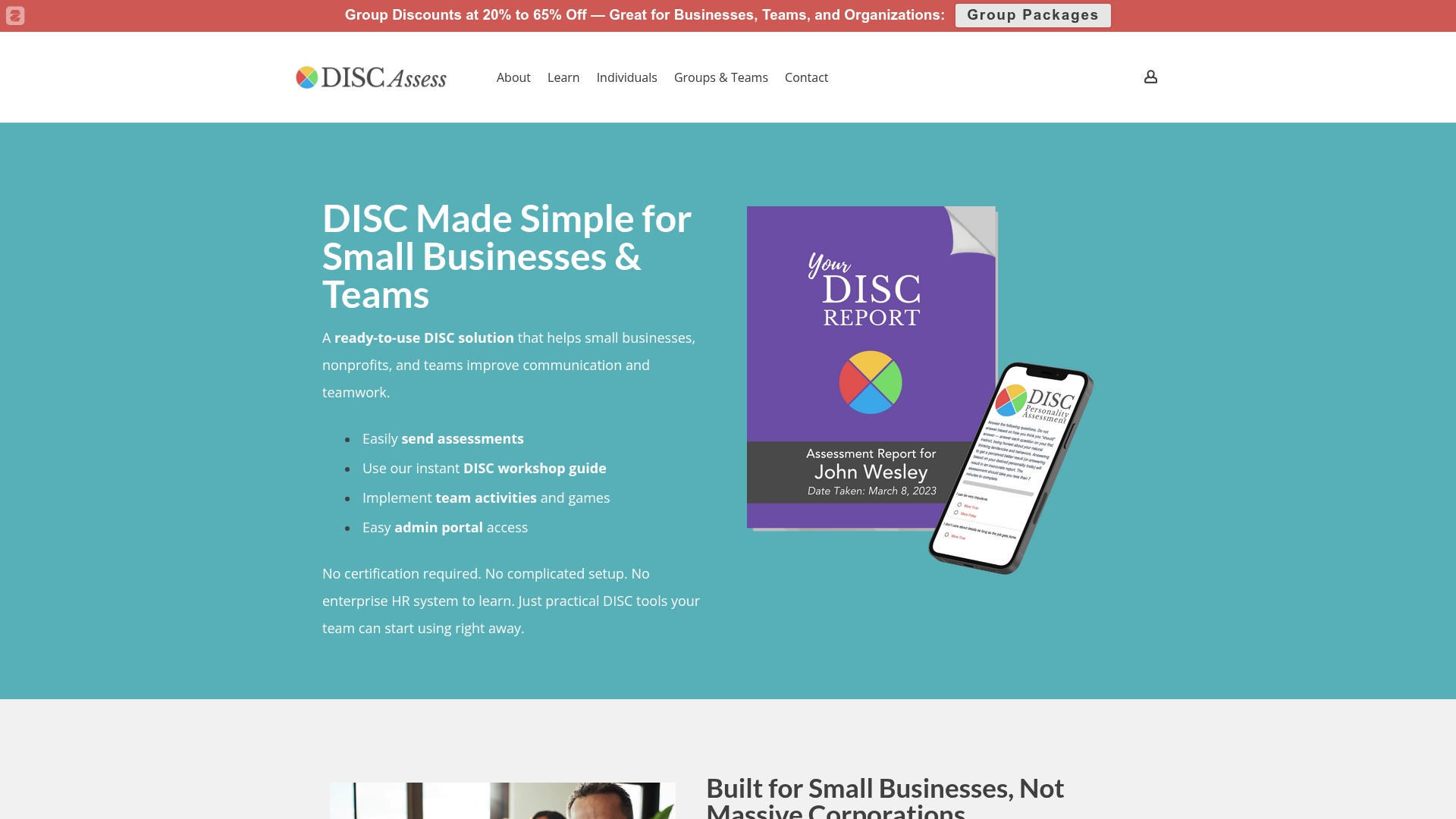
Discassess makes it straightforward for small teams to get started with DISC assessments, no HR background required. Whether you need a single assessment or a full group package for your team, the platform is built to deliver clear, practical results you can use right away. Backed by Prism Counseling & Coaching's decade of experience, Discassess combines affordability with the depth your team actually needs.
Start your team's assessment today and turn personality differences into your team's greatest strength.
Key Takeaways
Personality tools give small teams a shared language for working through differences, and the teams that use them well see measurable gains in engagement, retention, and collaboration.
| Point | Details |
|---|---|
| Small teams feel clashes immediately | Personality tools surface hidden imbalances before friction becomes a lasting problem. |
| Engagement and retention improve | Organizations using assessments report 15% higher engagement and 25% lower turnover when roles align to strengths. |
| Psychological safety amplifies results | High-safety teams exceed sales targets by 17%; tools work best when safety is actively built alongside them. |
| Developmental use beats evaluative use | Framing assessments as team learning tools, not performance metrics, produces authentic results and real buy-in. |
| Periodic reassessment keeps data current | Personality traits change over time, so revisiting assessments every year or two keeps team insights accurate. |