
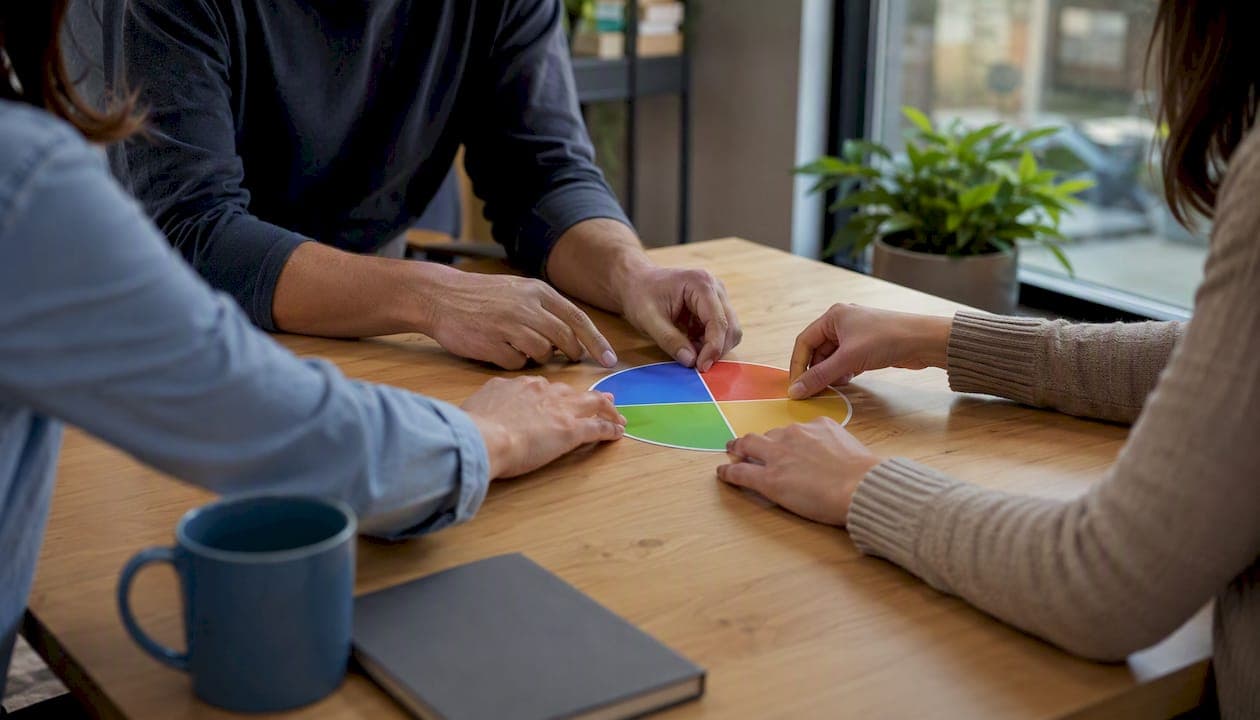
A "skills assessment" in this guide means a DISC behavioral-style assessment, not a hiring test for job competencies. If you lead a small business, a nonprofit, or a coaching practice, the fastest path to better communication is a simple, group-ready DISC platform you can roll out with a pilot team this month. DISC is used by more than one million people every year, and Discassess, backed by Prism Counseling & Coaching's decade of team-building experience, builds its whole platform around making that tool usable without an HR department or a certification.
Key Takeaways
A small team gets the most value from DISC by starting with a short pilot, protecting participant privacy, and folding the results into everyday meetings rather than treating the debrief as a one-time event.
| Point | Details |
|---|---|
| Start with a pilot | Run DISC with a 4 to 12 person team over about one month before scaling wider. |
| Protect privacy and consent | Make participation voluntary and use composite reports in sensitive team settings. |
| Build it into daily work | Add style cues to meeting agendas and revisit results every few months, not once. |
| Know the ethical limits | DISC measures workplace behavior, not competence, intelligence, or mental health. |
| Choose a small-team platform | Discassess offers instant reports, group admin tools, and Prism Counseling & Coaching backing built for teams without an HR department. |
Table of Contents
- What Does a DISC Skills Assessment Actually Measure?
- How Does DISC Help a Small Team Function Better?
- What DISC Can't Do and Where the Guardrails Are
- How Do You Choose the Right DISC Provider for a Small Team?
- Running a One-Month DISC Pilot: Steps and a Sample Agenda
- What Does a DISC Program Cost for a Small Team?
- A Manager's Case: Rebuilding a Disconnected Team
- How Do Other DISC Tools Compare to a Small-Team Platform?
- Who Should Help a Small Team Interpret DISC Results?
- How Do You Keep DISC From Becoming a One-Time Event?
- Why a DISC-First Approach Works Better Than Waiting for a Bigger Program
- Ready to Run Your Team's First DISC Assessment?
- Frequently Asked Questions
- Sources
What Does a DISC Skills Assessment Actually Measure?
DISC assessments are behavioral instruments. They tell you how someone approaches tasks, makes decisions, and interacts with others at work, not how smart they are, what they value at their core, or whether they have a mental health condition. That distinction matters because DISC gets confused with clinical personality testing more often than any other workplace tool, and treating it as one leads to bad decisions.
A well-built DISC report gives you four things: a workplace style summary, a list of what motivates the person, a list of what stresses them out, and specific tips for communicating with them. Read that report before a tense one-on-one and you walk in knowing whether to lead with data or with encouragement.
The four DISC dimensions break down like this:
| Style | Core tendency | Communication cue |
|---|---|---|
| D (Dominance) | Direct, results-focused, decisive under pressure | Lead with the bottom line, skip the preamble |
| I (Influence) | Enthusiastic, people-oriented, persuasive | Give them room to talk it out and connect |
| S (Steadiness) | Patient, cooperative, resistant to sudden change | Give advance notice before shifting plans |
| C (Conscientiousness) | Analytical, detail-driven, quality-focused | Send data and pre-reads before the meeting |
None of this replaces a hiring assessment, a clinical evaluation, or informed consent. Every person taking the assessment should know why they're taking it, who sees the results, and that participation is voluntary. Discassess builds these protections into its group management and admin portal so managers aren't left guessing how to handle sensitive results.
How Does DISC Help a Small Team Function Better?
The immediate payoff is a shared vocabulary. Instead of labeling a coworker "difficult," a team can say she's high D under deadline pressure, and that reframing alone depersonalizes conflict because it names behavior instead of assigning blame.
Small teams see the benefit show up in specific, everyday friction points:
- Faster conflict de-escalation. Naming a style shift ("I'm noticing some D energy here, let's slow down") interrupts a spiral before it becomes personal.
- Better delegation. You stop handing detail-heavy audits to your highest-I team member and creative brainstorms to your highest-C.
- Clearer meetings. Structuring agendas around style needs, results up front for D's, pre-reads for C's, keeps everyone engaged instead of just the loudest voice.
- Smoother onboarding. New hires and volunteers learn the team's communication norms in week one instead of guessing for six months.
A few concrete scenarios show this in action: a manager redesigns a Monday standup so the D on the team gets thirty seconds for headlines while the S gets a heads up on any agenda changes. A coach uses DISC results before a difficult feedback session to soften the delivery for an S-style client. A nonprofit director maps volunteer roles to styles, putting high-I volunteers on donor outreach and high-C volunteers on grant reporting.
Pro Tip: Put each person's DISC style initial next to their name on your meeting agenda template. It takes ten seconds to glance at and reminds you to adjust your delivery before you open your mouth.
What DISC Can't Do and Where the Guardrails Are
DISC is a behavioral awareness tool. It is not a hiring filter, and it is not a substitute for a clinical assessment. Practitioners are consistent on this point: DISC works as a neutral map for optimizing collaboration, not a predictor of who will succeed in a role or a measure of someone's worth as an employee.
That means a few practical rules apply. Participation should be voluntary and explained up front, results belong to the individual first, and sharing should happen by invitation rather than mandate. In sensitive contexts, like a team already dealing with tension, consider anonymized composite reports instead of naming individual scores in a group setting. If someone asks whether their result means something is "wrong" with them, the honest answer is no. DISC describes a tendency, not a diagnosis, and tendencies shift depending on context and stress level.
When results come up in a performance conversation, use them to explain communication style, never to excuse poor performance or justify a decision you'd already made for other reasons.
How Do You Choose the Right DISC Provider for a Small Team?
Most small teams don't need an enterprise HR platform. They need something a non-specialist manager can run without a consultant. Here's a checklist worth working through before you buy:
- Instant individual reports. Nobody wants to wait a week for results after a team meeting.
- A group admin portal. You should be able to see who's completed the assessment and pull reports in one place.
- A composite team report. Individual profiles matter, but seeing the team's overall style mix is what actually informs how you run meetings.
- Printable materials. Workshops and volunteer sessions still need paper handouts sometimes.
- Easy-to-run workshops. Look for step-by-step facilitation guides, not just raw data.
- Privacy controls. Confirm who can see individual results versus composite data.
- Affordable group pricing. A per-seat cost that scales down for a five-person nonprofit board, not just a 500-person enterprise.
Discassess was built around exactly this list. Its streamlined admin tools, group packages, and the decade of coaching experience behind Prism Counseling & Coaching mean a small business owner or nonprofit director doesn't need an HR background to run a credible rollout.
Before you buy from any provider, ask these questions directly: What formats do reports export in? Are there bulk pricing tiers for groups under fifteen people? Is facilitator support included, or is that a separate purchase? Can results be deleted or archived if someone leaves the team?
Running a One-Month DISC Pilot: Steps and a Sample Agenda
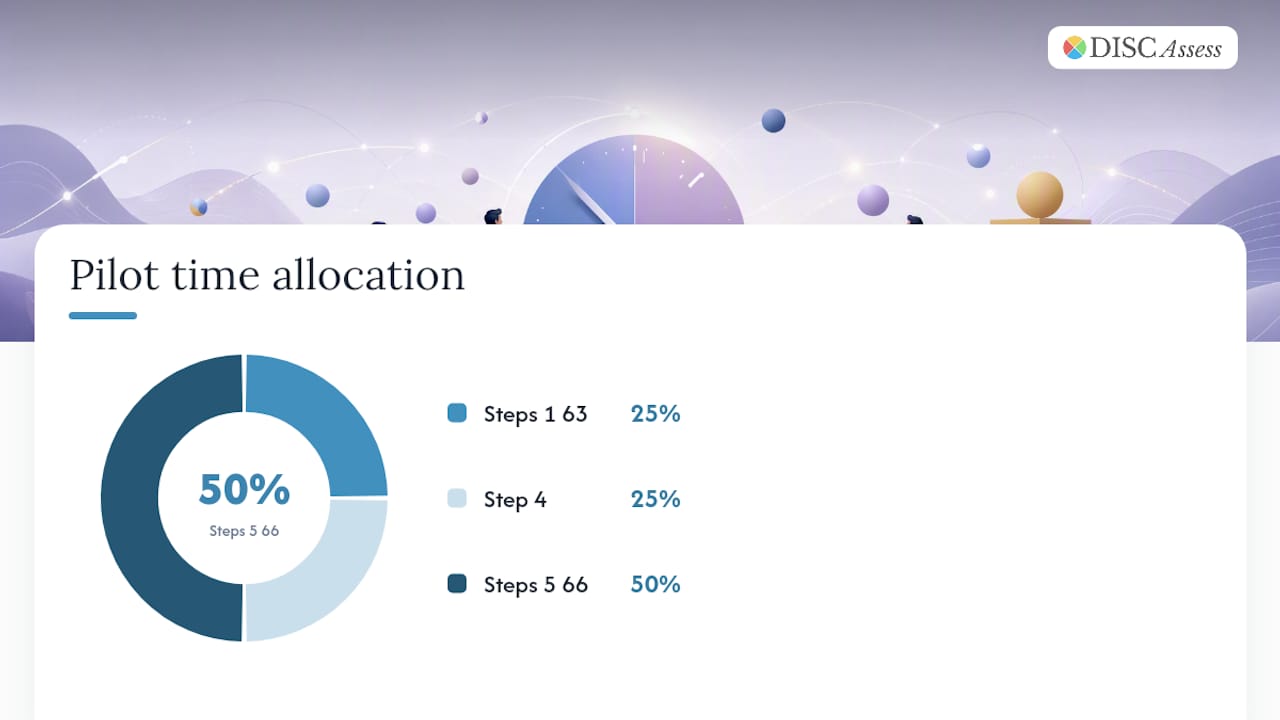
You don't need a quarter-long initiative to see results. A six-step pilot over about four weeks works for teams of four to twelve people.
| Step | Timing | What happens |
|---|---|---|
| 1. Prepare | Week 1, days 1-2 | Choose your pilot group and decide who facilitates the debrief |
| 2. Invite | Week 1, days 3-4 | Explain the purpose, confirm voluntary participation, share timeline |
| 3. Assess | Week 1, days 5-7 | Team members complete the individual assessment online |
| 4. Debrief | Week 2 | Hold a one-hour facilitated meeting to review styles as a group |
| 5. Apply | Weeks 3-4 | Adjust meeting formats, delegation, and communication norms |
| 6. Follow up | End of week 4 | Check in on what stuck and what needs reinforcement |
A sample debrief agenda balances all four styles instead of favoring the loudest one. Send individual reports two days in advance so C-types can review the data and S-types aren't caught off guard. Open with a five-minute overview of what DISC does and doesn't measure. Spend twenty minutes on individual style shares, keeping each person's turn to two or three minutes. Spend twenty minutes mapping how the team's style mix shows up in current friction points. Close with three specific commitments the team agrees to try for the next month, written down and sent out within 24 hours.
Self-facilitation works fine for a first pass if the manager is comfortable being neutral. Bring in a paid facilitator or coach when the team has existing tension that a manager can't referee objectively, since pairing assessment with real facilitation is what keeps the awareness from fading after week one.
What Does a DISC Program Cost for a Small Team?
Pricing in the DISC space generally falls into three models, and each fits a different situation.
- Single assessment purchases work well for a one-off workshop, a coaching client, or testing the waters with a handful of people before committing further.
- Group packages bundle a set number of assessments at a lower per-person cost, ideal for a board retreat, a volunteer training day, or an annual team offsite.
- Unlimited memberships suit organizations running DISC regularly, onboarding new hires throughout the year or offering it as a standing coaching tool with clients.
A five-person nonprofit board doing this once a year probably wants a group package. A coach running assessments with new clients every month is better served by an unlimited membership, since the per-use cost drops fast once volume climbs. Budget-conscious microbusinesses should calculate cost per person per year rather than sticker price alone. A $600 package split across twelve staff members and reused for onboarding all year costs less per person than it looks on the invoice.
A Manager's Case: Rebuilding a Disconnected Team
One manager described a team that showed up to every meeting, checked their task lists, and left without ever really connecting. Deadlines were met, but nobody felt like colleagues. She ran DISC assessments across the group, brought in a facilitator for the debrief, and had the team build behavioral agreements together instead of having rules handed down.
The concrete moves were simple to copy: she sent reports as pre-reads, restructured the next meeting's agenda around style needs instead of just an item list, and mapped project roles to strengths rather than convenience. The result was measurable: clearer task ownership, fewer misread emails, and meetings that actually resolved things instead of just reporting on them.
Her takeaway for other leaders: the assessment starts the conversation, but the debrief and the follow-through are what actually change how a team works together.
How Do Other DISC Tools Compare to a Small-Team Platform?
Plenty of behavioral assessment tools exist beyond a single provider, ranging from academic-style inventories used in corporate leadership programs to lightweight quizzes built for casual team-building days. The corporate-grade tools often require certified facilitators and carry enterprise pricing that assumes a dedicated HR budget. The casual quizzes go the other direction. They're free or nearly free but skip the structured reporting, group admin tools, and facilitation guidance that make results usable beyond a single fun afternoon.
The gap in the middle, professional-quality reporting without enterprise overhead, is where a small-team focused platform like Discassess sits. You get instant individual reports and a composite team view without needing a certification to interpret them, which matters when your "HR department" is one person handling six other jobs.
Who Should Help a Small Team Interpret DISC Results?
A manager can read a basic DISC report without training. Understanding what "high D" means for delegation isn't complicated. But interpreting group dynamics, especially when a team has real friction, benefits from more structure than a report alone provides.
The middle ground is a guided debrief using published facilitation materials, which most small teams can run themselves with the right prep. Reserve paid coaching support for teams with existing conflict, leadership transitions, or when a manager wants outside neutrality for a sensitive conversation. Discassess's practical resources and manager-focused guides are built to close this gap without requiring outside coaching for every team.
How Do You Keep DISC From Becoming a One-Time Event?
The single biggest mistake small teams make is running the assessment once, holding one meeting, and never mentioning it again. Most successful DISC implementations build the framework into everyday operations, not a single training day.
Practical ways to keep it alive: add style initials to meeting agenda templates, reference styles briefly during project kickoffs when assigning roles, and revisit the team's composite report every six months as the group changes. Following up with 30 to 60 day check-ins after the initial debrief measurably increases how much of the training actually sticks. A quarterly five-minute "style check" at the start of a team meeting costs almost nothing and keeps the vocabulary active.
Why a DISC-First Approach Works Better Than Waiting for a Bigger Program
Small teams often delay behavioral work because they assume it requires a consultant, a training budget, or a multi-month rollout. That assumption is wrong, and it costs teams months of avoidable friction. A four-person team can run a complete DISC pilot, from assessment to applied behavioral agreements, in under a month, and the research on integration is consistent: the teams that see lasting change are the ones that fold DISC language into daily operations rather than treating it as a one-time event.
The overlooked piece is momentum. Most teams nail the assessment and the debrief, then let it fade within six weeks because nobody scheduled a follow-up.
Pro Tip: Set a calendar reminder for 30 days after your debrief to ask each person one question: "What's one thing about how we communicate that's actually gotten easier?" That single check-in does more for retention than any second workshop.
DISC isn't a silver bullet, and it won't fix a team with a genuine trust or leadership problem underneath the surface friction. But for the ordinary communication breakdowns most small teams face, mismatched expectations, unclear delegation, meetings that drag, it's one of the more reliable tools available, and it scales down to a five-person team as well as it scales up.
Ready to Run Your Team's First DISC Assessment?
Discassess skips the certification requirements and enterprise sales calls that slow down most DISC providers, so you can have your team's reports in hand within days instead of weeks. The platform's group admin portal lets one person, you, manage the whole pilot without needing a dedicated HR system.
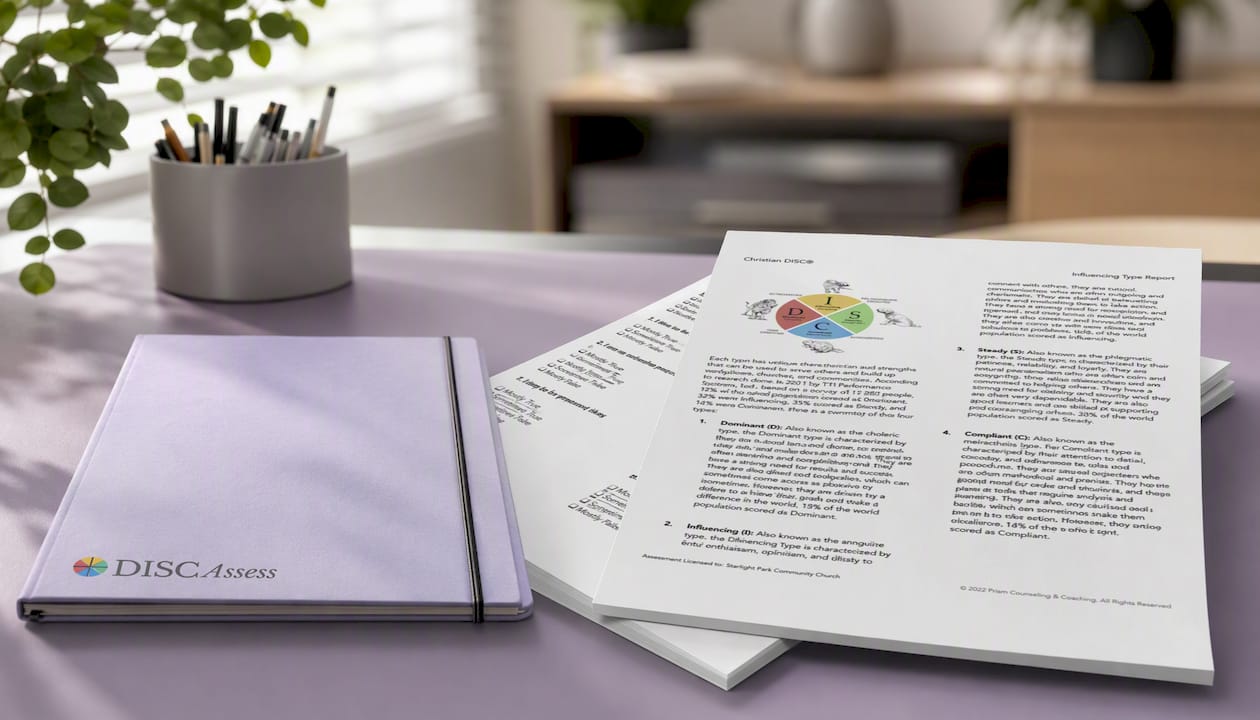
Here's what you get: instant individual reports the moment someone finishes the assessment, a composite team report that shows your group's overall style mix, printable materials for in-person workshops, and multiple purchase options built around real small-team budgets, individual assessments, group packages, or unlimited memberships for organizations running this regularly. The platform is backed by Prism Counseling & Coaching's decade of coaching experience, and it comes with practical resources and manager-focused guides so you're never starting from a blank page.
If your team prefers a printed, in-person format for a retreat or workshop day, you can also add offline assessments to your order. Start by picking your pilot group size and choosing the package that matches it on the Discassess site, then set your debrief date for two weeks out.
Frequently Asked Questions
Is a DISC skills assessment the same as a job skills test? No. A DISC assessment measures behavioral style and communication tendencies. It says nothing about whether someone has the technical skills for a role, and it should never be used as a hiring filter.
How long does a DISC skills assessment take to complete? Most individual assessments take 10 to 15 minutes online, with reports generated instantly once someone finishes.
Can a small team run DISC without a certified facilitator? Yes, for a first pass. A manager can self-facilitate a debrief using published guides. Bring in outside coaching support when a team has existing conflict or the manager wants neutral facilitation.
Do employees have to share their DISC results with the team? No. Sharing should be voluntary. In sensitive situations, use anonymized composite team reports instead of naming individual scores.
How often should a small team retake or revisit DISC results? Revisiting composite results every six months, or whenever the team's makeup changes significantly, keeps the framework relevant without requiring a full retake every time.
Sources
The sources below back the major claims in this guide and offer deeper practical detail for readers ready to go further.
- Understanding DISC Personality Types — Professional and Continuing Education (UNC Charlotte)
- How DISC Assessment Enhances Team Dynamics | SUCCESS
- The Secret To Building Stronger Teams? Know Their DISC Styles — Forbes Coaches Council
Recommended
- DISC Assess | Affordable, Professional DISC Assessments for Small Businesses - DISC Personality Assessment | Prism Counseling & Coaching
- DISC Assess | Affordable, Professional DISC Assessments for Small Businesses - DISC Personality Assessment | Prism Counseling & Coaching
- DISC for Workplace Teams: A Manager's Practical Guide
- DISC Assessment for Leadership Development: A Practical Guide