

In DISC, adaptive behavior means the way you adjust your natural behavioral tendencies to meet the expectations of your current environment, whether that's a demanding role, a particular team culture, or a stressful season at work. Your DISC report captures this as a second profile, sometimes called Graph I or the Adapted Style, sitting alongside your Natural Style. The two together tell a richer story than either one alone.
Quick scan checklist for your report:
- Locate both profiles: the Natural graph (who you are at rest) and the Adaptive graph (who you become under environmental pressure)
- Note the size of the gap between the two
- Identify which letters shifted and in which direction (up or down)
- Check whether the narrative recommendations reference the Natural or Adaptive profile
Key Takeaways
Adaptive behavior in DISC reflects how you adjust your behavioral style to meet environmental expectations, and comparing it to your Natural Style is the most practical insight your DISC report offers.
| Point | Details |
|---|---|
| Adaptive vs. Natural | Adaptive shows who you're being in your environment; Natural shows your instinctive baseline. |
| Report scan priority | Check which letters shifted, the direction of each shift, and the size of the gap first. |
| When gaps signal strain | Large, persistent gaps across multiple letters often indicate role misfit or chronic behavioral effort. |
| Red flag timing | If a large gap persists after 4–6 weeks of role adjustments, schedule a structured coaching or HR conversation. |
| Discassess next step | Run a Classic DISC Assessment to get instant Natural and Adaptive graphs and start the conversation today. |
Table of Contents
- What does adaptive behavior mean in DISC, and how does it differ from your natural style?
- How does adaptive behavior show up in your DISC graphs and report?
- Common adaptive patterns for D, I, S, and C
- Why the gap between your natural and adaptive styles matters
- Red flags: the adaptation patterns that deserve attention
- Practical steps for individuals, managers, and coaches
- How the clinical definition of adaptive behavior differs from DISC's adaptive profile
- A practical checklist for scanning your DISC report
- Using adaptive data ethically and with care
- Discassess makes it easy to see natural and adaptive profiles side by side
- Sources
What does adaptive behavior mean in DISC, and how does it differ from your natural style?
Your Natural Style is your baseline. It reflects the behavioral pattern you fall back on when no one is watching, when pressure is low, and when you're operating from instinct rather than strategy. Think of it as your default wiring.
Your Adaptive Style is what you project when you're responding to the environment around you. It's the version of yourself you bring to a particular job, team, or situation. Some adaptation is healthy and even necessary; it shows self-awareness and flexibility.
Here's a quick contrast between the two:
- Natural Style: Low-effort, automatic, reflects core tendencies
- Adaptive Style: Deliberate or habitual response to perceived expectations
- Key difference: Natural is who you are; Adaptive is who you're being right now
A simple example: someone with a naturally high I (Influence) score who works in a data-heavy compliance role may adapt by suppressing their expressive, people-oriented tendencies and elevating their C (Conscientiousness) behaviors, becoming more precise, reserved, and detail-focused on the job. Their report will show a high I in the Natural graph and a noticeably higher C in the Adaptive graph. That shift is the adaptation.
How does adaptive behavior show up in your DISC graphs and report?
Most DISC reports display two separate graphs or two sets of bars, one for the Natural Style and one for the Adapted Style. DISC report documentation describes the Adaptive graph as the behavior a person uses to meet the expectations of their current environment, while the Natural graph reflects the person's more instinctive pattern.
When you scan the two graphs side by side, look for these visual cues:
| What to Look For | What It Means |
|---|---|
| A letter rises in Adaptive vs. Natural | You're increasing that behavior to meet perceived demands |
| A letter drops in Adaptive vs. Natural | You're suppressing that tendency in your current environment |
| Graphs look nearly identical | Low adaptation; your role fits your natural style closely |
| Large shifts across multiple letters | High adaptation; significant behavioral effort is being expended |
Adapting up on a letter (say, D rises from moderate to high) usually means the environment rewards urgency, decisiveness, or assertiveness. Adapting down (say, I drops sharply) often signals that expressiveness or spontaneity feels unwelcome or risky in that setting.
Pro Tip: When reading narrative recommendations in your report, check whether they reference the Natural or Adaptive profile. Recommendations tied to the Adaptive graph describe how others currently experience you. Recommendations tied to the Natural graph describe your instinctive preferences. Mixing them up is one of the most common interpretation errors, and it leads to coaching advice that doesn't quite fit.
Common adaptive patterns for D, I, S, and C
Understanding how each DISC letter tends to shift, and why, helps you move from reading a graph to understanding a person. Practitioner guidance notes that people often adapt by elevating or suppressing particular letters, and that adapted profiles can indicate role fit or chronic masking.
-
D (Dominance) adapts upward: A naturally moderate-D employee moves into a management role and begins scoring high D in the Adaptive graph. The role demands quick decisions, authority, and accountability. Coaching prompt: "What decisions feel most draining to make right now, and what would make them easier?"
-
I (Influence) adapts downward: A high-I salesperson joins a team with a heavily process-driven culture and starts suppressing their natural enthusiasm and spontaneity. Their Adaptive I drops noticeably. Coaching prompt: "Where do you feel most like yourself at work, and where do you feel you have to hold back?"
-
S (Steadiness) adapts downward: A naturally high-S team member is placed in a fast-changing project environment with constant reprioritization. Their Adaptive S drops as they try to keep pace. Coaching prompt: "What would help you feel more settled and supported through these changes?"
-
C (Conscientiousness) adapts upward: A creative, high-I professional takes on a compliance or quality-assurance function. Their Adaptive C climbs as they respond to the precision the role demands. Coaching prompt: "How are you managing the tension between following the rules closely and bringing your own ideas forward?"
Common causes driving these patterns include role demands that conflict with natural tendencies, team culture that rewards only certain behavioral styles, leadership expectations that are implicit rather than stated, and prolonged stress or organizational change.
Why the gap between your natural and adaptive styles matters
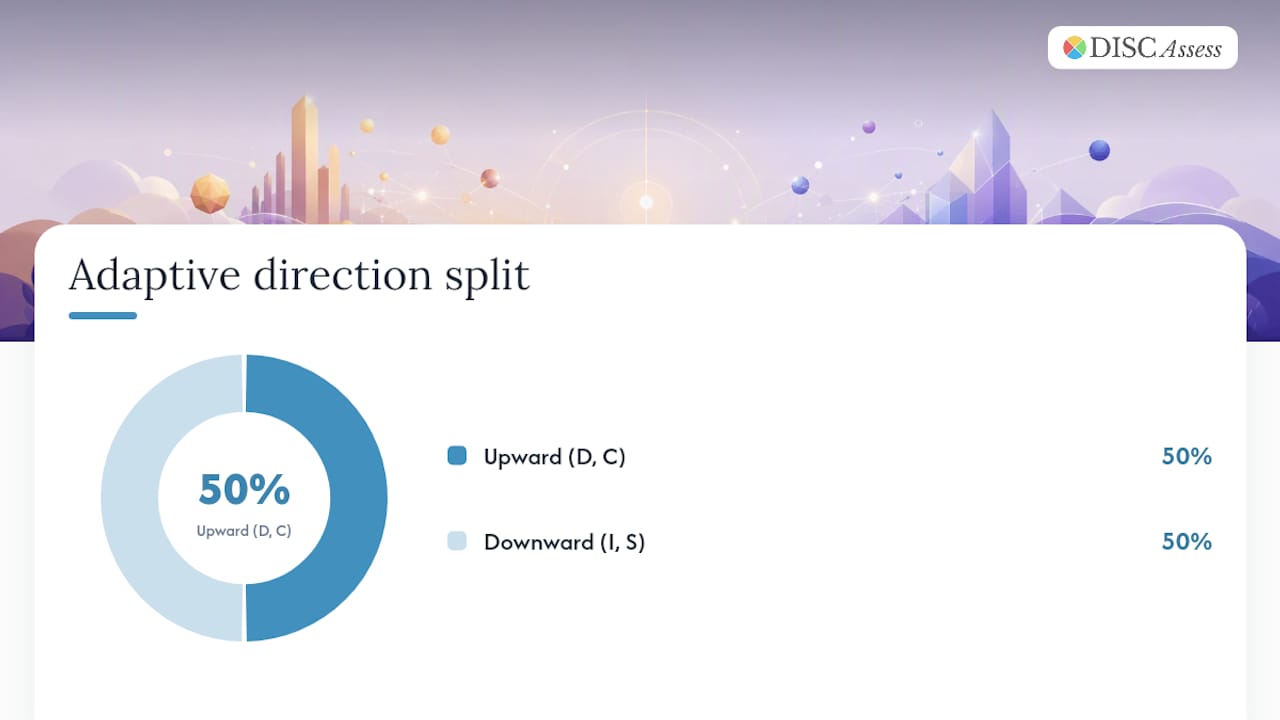
A small gap between Natural and Adaptive is normal. People adapt all the time, and healthy adaptation reflects growth, situational awareness, and relational skill. The concern arises when the gap is large, persistent, or growing.
When adaptation aligns well with a person's values and goals, it tends to be sustainable. A naturally high-C person who adapts upward on S to lead a collaborative team may find the adjustment energizing because it builds on existing strengths. That's alignment.
Strain enters the picture when the adaptation requires sustained suppression of core tendencies. Practitioner communities note that large disparities often point to stress or role misfit, and that adaptation can be either a conscious choice (masking to fit in) or an unconscious habitual response to perceived expectations. Either way, maintaining a large gap over months or years tends to produce:
- Fatigue and reduced engagement
- Inconsistent performance as the person oscillates between styles
- Withdrawal, irritability, or health-related attendance issues
- A sense of inauthenticity that erodes confidence
When you spot a meaningful gap, a staged response works well: start with an open, fact-finding conversation, make short workload or role adjustments, then follow up with a re-assessment in 6–12 weeks to see whether the gap has narrowed.
Red flags: the adaptation patterns that deserve attention
Not every gap requires intervention, but some patterns are worth watching closely. Here are the clearest signals that adaptation has moved from healthy flexibility into a problem worth addressing:
- A large, persistent gap across multiple DISC letters that doesn't change between assessments taken months apart
- Frequent role or team changes that coincide with new adaptive profiles each time, suggesting the person is never finding a natural fit
- Health or attendance issues appearing alongside a significant adaptive shift, which may indicate chronic strain
- Inconsistent performance where the person excels in some contexts and struggles in others without an obvious skill explanation
Action triggers by role:
- Individual: If you recognize your own pattern here, note the specific contexts where you feel most drained and bring that to a coaching conversation or a 1:1 with your manager.
- Manager: Schedule a nonjudgmental check-in within two weeks of noticing a large gap. Frame it around role clarity and support, not performance.
- HR/Coach: If the gap persists after role adjustments and the person reports ongoing strain, a formal role-fit review is appropriate. Reassessing after 6–8 weeks of changes gives enough time for a meaningful comparison.
A reasonable observation window before acting is roughly four to six weeks. Seeing one large gap on a single assessment is a prompt to ask questions, not a diagnosis. Seeing the same large gap on a follow-up assessment, combined with behavioral signals, is a stronger case for structured support.
Practical steps for individuals, managers, and coaches
Once you've identified an adaptive gap, the next step is deciding what to do with it. Here's a short roadmap organized by role.
For the individual:
- Write down the two or three environments where you feel most like yourself. Compare them to your current role.
- Note specific stressors or expectations that seem to pull you away from your natural style.
- Test one small change: ask for a task, meeting format, or communication style that better fits your natural tendencies, and observe how it feels after two weeks.
For the manager:
- Open a 1:1 with curiosity, not conclusions. Try: "I noticed some shifts in your DISC profile. I'd love to hear how things feel from your side."
- Review current tasks and responsibilities for any that consistently conflict with the person's Natural Style.
- Offer short-term support: adjusted deadlines, a different team pairing, or clearer role boundaries.
For the coach:
- Explore the contexts driving the adaptation before reframing anything. Ask: "When did this pattern start, and what changed around that time?"
- Reframe the adaptive shift as a strength the person has been using, then help them evaluate whether it's still serving them.
- Design a small experiment together: one behavioral change, one week, then debrief.
Pro Tip: Before sharing adaptive data in a group or team setting, get explicit consent from each participant. Agree in writing on how the information will be used, who will see it, and what it will not be used for (such as performance ratings). This one step protects trust and makes the conversation far more productive.
For coaches building this into a practice, the group assessment management guide from Discassess offers practical documentation and workflow guidance.
How the clinical definition of adaptive behavior differs from DISC's adaptive profile
If you've searched "adaptive behavior" outside of DISC contexts, you've likely encountered a very different meaning. In clinical psychology, education, and law, adaptive behavior is defined as the collection of learned conceptual, social, and practical skills people use to function in daily life. The American Association on Intellectual and Developmental Disabilities (AAIDD) groups these into three domains:
- Conceptual skills: literacy, numeracy, self-direction, and understanding of concepts like time and money
- Social skills: interpersonal relationships, social problem-solving, and following rules
- Practical skills: daily living activities, occupational skills, and personal safety
Clinical adaptive behavior measures are used to document what a person does independently and to inform education, habilitation, and support planning. Historically, adaptive behavior has been central to diagnosing intellectual disability and is treated as a construct distinct from intelligence in major U.S. diagnostic frameworks including the DSM.
DISC's adaptive profile measures something entirely different. It captures situational behavioral preferences, specifically how a person adjusts their style in response to perceived environmental expectations. Using the clinical construct's meaning to interpret a DISC graph is a category error. One measures functional independence across life tasks; the other measures behavioral style in a workplace or relational context.
A concrete example: a clinical adaptive behavior assessment might ask whether someone can manage their own finances or navigate public transportation independently. A DISC adaptive graph asks, in effect, "How are you showing up at work right now compared to how you naturally tend to behave?" The questions, the tools, and the purposes are entirely separate.
A practical checklist for scanning your DISC report
When you open a DISC report, use this short routine to surface the adaptive insights quickly.
- Step 1: Find both graphs or profiles. Label them clearly in your mind: Natural (who you are) and Adaptive (who you're being in this environment).
- Step 2: Identify which letters shifted and by how much. A shift of one or two points is minor. A shift of several points across multiple letters is significant.
- Step 3: Note the direction. Rising letters suggest you're adding behaviors the environment rewards. Dropping letters suggest you're suppressing tendencies that feel unwelcome.
- Step 4: Read the narrative sections. Check whether each recommendation references the Natural or Adaptive profile, and apply it accordingly.
- Step 5: Ask one clarifying question: "Does this adaptive pattern reflect a short-term adjustment, or has it been consistent for months?"
For a behavioral assessment tool overview that explains how DISC fits among other assessment formats, Discassess has a clear guide worth reading before your next team debrief.
If you're planning to re-assess after making role or workload changes, a 6–12 week window gives enough time for meaningful behavioral shifts to register in a follow-up report.
Using adaptive data ethically and with care
Adaptive data is genuinely useful, and it's also personal. When someone's DISC report reveals a large gap between who they naturally are and who they've been performing as, that's not a data point to broadcast in a team meeting. It's an invitation to a private, respectful conversation.
Working with adaptive profiles over time, the most productive use of this data happens when the person whose report it is leads the interpretation. A coach or manager who presents adaptive findings as conclusions ("your report shows you're stressed") tends to get defensiveness. One who presents them as questions ("your report shows some interesting shifts; what's your read on that?") tends to get honesty.
There's also a practical reason to document consent before sharing adaptive data with anyone beyond the individual. Adaptive profiles can surface information about strain, role misfit, or personal stressors that the person may not have chosen to disclose. Treating that information with the same care you'd give any sensitive personnel data builds the kind of trust that makes DISC genuinely useful rather than just interesting.
For teams, positioning adaptive findings as a shared growth conversation, rather than an evaluation, changes the entire dynamic. When people understand that the goal is alignment and support, not judgment, they engage with the data honestly. That's where the real value lives.
Discassess makes it easy to see natural and adaptive profiles side by side
Reading adaptive behavior in a DISC report is straightforward when the report is built to show it clearly. Discassess delivers instant Natural and Adaptive graphs in every Classic DISC Assessment, so you can see the gap, the direction of each shift, and the narrative recommendations tied to each profile, without needing a certification or a consultant to interpret it.
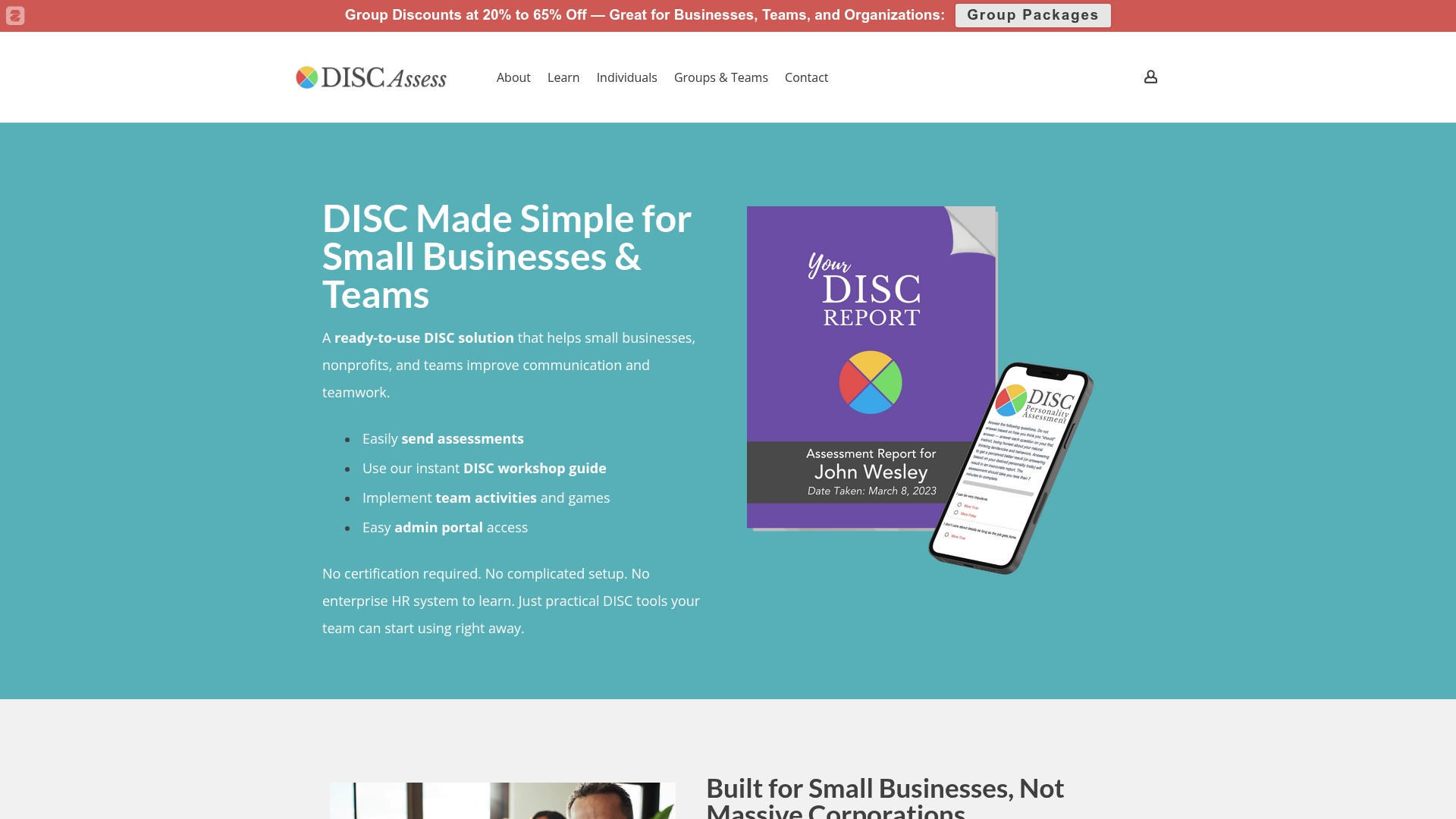
For teams and organizations, the DISC Group Package gives you an admin account, bulk assessment credits, and group management tools that let you track adaptive patterns across your whole team in one place. Coaches and consultants who want to offer branded reports to clients can explore the White Label DISC System for a fully customized experience. Discassess is built for small businesses, nonprofits, and teams across the U.S. that want practical, affordable assessments without the complexity of enterprise platforms. To see the admin tools and report format before you buy, request a demo and explore the platform at your own pace.
Sources
These sources are worth bookmarking if you want to go further, especially on the clinical side of adaptive behavior.
- Adaptive Behavior - AAIDD
- Adaptive behavior test battery development and measurement considerations - PMC
- Adaptive behavior and its role in diagnosis and measurement - NCBI Bookshelf
- Current conceptualization and measurement issues for adaptive behavior (journal article DOI)
- What Are Adaptive Behavior Assessments? - WPS
Recommended
- How DISC Identifies Your Personal Strengths and Weaknesses
- Take DISC Personality Assessment - DISC Assess | Affordable, Professional DISC Assessments for Small Businesses
- The Appeal of DISC: Why People Love Using This Popular Personality Assessment - DISC Assess | Affordable, Professional DISC Assessments for Small Businesses
- DISC Personality Assessment | Prism Counseling & Coaching - DISC Assess | Affordable, Professional DISC Assessments for Small Businesses