

Group assessment management coaching practice is the structured method of evaluating and developing team performance through facilitated group coaching sessions using targeted assessment tools and management techniques. Coaches, team leaders, and HR professionals who apply this approach consistently see stronger communication, clearer accountability, and measurable gains in team output. Tools like the DISC assessment, ProfileXT, and 360-degree feedback instruments give coaches the data they need to move beyond guesswork and into evidence-based development. High-performing teams are 1.9 times more likely to have a leader who prioritizes facilitative coaching over directive management. That single finding reframes the entire purpose of group evaluation strategies.
What tools and prerequisites are essential for group assessment management coaching?
The right assessment tool shapes every session that follows. DISC measures behavioral tendencies across four dimensions: Dominance, Influence, Steadiness, and Conscientiousness. ProfileXT adds cognitive and occupational fit data. Emotional Intelligence assessments, such as the EQ-i 2.0 from Multi-Health Systems, measure self-awareness and interpersonal regulation. Each instrument answers a different question, so your tool choice should match your team's development goal.
Group coaching cohort sizes typically range from 6 to 12 participants to balance diversity with manageable communication. Fewer than six limits peer learning. More than twelve makes it difficult to give each person meaningful airtime. Get this number right before you schedule a single session.

Assessment tool comparison:
| Tool | Focus Area | Best For |
|---|---|---|
| DISC | Behavioral style | Communication and team dynamics |
| ProfileXT | Cognitive and occupational fit | Role alignment and hiring |
| EQ-i 2.0 | Emotional intelligence | Conflict resolution and leadership |
| 360-Degree Feedback | Peer and supervisor ratings | Blind spot identification |
Before your first session, three prerequisites must be in place:
- Clarified goals: Every participant and their supervisor must agree on what success looks like at the end of the engagement.
- Psychological safety: Team members will not share honest feedback in an environment where candor feels risky.
- Stakeholder alignment: The participant, their direct supervisor, and the coach each carry a defined role. Blurring those roles creates confusion and erodes trust.
Pro Tip: Write one measurable outcome per participant before the kickoff session. "Improve communication" is not measurable. "Reduce meeting interruptions by asking clarifying questions first" is.
How to structure and execute group coaching sessions for maximum impact
A well-structured engagement follows three phases: kickoff, mid-point check-ins, and a final progress review. Standard group coaching engagements span approximately four months, with structured three-way sessions involving the participant, their supervisor, and the coach. That structure keeps individual growth connected to organizational goals.
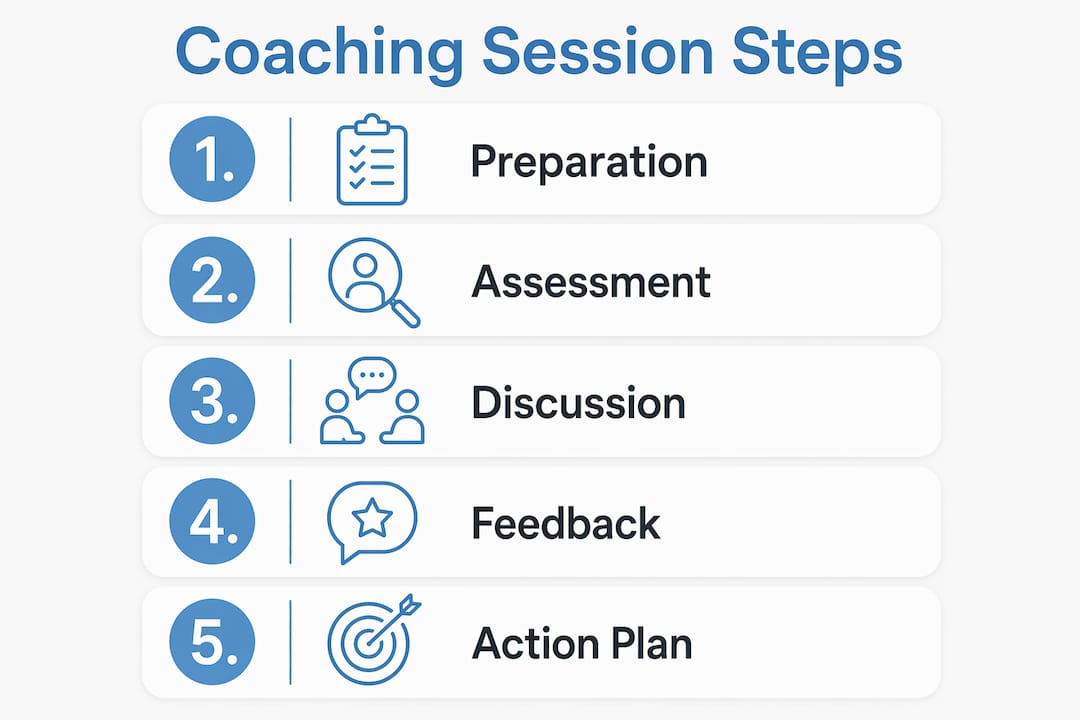
Here is a numbered sequence that works across most group coaching formats:
- Kickoff session: Administer assessments before this meeting. Use the first session to share results, establish group norms, and set individual development goals.
- Debrief assessment data: Walk each participant through their profile. Connect their behavioral style to team communication patterns, not just personal traits.
- Peer consultation rounds: Group coaching sessions often include peer consultation and individual "hot-seat" coaching integrated with taught content for reinforcement. Rotate the focus so every participant receives direct coaching in front of the group.
- Mid-point three-way meeting: Bring the participant and their supervisor together with the coach. Review progress against the goals set at kickoff. Adjust the development plan if needed.
- Calibration exercise: Ask participants to rate themselves on key behaviors, then compare those ratings with peer observations. This step surfaces blind spots before the final review.
- Final progress review: Measure behavioral change against the original outcomes. Document wins and identify the next development cycle.
Effective facilitators use powerful questioning, active listening, and specific feedback frameworks like FIRE to promote growth in group coaching. FIRE stands for Focus, Impact, Request, and End. It gives coaches a repeatable structure for delivering feedback that is specific and behavioral rather than vague and personal.
Pro Tip: Track individual airtime across sessions. If two participants consistently dominate, use a structured round-robin format for the first 15 minutes of each meeting. Quiet members often carry the most useful observations.
What are common challenges in managing group dynamics during coaching?
Dominant personalities are the most common obstacle in group coaching. One or two voices can crowd out the rest, so the group stops functioning as a learning community and starts performing for its loudest members. The fix is structural, not confrontational. Assign rotating roles such as timekeeper, summarizer, and questioner so every participant has a defined contribution.
Conflict avoidance is the quieter problem. Teams that never disagree in sessions are usually disagreeing outside them. A coach who mistakes silence for harmony will miss the real group dynamic entirely. Use anonymous written reflections before live discussions to surface honest perspectives before the group pressure kicks in.
Mid-point feedback loops and calibration exercises where team members compare self-assessments with peer ratings promote immediate reflection and prevent free-rider issues early in engagements. Waiting until the end of a project to assess performance is the single most common mistake in group evaluation strategies. By then, the patterns are entrenched and the window for behavioral change has closed.
"Effective group coaching treats the team system as the client rather than focusing on 'fixing' individuals, helping the team recognize its own behavior patterns." — Henka Institute
Signs that a coaching engagement is losing traction include:
- Participants stop completing pre-session assignments.
- The same issues surface in every meeting without resolution.
- Supervisors disengage from three-way meetings.
- Group energy drops noticeably after the mid-point.
When you see two or more of these signs together, pause the agenda and name the pattern directly with the group. Naming it is not a failure. Ignoring it is.
How does assessment data drive sustainable high performance in teams?
Assessment data is only useful when it connects to behavior change, not just self-awareness. A DISC profile that sits in a folder after the debrief session produces no measurable outcome. The coach's job is to translate profile insights into specific commitments: "Because your profile shows a high D tendency, your development goal is to pause and ask one question before responding in conflict situations."
High-performing teams are 1.9 times more likely to have a leader who prioritizes active coaching over directive management. That gap between coaching and directing is where most team performance problems live. Directive managers tell people what to do. Coaching leaders ask questions that help people figure it out themselves, which builds the accountability that sticks.
Coaching vs. directive managing:
| Approach | Leader Behavior | Team Outcome |
|---|---|---|
| Directive managing | Assigns tasks, monitors compliance | Short-term output, low ownership |
| Coaching leadership | Asks questions, builds self-awareness | Long-term accountability, higher trust |
Structuring coaching around the developmental stages of teams, specifically Forming, Storming, Norming, and Performing, prevents premature performance pressure. A team in the Storming stage needs conflict navigation skills, not productivity targets. Matching your coaching intervention to the team's actual stage is what separates effective group coaching from well-intentioned but poorly timed training.
To maintain development beyond the formal coaching cycle, build these habits into your team's regular rhythm:
- Schedule quarterly peer feedback conversations using the FIRE model.
- Revisit DISC profiles when new members join or roles shift significantly.
- Use printable profiles as reference tools in team meetings, not just onboarding documents.
- Tie behavioral goals to performance reviews so coaching outcomes carry organizational weight.
Key Takeaways
Group assessment management coaching practice produces lasting results only when assessment data, structured sessions, and ongoing feedback loops work together as a system.
| Point | Details |
|---|---|
| Choose the right tool | Match your assessment instrument to the team's specific development goal, not just availability. |
| Size your group correctly | Keep cohorts between 6 and 12 participants to balance learning diversity with individual airtime. |
| Structure every engagement | Use a kickoff, mid-point three-way meeting, and final review across a four-month cycle. |
| Address dynamics early | Use calibration exercises mid-engagement to surface blind spots before patterns become fixed. |
| Connect data to behavior | Translate assessment results into specific behavioral commitments, not general awareness goals. |
Why I think most group coaching fails before it starts
Most group coaching programs fail at the design stage, not the delivery stage. Coaches spend weeks selecting the perfect assessment tool and almost no time clarifying what the supervisor expects to see change. Without that alignment, the coaching engagement becomes a personal development experience that floats free of any organizational outcome. Participants enjoy it. Nothing changes.
The shift that made the biggest difference in my own practice was treating the three-way meeting as the spine of the engagement, not an optional check-in. When a supervisor sits in that room and hears their direct report articulate a behavioral goal out loud, accountability becomes real in a way that no worksheet can replicate.
I also believe the field underestimates the value of credentialing. The ICF Advanced Certified Team Coach credential sets a measurable professional standard for team-level coaching competencies. Coaches who hold it are not just better trained. They signal to organizational clients that the work is serious and the outcomes are trackable.
One more thing: stop designing sessions for where you want the team to be. Design for where they actually are. A team in the Storming stage does not need a visioning exercise. They need a structured conversation about what is making collaboration hard right now. Tuckman's model is not just a framework for textbooks. It is a diagnostic tool that tells you what your next session should actually address.
— Tres
Discassess tools for your group coaching practice
Discassess, backed by Prism Counseling & Coaching, gives coaches and HR professionals a practical platform for running group assessments without the complexity of enterprise-level systems.
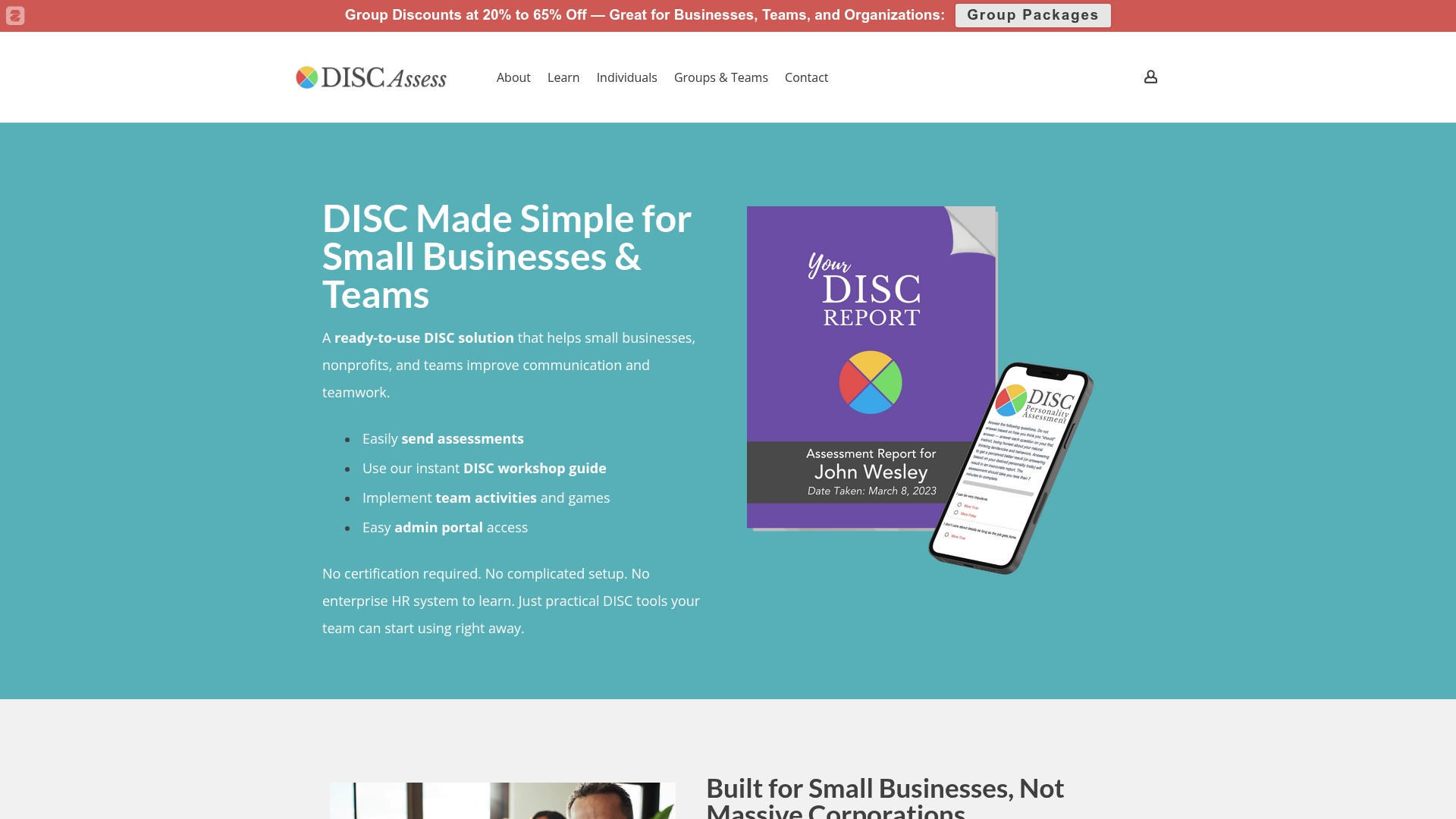
The platform's group assessment management tools let you administer multiple DISC assessments, track results by cohort, and generate detailed reports that feed directly into your coaching sessions. Live group training resources support facilitators who want structured content alongside their assessment data. Pricing is transparent and accessible, with individual, group, and unlimited membership options. Whether you are coaching a nonprofit leadership team or a small business staff, Discassess gives you the tools to run a credible, organized engagement from day one. Start with a demo account to see how the platform fits your practice.
FAQ
What is group assessment management coaching practice?
Group assessment management coaching practice is the structured use of validated assessment tools and facilitated coaching sessions to evaluate and develop team performance. It combines instruments like DISC or 360-degree feedback with group coaching methods to improve communication and accountability.
How many people should be in a group coaching cohort?
Optimal cohort size ranges from 6 to 12 participants. This range supports diverse peer learning while keeping individual coaching time manageable.
How long does a group coaching engagement typically last?
Standard engagements run approximately four months and include a kickoff, mid-point check-ins, and a final progress review aligned with organizational KPIs.
What is the FIRE feedback model in group coaching?
FIRE stands for Focus, Impact, Request, and End. It gives coaches a repeatable structure for delivering specific, behavioral feedback that supports growth without becoming personal or vague.
Why does coaching outperform directive management for team performance?
Teams led by facilitative coaches are 1.9 times more likely to reach high performance than those managed directively. Coaching builds self-awareness and ownership, which sustains performance beyond any single project cycle.
Recommended
- Individual Coaching - DISC Assess | Affordable, Professional DISC Assessments for Small Businesses
- Multiple Assessments for Groups - DISC Assess | Affordable, Professional DISC Assessments for Small Businesses
- Self-Guide Team Training - DISC Assess | Affordable, Professional DISC Assessments for Small Businesses
- Workshop Guide - DISC Assess | Affordable, Professional DISC Assessments for Small Businesses