
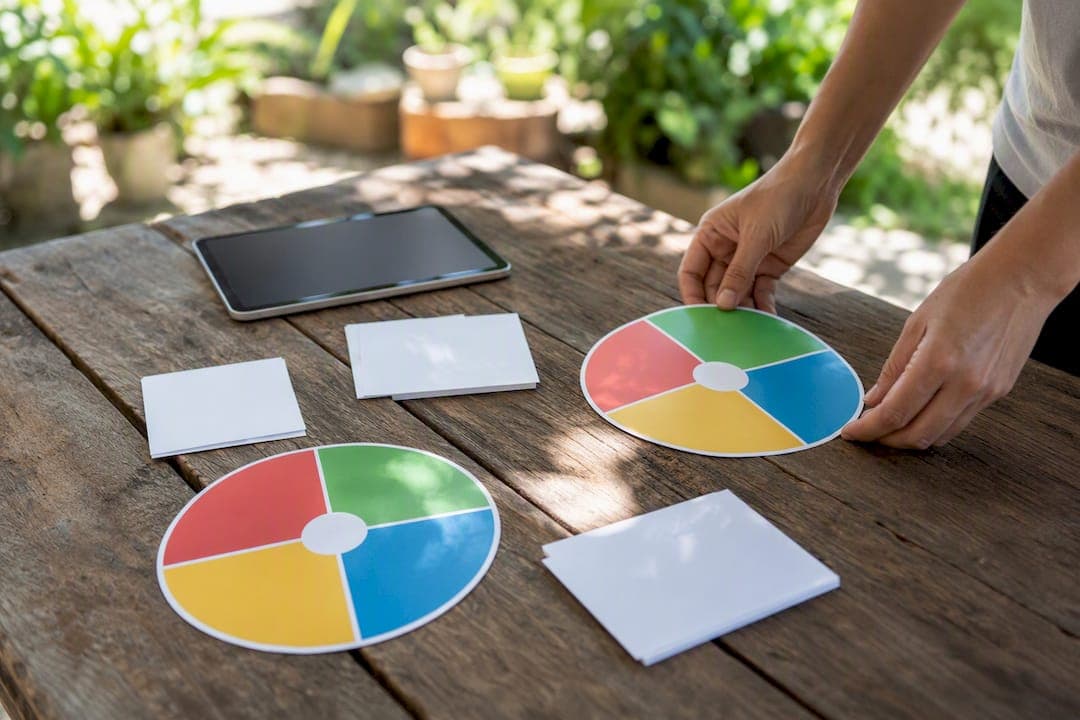
Pick the DISC assessment whose report features match your primary goal: team communication, leadership development, hiring support, or coaching. That's the whole decision, boiled down. Once you know your goal, three things separate a worthwhile assessment from a wasted purchase: validated scoring behind the report, group and admin tools if you're assessing more than one person, and some form of learning support after the report lands in an inbox.
A few non-negotiables to check before you buy:
- Validated scoring. The provider should be able to point to reliability data or a norming sample, not just a slick report design.
- Group and admin tools. If you're assessing a team, you need batch reporting and a group map, not five separate PDFs you have to compare by hand.
- Post-report support. A report without facilitation or follow-up resources tends to sit in a drawer. Look for coaching prompts, team debrief guides, or a live training option.
The fastest way to confirm fit is to request a sample report and run a small pilot with two or three people before committing to a full team rollout.
Key Takeaways
Choosing the right DISC assessment comes down to matching your specific goal, communication, leadership, hiring, or coaching, to a provider offering validated scoring, group tools, and follow-up support.
| Point | Details |
|---|---|
| Match features to goal | Team communication, leadership development, hiring, and coaching each need different report features. |
| Confirm validation | Ask about reliability data and norming samples before trusting any provider's scoring claims. |
| Pilot before rollout | Test the assessment with two or three people before buying a full team package. |
| Support after the report matters | Facilitator resources and follow-up materials drive more lasting behavior change than a static report alone. |
| Discassess fits small teams | Its group packages, admin dashboard, and instant individual reports suit teams without dedicated HR staff. |
Table of Contents
- What Is DiSC and Where Did It Come From?
- The Four DiSC Styles, in Plain Terms
- How DISC Assessments Actually Work
- How to Choose the Right DISC Assessment
- Free DISC Test or Paid, Certified Assessment?
- Turning Results Into Action Without Labeling Anyone
- DISC Versus MBTI, and How to Judge Validation Claims
- What I'd Tell a Small-Business Leader Buying Their First Assessment
- A Small-Business-Friendly Way to Choose Your DISC Assessment
- Sources
What Is DiSC and Where Did It Come From?
DiSC is a four-style behavioral model, Dominance, Influence, Steadiness, and Conscientiousness, built to describe how people act and communicate at work rather than to diagnose who they are deep down. The framework traces back to William Moulton Marston, whose early theories of behavior became the foundation that later publishers turned into the workplace assessments used today. Marston's broader biography is unusual for a psychometric pioneer. NPR has reported that his work blended psychological theory with popular culture, which is part of why modern DiSC tools read as practical and applied rather than clinical.
Teams generally use DiSC for four things: sharpening day-to-day communication, developing new and existing leaders, smoothing onboarding for new hires, and giving coaches a shared vocabulary to work from. None of that requires a psychology degree to interpret. That's the appeal.
The Four DiSC Styles, in Plain Terms
Every DiSC report centers on these four styles. Most people carry a blend, but one or two usually lead.
- Dominance (D): Direct, results-focused, comfortable with conflict and fast decisions. Strength is momentum; blind spot is steamrolling quieter voices. What they need from others: get to the point, skip the small talk, bring solutions not just problems.
- Influence (I): Enthusiastic, persuasive, energized by people and ideas. Strength is building buy-in; blind spot is following through on details. What they need from others: public recognition, room to talk through ideas out loud, and gentle deadline reminders.
- Steadiness (S): Patient, dependable, values harmony and consistency. Strength is steady execution; blind spot is resisting sudden change. What they need from others: advance notice before shifts in plans, and a calm, low-pressure pace of conversation.
- Conscientiousness (C): Analytical, precise, focused on quality and accuracy. Strength is catching errors others miss; blind spot is overanalyzing at the expense of speed. What they need from others: time to think before responding, and data to back up requests.
Knowing your own style is useful. Knowing your coworkers' styles, and adjusting how you approach them, is where the actual value shows up.
How DISC Assessments Actually Work
Most modern DISC assessments run online, self-complete, and take about 15 minutes according to OptimizeTeamwork's guide. Some providers still offer paper-based or facilitator-led versions, useful for groups without reliable internet access, but the online format dominates because it produces the report instantly.
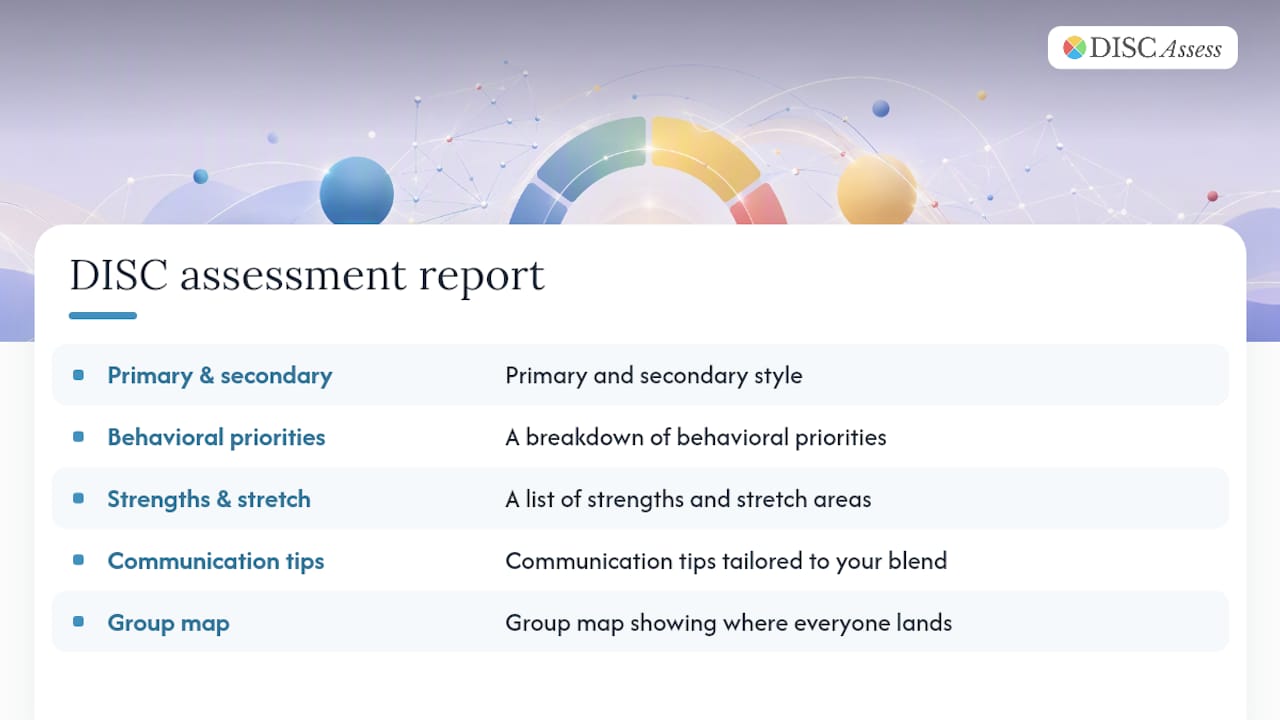
A solid report includes your primary and secondary style, a breakdown of behavioral priorities, a list of strengths and stretch areas, communication tips tailored to your blend, and, for team packages, a group map showing where everyone lands relative to each other. Some platforms use computerized adaptive testing, where each question adjusts based on how you answered the last one. That approach tends to produce a tighter, more individualized profile than a fixed question set, which is worth asking about if precision matters for your use case.
How to Choose the Right DISC Assessment
Start with your outcome, not the assessment. Are you trying to improve how a team talks to each other, groom a manager for a bigger role, screen candidates more thoughtfully, or give a coaching client language to work with? Your answer determines which features actually matter, and which are just nice add-ons you'll never use.
Once you know your outcome, run through this priority list:
- Define the outcome. Write down the specific behavior or decision the assessment needs to inform.
- Request a sample report. Any credible provider will show you exactly what a report looks like before you buy. If they won't, that's a red flag.
- Verify validation and admin features. Ask what reliability data backs the scoring, and confirm the platform includes batch reporting or a group map if you're assessing more than one person.
- Pilot with a small group. Run the assessment with two or three people before rolling it out to a full team or department.
Beyond those must-haves, a few features are worth having but shouldn't make or break your decision: white-label or customizable branding for consultants and coaches, integration with your existing HR software, mobile-friendly delivery for remote teams, and multilingual support if your team spans regions.
Pro Tip: Before you commit to a full team package, pilot the assessment with two or three people, ideally from different departments, and compare how well the reports match what you already know about them. If the results feel off for people you know well, they'll feel off for the rest of the team too.
Free DISC Test or Paid, Certified Assessment?
A free quick test is fine for personal curiosity or a low-stakes icebreaker at a team retreat. It's not fine when the results will inform hiring, promotions, or a structured leadership development track.
The tradeoff comes down to depth versus speed:
- Free tests: Fast, no cost, good for casual self-awareness or a five-minute team activity.
- Paid, validated instruments: Backed by reliability data, deeper reports, group tools, and often facilitator or coaching resources built in.
If a decision with real consequences rides on the outcome, a validated paid instrument is the safer call every time.
Turning Results Into Action Without Labeling Anyone
A report is only the starting point. The rollout matters more than the assessment itself.
- Share the aggregate team map in a team meeting, not individual scores in private one-on-ones only.
- Run a facilitated session where people discuss what their style needs from others, using the report as a conversation starter.
- Create communication agreements as a team, based on what surfaced in that discussion.
- Fold it into ongoing feedback by referencing styles in one-on-ones and meeting norms, not just once and never again.
The mindset shift that matters most: stop asking "what type is this person?" and start asking "what does this style need from me right now?" That question keeps DISC useful as a shared language instead of a shortcut for labeling coworkers.
Pro Tip: Weave DISC language directly into meeting agendas and feedback templates. Teams that treat DISC as a one-time activity see the insights fade within weeks; teams that reference it regularly keep it alive.
DISC Versus MBTI, and How to Judge Validation Claims
DISC and MBTI answer different questions. DISC measures observable behavior, how you act and communicate, while MBTI measures psychological preference, how you tend to think and process. For workplace training and team development, DiSC's behavioral focus tends to translate more directly into day-to-day coaching conversations than a preference-based framework does.
Before trusting any provider's validation claims, check for a described norming sample, independent reliability data, and clarity on whether the test uses fixed or adaptive questioning. The American Psychological Association's resources on personality are a solid baseline for understanding what a legitimate psychometric claim actually looks like. If results will shape hiring or promotion decisions, ask directly whether the instrument carries any independent validity evidence, not just marketing language.
What I'd Tell a Small-Business Leader Buying Their First Assessment
Start small. Prioritize ease of use and admin controls over feature lists you'll never touch. Test one report on yourself or a trusted peer before buying a full team package, and judge it by whether it changes an actual conversation, not by how polished it looks.
A Small-Business-Friendly Way to Choose Your DISC Assessment
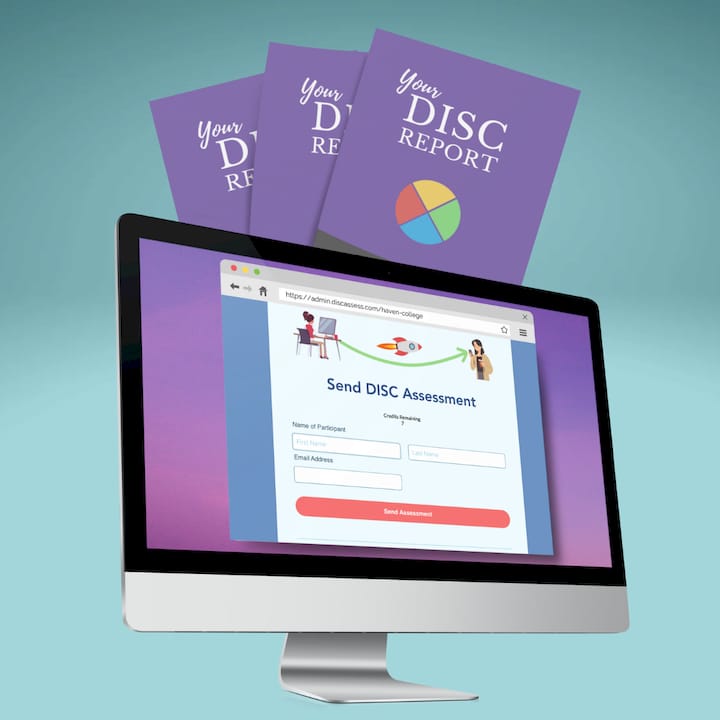
Discassess is the option built for teams that don't have an HR department running point on assessment logistics. The DISC Group Package (Admin Account + Assessment Credits) gives you batch reporting and a group admin dashboard without requiring a certification to operate it, and the Individual Classic DISC Personality Assessment delivers an instant report for anyone who wants to test the waters before buying for a full team.
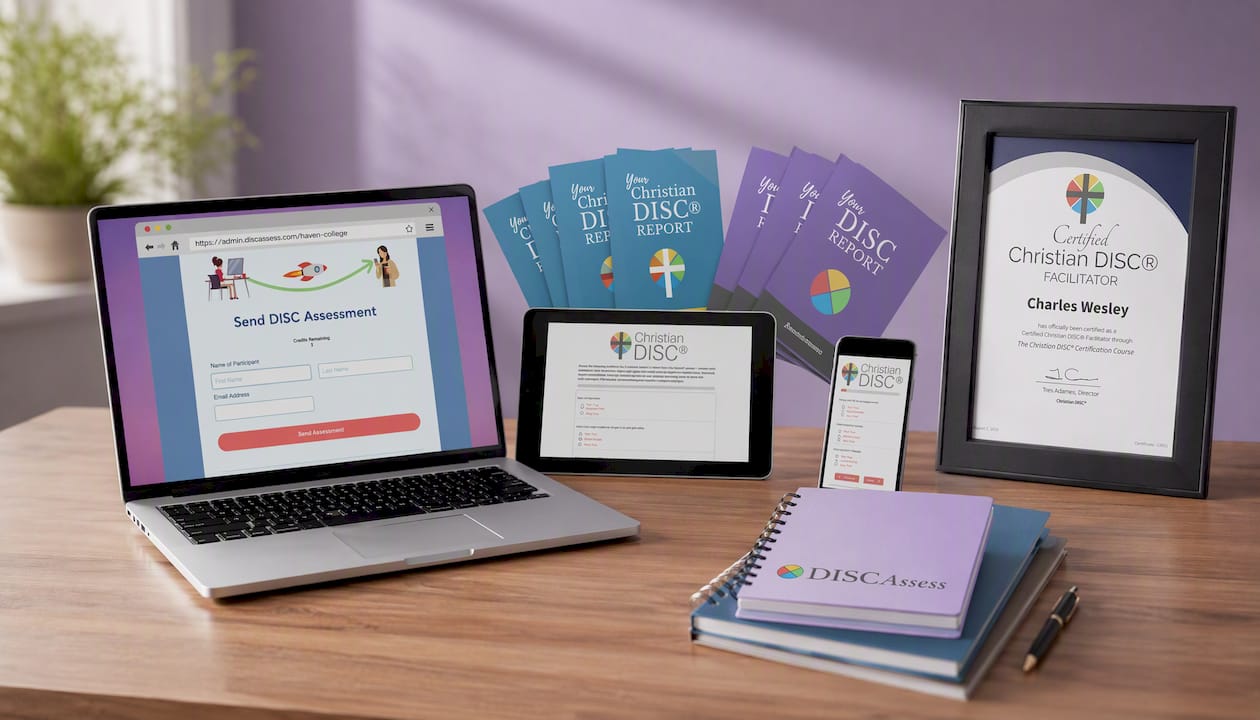
Coaches and consultants managing multiple client organizations can look at the White Label DISC System to run assessments under their own brand. If you want to see the admin experience before buying anything, the demo account walks through group tools and sample reports directly, and live group training is available if your team wants a facilitator-led session instead of a self-guided rollout. When you're ready to move past browsing, request a sample report or start with a single assessment to see how the results land with your team.
Sources
- Personality | American Psychological Association
- DiSC Assessment for Teams: Complete Guide | OptimizeTeamwork
- DISC vs MBTI: Which Should Your Company Choose? - CoachHub
Recommended
- Top 3 discflex.com Alternatives for DISC Assessment 2026
- DISC for Workplace Teams: A Manager's Practical Guide
- DISC Assessment for Leadership Development: A Practical Guide
- How to Use the DISC Personality Assessment with Employees - DISC Assess | Affordable, Professional DISC Assessments for Small Businesses