

What is a team personality profile group discussion and why does it matter?
A team personality profile group discussion is a structured conversation where team members share and explore aggregated personality data together, moving from individual self-awareness toward collective understanding. Rather than filing away assessment results in a drawer, this process turns profile data into a living dialogue about how your team actually works, where friction comes from, and how you can grow together.
Used well, these discussions reveal things a single report never could. You see patterns across the group, not just individual traits. You identify blind spots that no one person would have noticed alone. And you create a shared language for talking about communication, conflict, and collaboration going forward.
The most effective team personality profile group discussions typically include:
- Aggregated personality data from a recognized framework such as DISC, the Myers-Briggs Type Indicator (MBTI), or the Big Five personality model
- Facilitated conversation that connects profile results to real team behaviors and situations
- Shared understanding of each person's communication preferences, strengths, and growth edges
- A concrete output, such as a Team Charter or a set of agreed working norms, so the discussion produces lasting change
The benefits are practical and measurable. Teams that engage in this kind of group personality analysis tend to communicate more clearly, resolve conflict faster, and hold each other accountable with less friction. Understanding why a colleague processes information differently is not just interesting. It changes how you approach every meeting, every deadline, and every hard conversation.
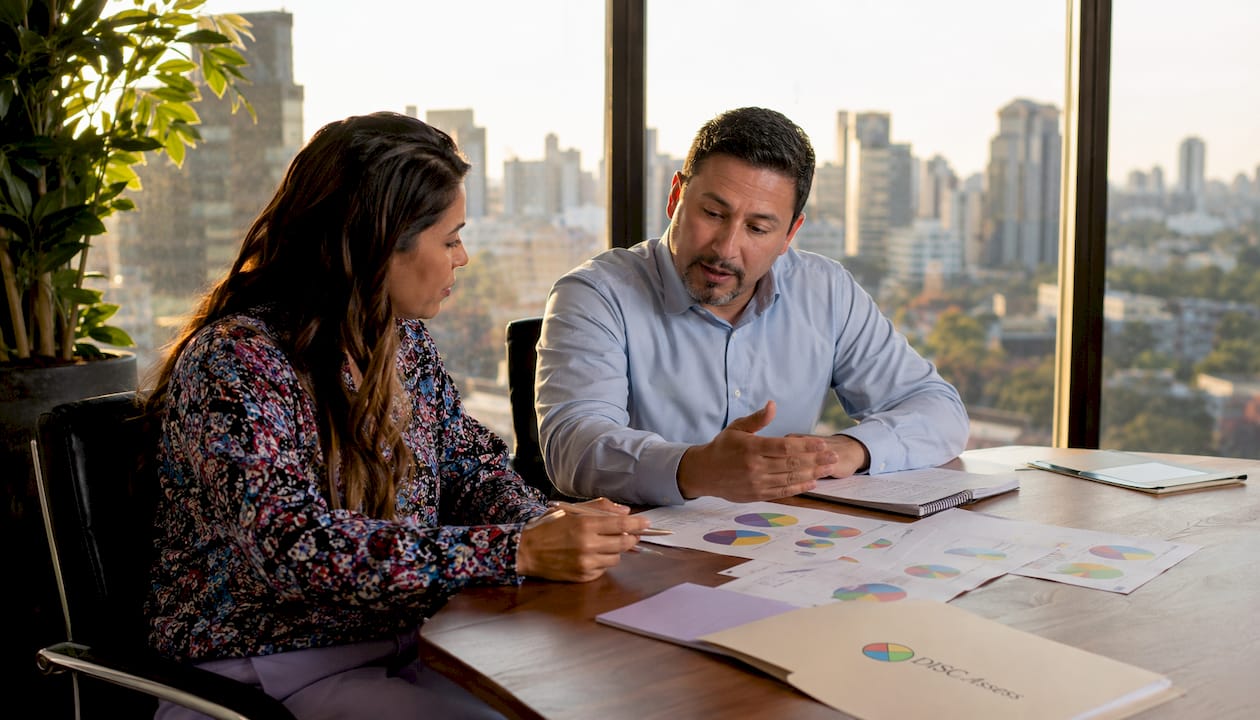
Discussion questions that open up real team conversations
The right questions do more than break the ice. They create the conditions for honest, productive dialogue about personality traits in teams. These questions work across DISC, MBTI, and Big Five frameworks, and you can adapt them to your team's context.
Questions about strengths and working styles:
- What part of your profile surprised you most, and do you think it shows up in how you work?
- Where do you feel most energized on a team project, and where do you tend to pull back?
- Which of your natural strengths do you think the team relies on most, even if it's never been said out loud?
Questions about communication preferences:
- How do you prefer to receive feedback, and does the team currently do that?
- When you're under pressure, how does your communication style shift, and how can teammates recognize that?
- What's one thing people often misread about you that your profile might explain?
Questions about collaboration and conflict:
- Where do you see the biggest personality gap on our team, and how does it show up in meetings?
- Think of a recent disagreement. Looking at your profiles now, what do you understand differently about what happened?
- What's one working norm you'd want us to adopt based on what we've learned about each other today?
Questions for building psychological safety:
- What would make it easier for you to speak up when you disagree?
- Is there a personality tendency in yourself that you'd like the team to give you grace on?
Pro Tip: Before opening the floor, remind participants that profile results describe tendencies, not fixed identities. Framing the discussion as "this is how I tend to show up" rather than "this is who I am" keeps the conversation curious and growth-oriented rather than defensive.
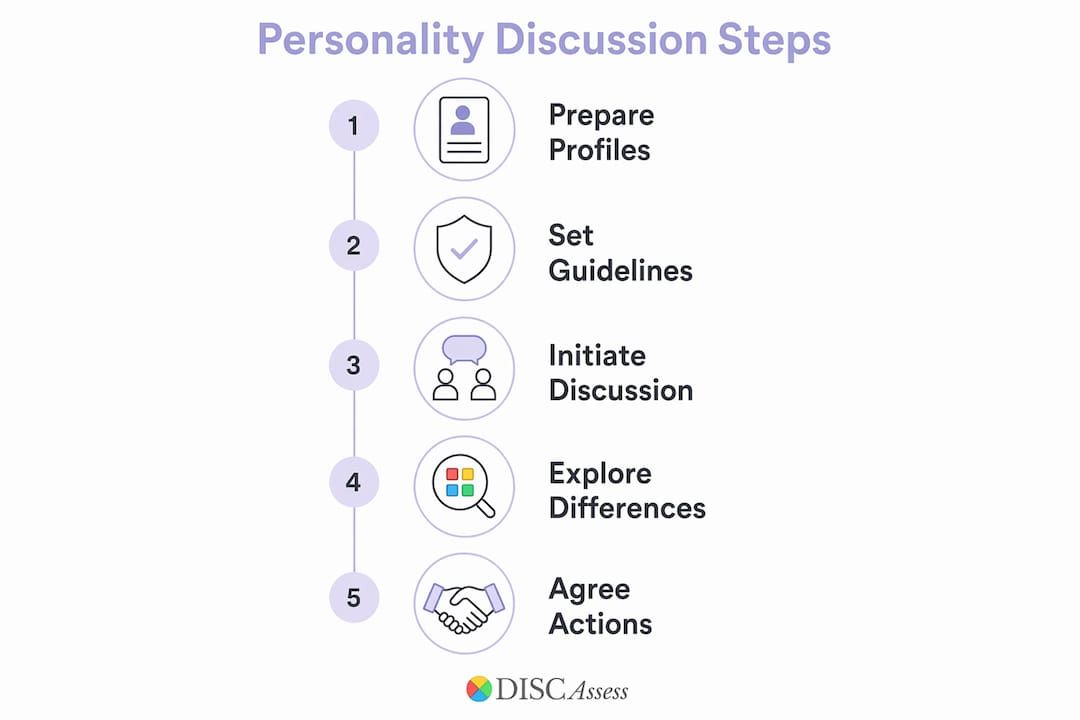
How personality tests actually improve team dynamics
Personality assessments improve team dynamics not by labeling people, but by making invisible patterns visible. When a team sees its collective behavioral styles laid out together, the conversation shifts from "why does she always do that?" to "oh, that's a natural difference in how we process decisions."
Here is what the research and practice consistently show:
- Trust deepens faster. Psychological safety is the strongest predictor of team effectiveness, and personality discussions create a structured, low-risk space to build it.
- Conflict becomes more productive. A team dynamics assessment that measures trust, clarity, conflict quality, and accountability together gives you the most useful diagnostic picture of where your team actually stands.
- Accountability improves. When team members understand each other's working styles, they set expectations that fit reality rather than assumptions.
- Communication gets clearer. Knowing that a colleague's DISC profile shows a high-C (Conscientious) tendency explains why they want more detail before deciding. You stop reading it as resistance and start giving them what they need.
- Blind spots surface. Group-level profiles often reveal that a team is collectively strong in one area, say, relationship-building, but thin in another, like analytical rigor. That gap is hard to see from inside the team without data.
Research on group personality composition shows that the minimum score of a trait across a group can predict team effectiveness as strongly as the average score. This "weakest link" effect means that one team member who struggles significantly with, say, openness or agreeableness can shape the whole group's outcomes. Knowing this helps you design support rather than assign blame.
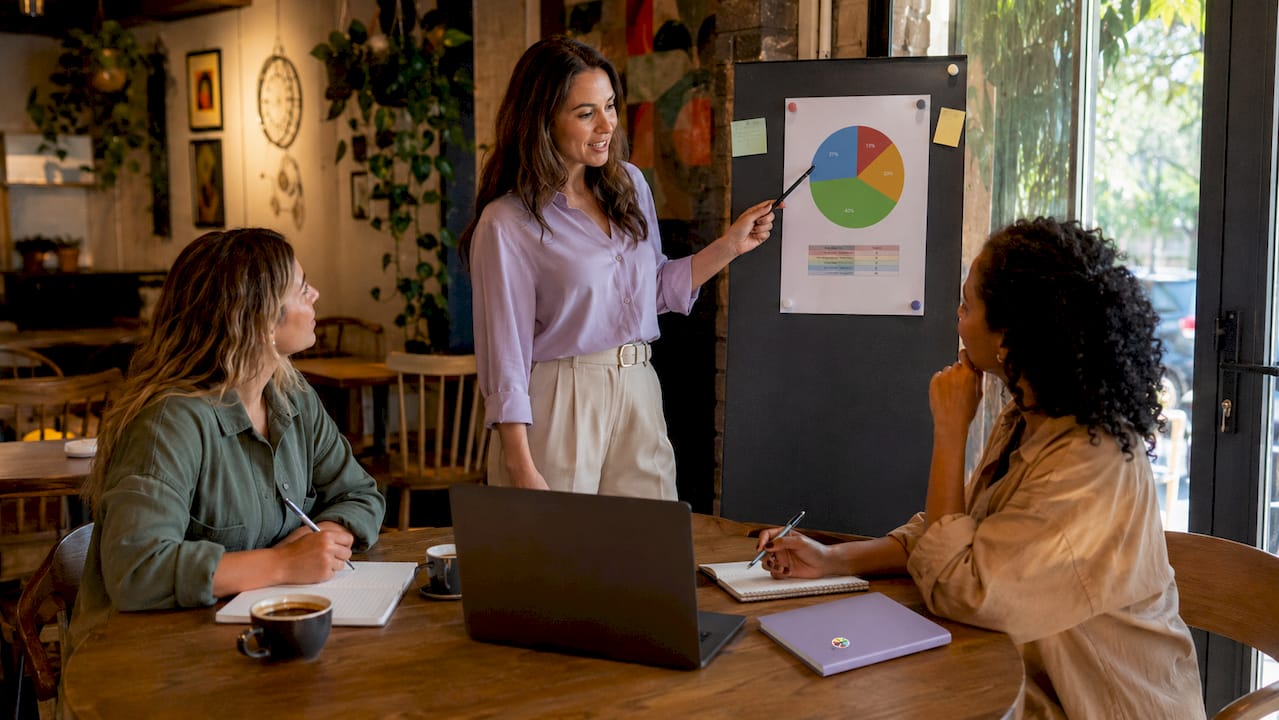
Practical tips for facilitating effective group discussions
Facilitation makes or breaks a personality profile session. The same data can produce either genuine insight or defensive posturing, depending entirely on how you run the room.
Before the session:
- Send profiles to participants at least 24 hours in advance so they arrive with questions, not just reactions.
- Set a clear purpose. Tell the team whether the goal is improving communication, preparing for a project, or working through a specific conflict.
- Establish ground rules: confidentiality, curiosity over judgment, and no using profiles to dismiss someone's concerns.
During the discussion:
- Avoid labeling individuals by their type. Role-based conversations work better: instead of "you're a high-D, so you're impatient," try "how can we design our decision process to work for people who move fast and people who need more time?"
- Use the MBTI's four cognitive functions (Sensing, Intuition, Thinking, Feeling) in sequence when working through a team problem. Start with facts, move to possibilities, then evaluate, then consider impact on people. This structured problem-solving approach keeps the discussion grounded.
- Watch for social desirability bias. People tend to rate their team more favorably in group settings. Build in moments for anonymous reflection or written responses before open discussion to surface more honest dynamics.
- Managers' behaviors heavily shape trust and conflict quality in these sessions. If you're the team leader, model vulnerability first.
After the session:
- Capture agreements in writing. A Team Charter built from the discussion gives the conversation a lasting home. Personality profile results are a starting point; the Team Charter is where shared insights become shared commitments.
- Schedule a follow-up check-in 30–60 days out to review whether the agreed norms are holding.
- Use a workplace relationships checklist to track progress on trust, communication, and accountability over time.
What the research says about group personality and team effectiveness
The science behind group personality composition has grown considerably, and the findings are worth knowing before you run your next session.
A 2026 analysis of group personality composition found that groups with similar levels of "agency" (a trait cluster covering assertiveness and dominance) are more prone to conflict. The implication is that maximizing individual strengths is not the goal. Balance across the team matters more.
Research highlight: A study of 94 small teams found that a consensus-based group assessment using Artificial Swarm Intelligence yielded a 91.8% higher correlation with performance metrics than traditional aggregated individual surveys, reaching consensus in an average of 18.8 seconds with full anonymity.
Additional findings worth building into your facilitation approach:
- Aggregate scores can mask individual variation. A team average on a Big Five trait like conscientiousness may look healthy while one member's score is pulling outcomes down. Exploring individual perspectives alongside group data helps you identify subgroups and unseen dynamics.
- Individual personality shapes how people perceive the group. A team member's own traits influence how they rate the team's collective characteristics, which means group profiles carry some perceptual bias. Facilitators should treat group scores as a starting point for conversation, not a verdict.
- Anonymity improves accuracy. Structured group discussions often fail because social influence silences quieter members or pushes conformity. Anonymous input tools, whether digital or written, consistently surface more honest data.
- Balanced trait composition reduces conflict. Teams that deliberately account for personality diversity in how they assign roles and structure decisions tend to experience less relationship conflict over time.
These findings point toward one clear practice: use personality data to design your team's processes, not to categorize your people. The effective communication strategies that stick are the ones built around how your specific team is actually wired.
How Discassess supports team personality profile discussions for small teams
Discassess is a Phoenix-based DISC assessment platform built specifically for small and medium teams, nonprofits, and individual leaders who want practical personality insights without the complexity of enterprise HR systems. It is backed by Prism Counseling & Coaching, with over a decade of applied experience in team development.
Where many personality profiling tools are designed for large corporations or require certified administrators, Discassess is built for accessibility. You do not need an HR background or a certification to run a meaningful group discussion with it.
Key features that support facilitated group discussions:
- Individual DISC assessments that are quick to complete and easy to interpret
- Group management tools that let you organize multiple team members under one account
- Detailed reports that translate DISC quadrant data into communication and collaboration insights
- Flexible purchasing options, including individual assessments, group packages, and unlimited memberships for ongoing team development
How Discassess compares to other common frameworks:
| Framework | Primary focus | Best for |
|---|---|---|
| DISC (Discassess) | Behavioral style and communication | Team communication and conflict resolution |
| MBTI | Cognitive preferences and decision-making | Understanding how people process information |
| Big Five | Broad personality trait measurement | Research and comprehensive trait profiling |
DISC is particularly well suited to team discussions because its four quadrants (Dominance, Influence, Steadiness, Conscientiousness) map directly to observable behaviors. When a team member sees their DISC profile, they can immediately connect it to how they show up in meetings, under pressure, and in conflict. That directness makes group conversations more grounded and less abstract.
For teams working through ongoing development, Discassess integrates naturally into staff meeting personality reviews and regular check-ins, not just one-time workshops. The platform's group resources also support nonprofit teams and volunteer organizations, where personality awareness can be especially valuable given the relational nature of the work.
Discassess makes group personality work accessible for your team
Most small teams do not need a consultant or a certification to run a meaningful personality profile discussion. They need clear data, a practical framework, and a tool that does not require a week of training to use.
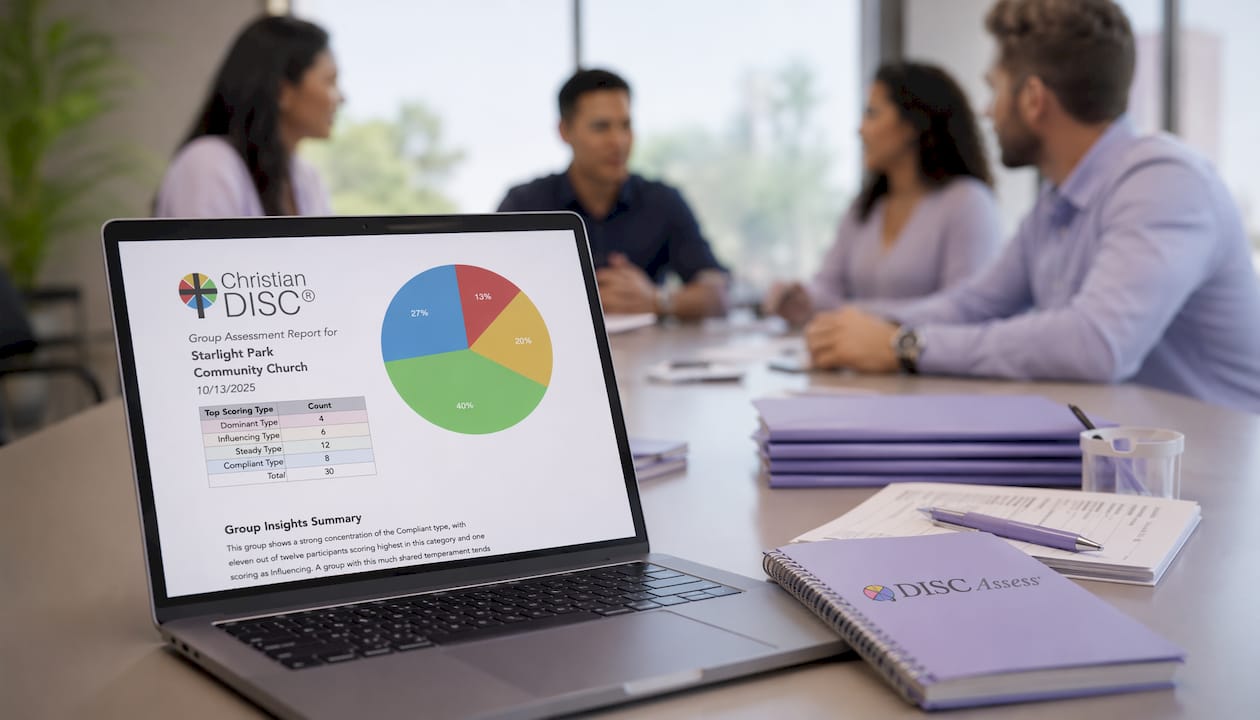
Discassess gives you all three. For a fraction of what enterprise platforms charge, you get individual DISC assessments, group management tools, and detailed reports your team can actually discuss in a meeting. The platform is designed for leaders who want to improve communication and cohesion without adding complexity to their workflow. Whether you are leading a five-person nonprofit team or a growing small business, Discassess fits where you are.
The custom group report takes the individual results and builds a team-level picture, complete with video analysis, so your group discussion starts with something concrete rather than a stack of individual PDFs. That group-level view is where the real insights live.
Ready to run your first team personality profile group discussion? Start with a group assessment at Discassess and give your team the shared language it needs to work better together.
Key Takeaways
A team personality profile group discussion produces lasting change only when it ends with concrete agreements, not just awareness.
| Point | Details |
|---|---|
| Balance over maximization | Groups with similar agency levels are more prone to conflict; aim for trait balance across the team. |
| Weakest-link effect | Minimum trait scores across a group are as predictive of team effectiveness as average scores, according to research. |
| Anonymity improves honesty | Anonymous input before open discussion surfaces more accurate group dynamics than open polling alone. |
| Charter as output | Every profile discussion should end with a Team Charter or written norms, not just conversation. |
| Discassess for small teams | Discassess offers group DISC assessments, detailed reports, and a custom group report with video analysis for teams that want practical, affordable profiling. |