

A staff meeting team personality review is a structured process of assessing team members' personality traits within regular meeting cycles to improve communication, reduce conflict, and strengthen collaboration. The industry term for this practice is team personality assessment, and the two most widely used frameworks are the DISC model and the Big Five personality dimensions. Both give teams a shared language for discussing work habits, communication styles, and behavioral tendencies. When you embed this process into your meeting rhythm rather than treating it as a one-time event, the results compound over time.
What does a staff meeting team personality review require to prepare?
Preparation determines whether a personality review produces lasting change or gets forgotten by the following week. Three decisions matter most: timing, tool selection, and psychological safety.
Frequency and timing shape everything. Experts recommend quarterly personality reviews to maintain team alignment and catch new gaps before they become conflicts. Quarterly reviews also give teams enough time to act on findings before the next cycle begins.
Tool selection is your next decision. You have several categories to choose from:
- Structured assessments like DISC or the Big Five provide detailed behavioral profiles and work well for team-wide reviews.
- Pulse surveys with 3–5 questions collect real-time meeting feedback. Sending surveys within 30 minutes of a meeting increases participation by 85%.
- Anonymous formats protect honesty. Anonymous pulse surveys reduce feedback filtering, especially when leadership roles might bias responses.
Psychological safety is the foundation that makes the other two work. Without it, team members give safe answers instead of honest ones. The table below shows how to build that safety before assessments begin.
| Preparation Step | What It Looks Like in Practice |
|---|---|
| Communicate the purpose | Tell the team the goal is better collaboration, not performance evaluation. |
| Guarantee anonymity | Use survey tools that hide individual responses from managers. |
| Share results collectively | Present findings as team patterns, not individual scorecards. |
| Set behavioral norms | Agree on how personality data will and will not be used. |
Pro Tip: Run a short work habits exercise before any formal assessment. Ask each person to describe how they prefer to receive feedback and how they respond under pressure. This surfaces behavioral patterns without the weight of a formal label.

How do you conduct a team personality review step by step?
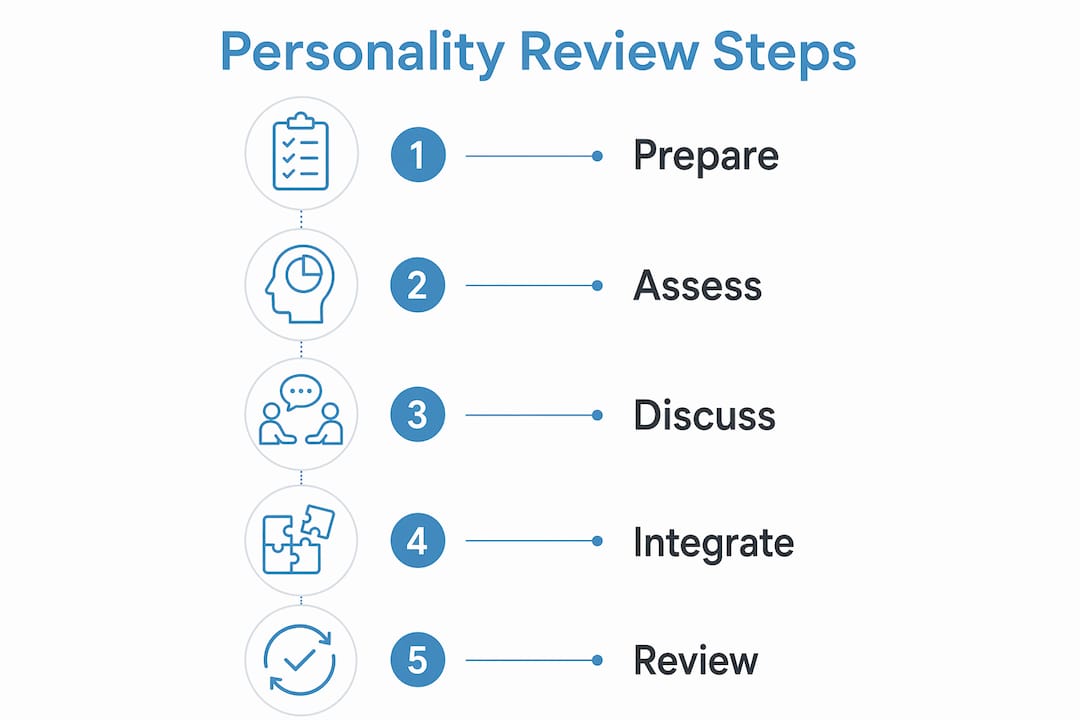
A well-run review follows five clear phases. Skipping any phase reduces the quality of the output.
-
Run a pre-workshop exercise. Before distributing any assessment, ask team members to reflect on their own work habits and stress responses. Pre-workshop exercises focused on behaviors reduce resistance and stigma around personality discussion. This step builds the shared language you need for honest conversation.
-
Administer the personality assessment. Distribute the chosen tool, whether DISC or another validated framework, with clear instructions and a firm deadline. Confirm that results go to a neutral facilitator first, not directly to the team manager.
-
Collect pulse survey feedback immediately after each meeting. Use 3–5 questions and send them within 30 minutes of the meeting closing. Pulse surveys completed within 1–2 hours of a meeting achieve response rates above 70%. That data becomes the behavioral evidence you compare against personality profiles.
-
Analyze self-versus-peer divergences. A divergence above 0.8 standard deviations between self-assessment and peer assessment signals a blind spot that needs direct attention. These gaps are the most valuable output of the entire process because they reveal what a person cannot see about their own impact on the team.
-
Facilitate a structured discussion. Map personality insights to specific meeting behaviors rather than abstract traits. If a team member scores high on Dominance in DISC, connect that to concrete patterns like interrupting others or pushing decisions before the group is ready. Focus on norms and practices, not character judgments.
Pro Tip: Assign a rotating facilitator role for personality review discussions. When the team leader steps back, team members speak more candidly about how meeting dynamics actually feel.
Learning how to use DISC with employees gives you a practical starting point for structuring each of these phases.
What are the most common mistakes in team personality reviews?
The single biggest mistake is treating the review as a one-time workshop. Treating personality reviews as isolated events rather than embedding them into daily workflows leads to failure. The insights fade, the shared language disappears, and the team reverts to old patterns within weeks.
Four other mistakes appear consistently across teams:
- Letting one voice dominate. Avoid letting one dominant team member monopolize personality discussions. Focus on team practices and meeting norms instead of individual labels. A structured agenda with timed speaking slots prevents this.
- Ignoring the feedback loop. Closing the feedback loop by sharing results and linking visible changes to team input is the primary driver of sustained participation. When people see nothing change, they stop responding to surveys.
- Survey fatigue. Long surveys kill participation. Keep pulse surveys to 3–5 questions and rotate the question set quarterly so responses stay fresh.
- Misapplying personality labels. Personality frameworks describe tendencies, not fixed identities. Using a DISC type as an excuse for poor behavior ("That's just how I am") shuts down growth. Redirect every conversation toward observable habits and team agreements.
"Most workplace conflict arises from misinterpreted intent rather than actual disagreements. Mapping personality traits to meeting behavior reduces such conflicts by setting team agreements." — Work Personality Types research
Understanding when DISC is not the right fit helps you avoid forcing a framework onto a team that needs a different approach.
How do you integrate personality review results into daily meetings?
Personality data loses its value the moment it sits in a report no one reads. Integration means building what you learned into the structure of every meeting going forward.
-
Create team communication agreements. After the first review cycle, draft a one-page document that captures how the team agrees to communicate, give feedback, and handle disagreement. Reference it at the start of each meeting until the norms become habit.
-
Adjust meeting formats for different personality styles. Introverts process information before speaking; extroverts think out loud. Send agendas 24 hours in advance so reflective team members can prepare. Build in brief written reflection time before open discussion.
-
Use personality profiles to clarify roles. Assign meeting roles, such as timekeeper, note-taker, and devil's advocate, based on personality strengths. A team member with high Conscientiousness in DISC naturally excels at tracking decisions and action items.
-
Embed profiles into project formation. When building a new project team, reference personality profiles alongside skills. A team with no high-Steadiness members will struggle with follow-through; a team with no high-Dominance members may avoid necessary decisions.
-
Schedule reviews around team changes. Any time a new member joins, a role shifts, or a major project ends, run a brief personality dynamics check. Team composition changes alter the group's behavioral patterns in ways that a static profile cannot capture.
| Integration Practice | Benefit |
|---|---|
| 24-hour advance agendas | Gives introverts time to prepare, improving meeting contribution quality. |
| Role assignments by profile | Matches natural strengths to meeting functions, reducing friction. |
| Quarterly review cycles | Catches new behavioral gaps before they become team conflicts. |
| Profile-informed project teams | Balances behavioral tendencies across task types and timelines. |
Pro Tip: Keep printable personality profiles accessible during project kickoff meetings. A quick visual reference reminds the team of each person's communication preferences without requiring a full review session.
Group personality analysis resources offer additional frameworks for embedding these practices into your team's regular workflow.
Why ongoing personality reviews matter more than you think
I have worked with enough teams to say this plainly: the one-time personality workshop is almost always a waste of time. Teams leave energized, post their DISC types on a whiteboard, and then nothing changes. The whiteboard fades. The insight fades with it.
What actually works is treating personality data the way a good coach treats game film. You review it regularly, you look for patterns, and you adjust. The teams I have seen grow the most are the ones where the leader models vulnerability first. When a team leader says, "My high-Dominance style probably cut that conversation short last week, and I want to do better," the whole team's willingness to engage with personality feedback shifts.
The other thing I have learned is that the shared language matters more than the framework itself. Whether you use DISC, the Big Five, or another validated tool, the goal is giving people words for what they already experience but cannot name. Once a team can say, "I think we have a blind spot around Steadiness," they can actually do something about it. Without that language, the problem stays invisible.
Psychological safety is not a soft concept. It is the precondition for honest feedback, and honest feedback is the only kind that produces change. Leaders who protect that safety, by keeping results confidential, by focusing on behaviors rather than labels, and by acting on what they hear, build teams that keep growing.
— Tres
Discassess makes team personality reviews practical and affordable
Running a consistent team personality assessment does not require a large HR budget or a certified consultant.
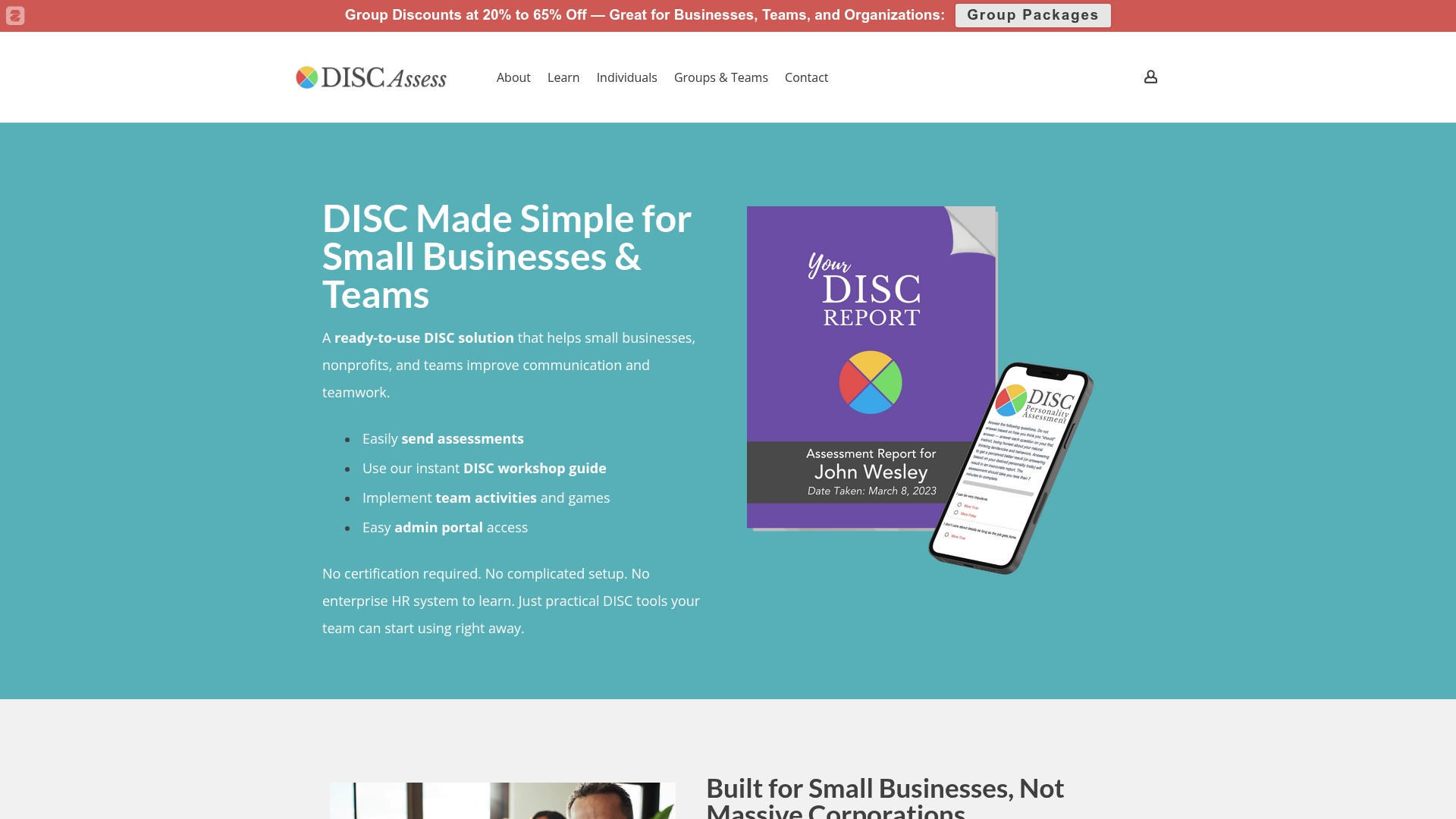
Discassess is a Phoenix-based DISC assessment platform built specifically for small businesses, nonprofits, and leadership teams. It offers individual assessments, group assessment packages, and an admin portal that lets you manage your entire team's results in one place. The platform is designed for team leaders who want professional-grade personality insights without the complexity of enterprise software. You can explore the admin demo to see how the group management features support the quarterly review cycle described throughout this guide. Discassess also provides detailed reports and practical resources that connect directly to meeting behavior and team communication, giving you everything you need to run a review that actually sticks.
Key takeaways
A staff meeting team personality review works when it is embedded into your regular meeting cycle, not treated as a one-time event.
| Point | Details |
|---|---|
| Use quarterly review cycles | Quarterly assessments maintain alignment and surface new behavioral gaps before they escalate. |
| Send pulse surveys within 30 minutes | Response rates exceed 70% when surveys go out immediately after a meeting closes. |
| Analyze self-versus-peer gaps | A divergence above 0.8 standard deviations signals a blind spot that needs direct team attention. |
| Close the feedback loop | Sharing results and linking changes to input is the primary driver of sustained team participation. |
| Integrate into meeting structure | Adjusting agendas, roles, and communication norms based on profiles turns data into lasting behavior change. |
Perspective: what I have learned from running team personality reviews
I have worked with enough teams to say this plainly: the one-time personality workshop is almost always a waste of time. Teams leave energized, post their DISC types on a whiteboard, and then nothing changes. The whiteboard fades. The insight fades with it.
What actually works is treating personality data the way a good coach treats game film. You review it regularly, you look for patterns, and you adjust. The teams I have seen grow the most are the ones where the leader models vulnerability first. When a team leader says, "My high-Dominance style probably cut that conversation short last week, and I want to do better," the whole team's willingness to engage with personality feedback shifts.
The other thing I have learned is that the shared language matters more than the framework itself. Whether you use DISC, the Big Five, or another validated tool, the goal is giving people words for what they already experience but cannot name. Once a team can say, "I think we have a blind spot around Steadiness," they can actually do something about it. Without that language, the problem stays invisible.
Psychological safety is not a soft concept. It is the precondition for honest feedback, and honest feedback is the only kind that produces change. Leaders who protect that safety, by keeping results confidential, by focusing on behaviors rather than labels, and by acting on what they hear, build teams that keep growing.
— Tres
FAQ
What is a staff meeting team personality review?
A staff meeting team personality review is a structured process of assessing team members' behavioral tendencies using validated frameworks like DISC or the Big Five, then applying those insights to improve meeting communication and team dynamics.
How often should teams conduct a personality review?
Experts recommend quarterly personality reviews to maintain alignment and address new behavioral gaps as teams evolve.
What type of survey works best for meeting feedback?
Anonymous pulse surveys with 3–5 questions sent within 30 minutes of a meeting consistently produce the highest response rates and the most honest feedback.
How do you prevent personality labels from causing conflict?
Focus every discussion on observable work habits and team agreements rather than fixed personality types. Avoiding personality theorizing in favor of documented behaviors keeps conversations productive and prevents misapplication of personality frameworks.
Can small teams benefit from personality reviews?
Small teams benefit most from personality reviews because every individual's behavioral style has a direct and visible impact on group dynamics. Tools like Discassess are built specifically for small teams and offer group assessment options that scale to any team size.
Recommended
- When the DISC is not the Right Fit: Understanding the Limitations of This Personality Assessment - DISC Assess | Affordable, Professional DISC Assessments for Small Businesses
- How to Use the DISC Personality Assessment with Employees - DISC Assess | Affordable, Professional DISC Assessments for Small Businesses
- DISC Personality Assessment | Prism Counseling & Coaching - DISC Assess | Affordable, Professional DISC Assessments for Small Businesses
- DISC Assess | Affordable, Professional DISC Assessments for Small Businesses - All Articles