

How to reduce workplace conflict in a small team
The most effective way to reduce workplace conflict in a small team is to address the structural conditions that create it, not just the personalities involved. Most disputes trace back to unclear role ownership, mismatched communication expectations, or gaps in how decisions get made. Fix those gaps, and you remove the fuel before a spark ever appears.
Start with these core tactics:
- Define role ownership clearly. Every recurring task and decision should have one named owner. Ambiguity about who decides what is one of the most common conflict triggers in small teams.
- Set communication norms explicitly. Agree as a team on which channels handle which types of messages, and when a conversation needs to move from chat to a call.
- Hold brief, regular one-on-ones. Weekly check-ins give team members a private space to surface frustrations before they harden into grievances.
- Practice active listening in every difficult conversation. Paraphrase what you hear, confirm understanding, and resist the urge to respond before the other person feels heard.
- Mediate early and privately. A quiet conversation between two people at the first sign of tension is far easier than a formal intervention after weeks of avoidance.
When conflict does surface, your role as a manager is to act as a neutral facilitator, not a judge. Your goal is to guide both parties toward uncovering their own underlying interests, which lowers defensiveness and opens the door to real conflict resolution that preserves the relationship.
Pro Tip: When a dispute feels personal, ask yourself whether a system gap is the real culprit. Shifting the question from "who is at fault?" to "what process broke down?" changes the entire conversation from blame to problem-solving.
What causes conflict in small teams, and how do you spot it early?
Most workplace conflict in small teams is structural, not personality-driven. That distinction matters because it changes where you look for solutions. Unclear role definitions, overlapping responsibilities, and unspoken communication norms create the conditions for friction long before any two people actually clash.
Common structural causes include:
- Overlapping or undefined responsibilities between team members
- No agreed process for making decisions or escalating problems
- Inconsistent expectations about response times and availability
- Rapid team growth without updated role documentation
Interpersonal triggers tend to layer on top of those structural gaps. Work style differences, perceived favoritism, and power struggles over informal authority all become more volatile when the underlying structure is already unclear.
Early warning signs managers should watch for:
- Missed deadlines that were previously reliable
- A team member going quiet in meetings or withdrawing from group channels
- Side conversations replacing open team discussions
- Passive-aggressive language in written messages
- Increased requests to work independently rather than collaboratively
Catching these signals early gives you the chance to have a calm, private conversation rather than a crisis intervention. The goal is to address the behavior and the system gap together, not to assign blame.
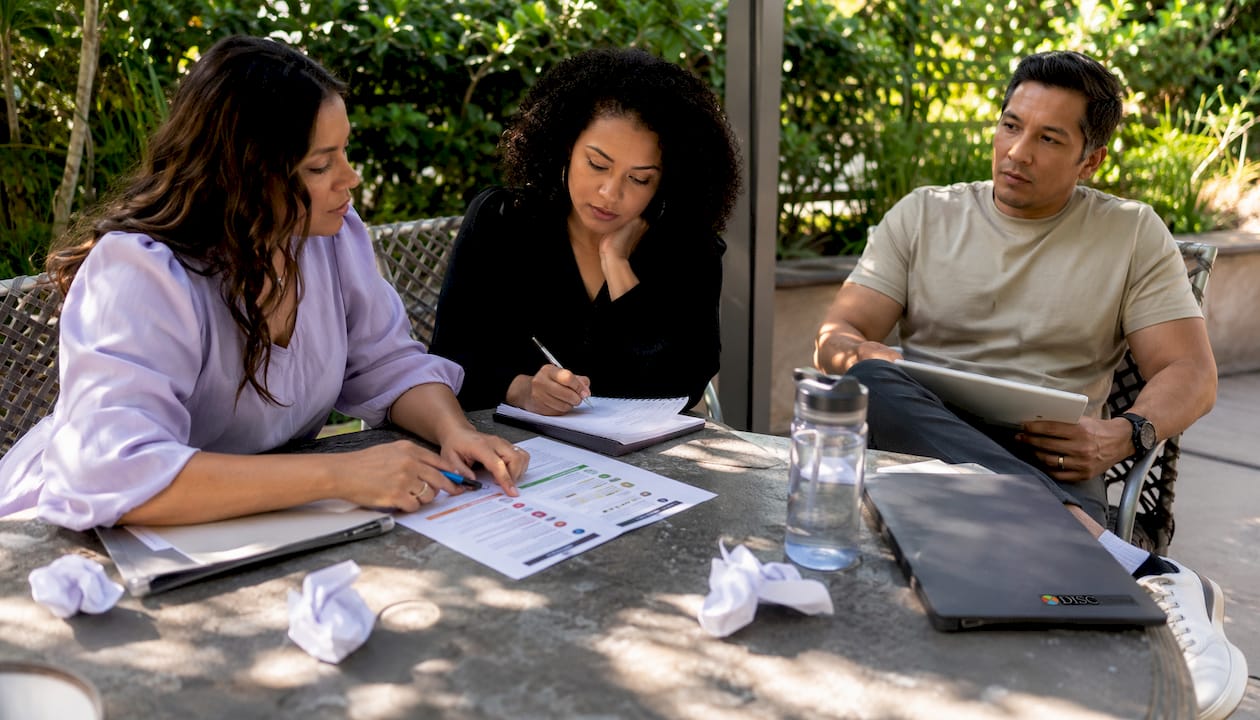
Essential conflict resolution skills every manager needs
Managers often spend significant time each week managing workplace disputes. That number reflects how much time gets consumed when conflict resolution skills are underdeveloped. The good news is that these skills are learnable, and even modest improvement pays off quickly in a small team.
The skills that matter most:
- Active listening. Paraphrase what each party says before responding. Confirming understanding before offering a solution prevents the most common mediation failure: people feeling unheard.
- Impartial facilitation. Your job is to ask questions, not to deliver verdicts. Avoid signaling agreement with one side through body language or tone.
- Emotional regulation. Staying calm when a conversation gets heated is itself a de-escalation tool. Your composure sets the ceiling for how tense the room gets.
- Interest-based questioning. Ask "what outcome matters most to you here?" rather than "who started this?" Uncovering interests beneath stated positions is the core of effective mediation practice.
- Conflict style awareness. Knowing your own default conflict style, and recognizing others', helps you adapt your approach rather than defaulting to whatever feels most comfortable.
Understanding communication style differences across your team is one of the fastest ways to sharpen these skills. When you know how each person processes disagreement, you can tailor your facilitation to actually reach them.
Top conflict resolution strategies and prevention techniques
Prevention is almost always cheaper than resolution. Investing 1–2 hours per role in documenting clear decision ownership prevents far more time spent in future mediation. That math alone makes preventive documentation one of the highest-return activities a small team leader can prioritize.
Preventive documentation to put in place:
- Written role definitions with explicit decision rights
- A team communication charter covering channel use, response time expectations, and meeting norms
- A simple organizational chart showing reporting lines and escalation paths
- An onboarding checklist that introduces new members to all of the above on day one
When conflict does require mediation, a structured process works far better than an improvised conversation, as explained in the overview of mediator-facilitated conflict resolution tailored for small nonprofit teams. Structured workplace mediation typically requires 4–6 hours of mediator time spread over 2–4 weeks, covering separate initial meetings, a joint session, and a documented follow-up. For a small team, you can adapt that process without a professional mediator by following these steps:
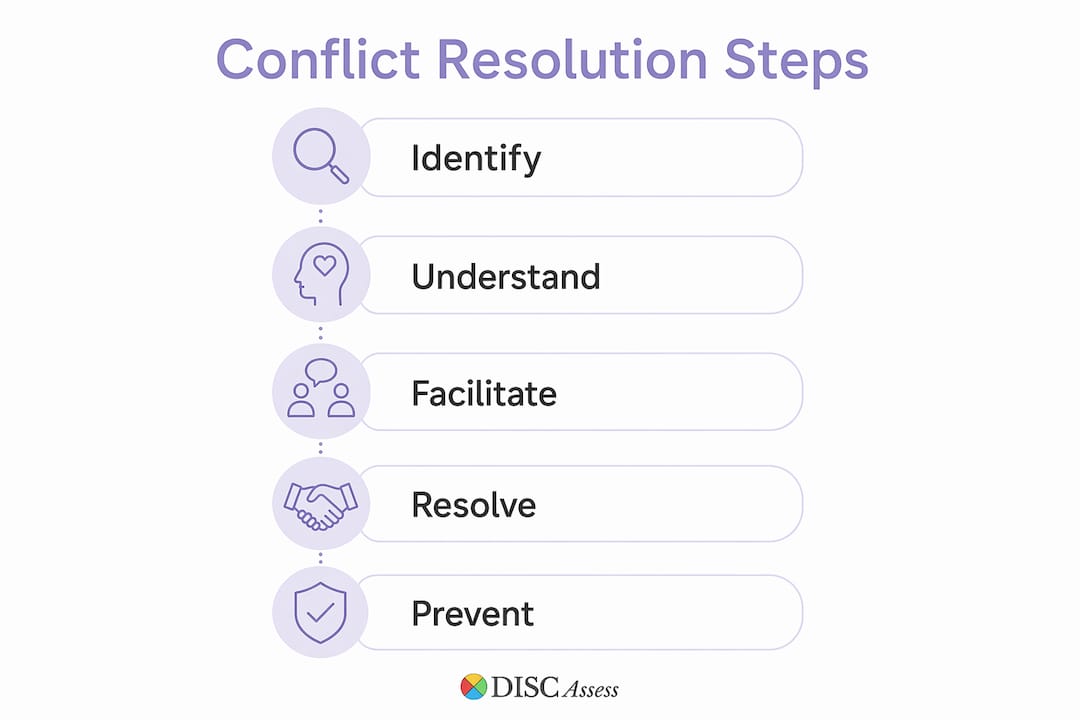
- Meet with each party separately to understand their perspective.
- Identify the shared interest or goal both parties care about.
- Bring both parties together in a neutral setting.
- Facilitate a conversation focused on behavior and impact, not intent or character.
- Agree on specific, observable changes each person will make.
- Document the agreement in writing.
- Schedule a follow-up check-in within two weeks.
Pro Tip: Never attempt to resolve a conflict over text, Slack, or email. Text-based channels strip out tone and body language, which increases misreading and avoidance. Move the conversation to a video call or, whenever possible, an in-person meeting.
Managing conflict in remote and hybrid team environments
Remote and hybrid settings amplify the communication pitfalls that already exist in small teams. A message that reads as curt in Slack might have been perfectly neutral in person. Without shared physical space, team members lose the informal cues that smooth over minor friction before it compounds.
Practical steps for remote conflict management:
- Shift conflict conversations off text immediately. When you sense tension in a written thread, move to a video call before the exchange escalates. Tone of voice and facial expression do more to de-escalate than any carefully worded message.
- Establish explicit async norms. Define what "urgent" means, what warrants a direct message versus an email, and what can wait for a scheduled meeting. Ambiguity in async communication is a direct conflict risk.
- Build in regular connection time. Remote teams that only interact around tasks lose the relational context that makes conflict easier to navigate. Brief, informal video check-ins build the goodwill that buffers friction.
- Trust your team visibly. Micromanaging remote workers damages morale and creates resentment. Focus on outcomes and workload conversations rather than monitoring activity.
- Provide a cooling-off period when things heat up. When a conflict surfaces remotely, allow a short period of reflection before convening a resolution conversation. Send written questions each party can consider beforehand, then meet to discuss.
For teams that include both remote and in-office members, pay particular attention to proximity bias. In-office members often have informal access to the manager that remote members lack, and that imbalance breeds resentment. Consistent one-on-ones with every team member, regardless of location, help level that playing field. Reviewing your workplace relationships checklist is a good starting point for identifying where those gaps already exist.
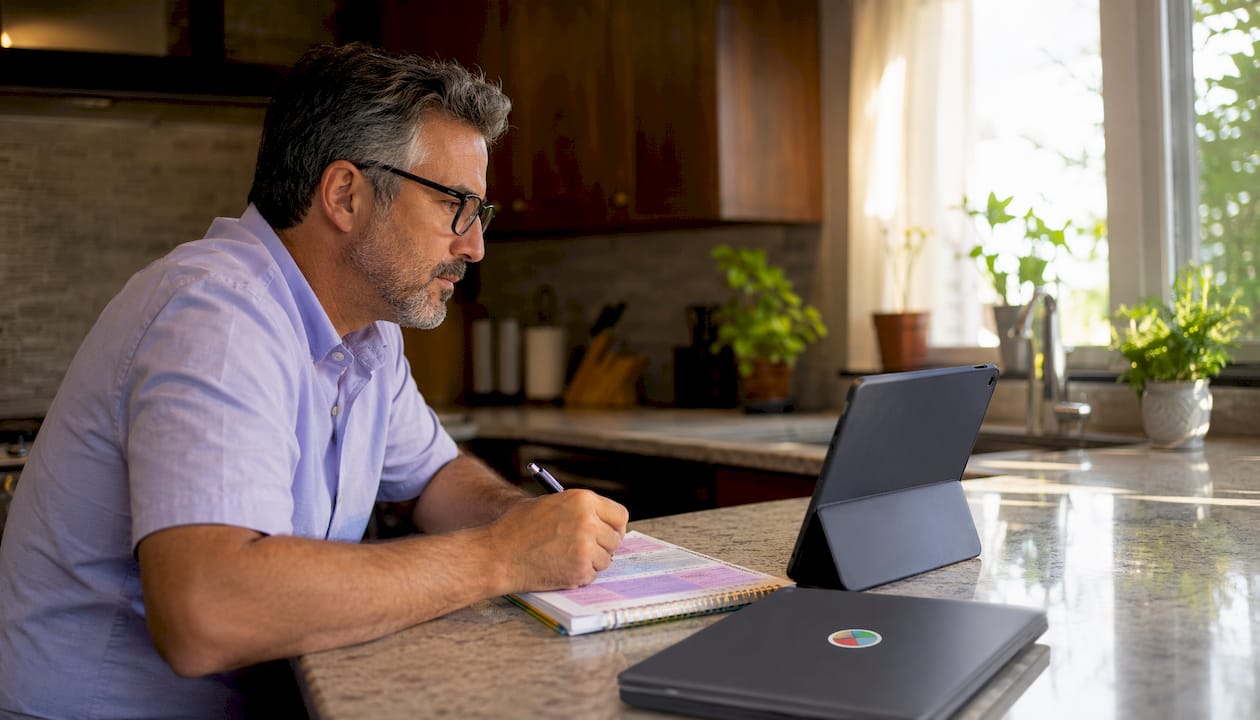
Research-backed conflict styles and frameworks for small teams
Understanding conflict styles gives you a map for why people respond to disagreement the way they do. The five main styles, drawn from the Thomas-Kilmann model, are competing, accommodating, avoiding, compromising, and collaborating. Each has a place, but they are not equally effective for building lasting team health.
| Conflict Style | Typical Use Case | Impact on Relationships |
|---|---|---|
| Competing | Urgent decisions with clear stakes | Damages trust if overused |
| Accommodating | De-escalating with a supervisor | Builds goodwill short-term |
| Avoiding | Trivial issues or volatile moments | Creates unresolved tension over time |
| Compromising | Minor disputes needing quick resolution | Neutral; neither party fully satisfied |
| Collaborating | Complex issues where the relationship matters | Builds durable agreements and trust |
The collaborating style is generally the most effective for sustainable small team relationships because it focuses on interests rather than positions. It takes more time upfront, but the agreements it produces tend to hold.
A useful framework for small teams is the Friction Field Map: a simple exercise where the team maps recurring friction points against the processes or role boundaries involved. When team members can see that a conflict traces to a process gap rather than a personality flaw, the conversation shifts from defensive to constructive.
Pro Tip: Before any joint mediation session, hold individual discovery meetings with each party. Individual meetings reduce performative defensiveness and let you focus the joint conversation on behavior and impact rather than character and intent.
Understanding each team member's natural tendencies, including how they process conflict, is where tools like a DISC assessment become genuinely useful. Knowing whether someone defaults to a competing or accommodating style helps you anticipate how they will respond under pressure and adapt your facilitation accordingly. You can explore DISC for workplace teams as a practical starting point for building that awareness across your team.
How team-building activities prevent conflict before it starts
Team-building activities do more than boost morale. They build the relational foundation that makes conflict easier to navigate when it does arise. Teams that have shared experiences and genuine mutual understanding tend to extend more good faith when disagreements surface.
The most effective team-building for conflict prevention focuses on communication and self-awareness rather than generic fun. Activities that help team members understand each other's work styles, communication preferences, and stress responses create practical insight that carries into daily interactions. A personality awareness session using DISC profiles, for example, gives team members a shared language for discussing differences without it feeling personal.
Structured reflection exercises, such as a team retrospective after a difficult project, also serve a preventive function. They normalize the practice of naming what went wrong and what could improve, which reduces the likelihood that frustrations accumulate silently. Pair those retrospectives with staff communication strategies tailored to your team's size and you create a feedback loop that catches friction early.
How do you measure whether conflict resolution is actually working?
Measuring the impact of conflict resolution on team morale and productivity does not require a formal survey, though those help. You can track meaningful indicators with tools you already have.
Qualitative signals to monitor:
- Participation levels in team meetings (are quieter members re-engaging?)
- Tone and frequency of peer-to-peer communication
- Whether team members raise concerns directly rather than through side channels
Quantitative indicators:
- Absenteeism and turnover rates over a rolling quarter
- On-time project delivery rates before and after a mediation intervention
- Manager time spent on dispute-related conversations (the four-plus hours per week benchmark is a useful baseline to measure against)
The most telling sign that conflict resolution is working is not the absence of disagreement. It is the presence of productive disagreement: team members who can challenge ideas, name problems, and work through differences without the conversation becoming personal. That shift, from avoidance to honest engagement, is what effective conflict management actually looks like in practice.
Discassess can help your team build lasting harmony
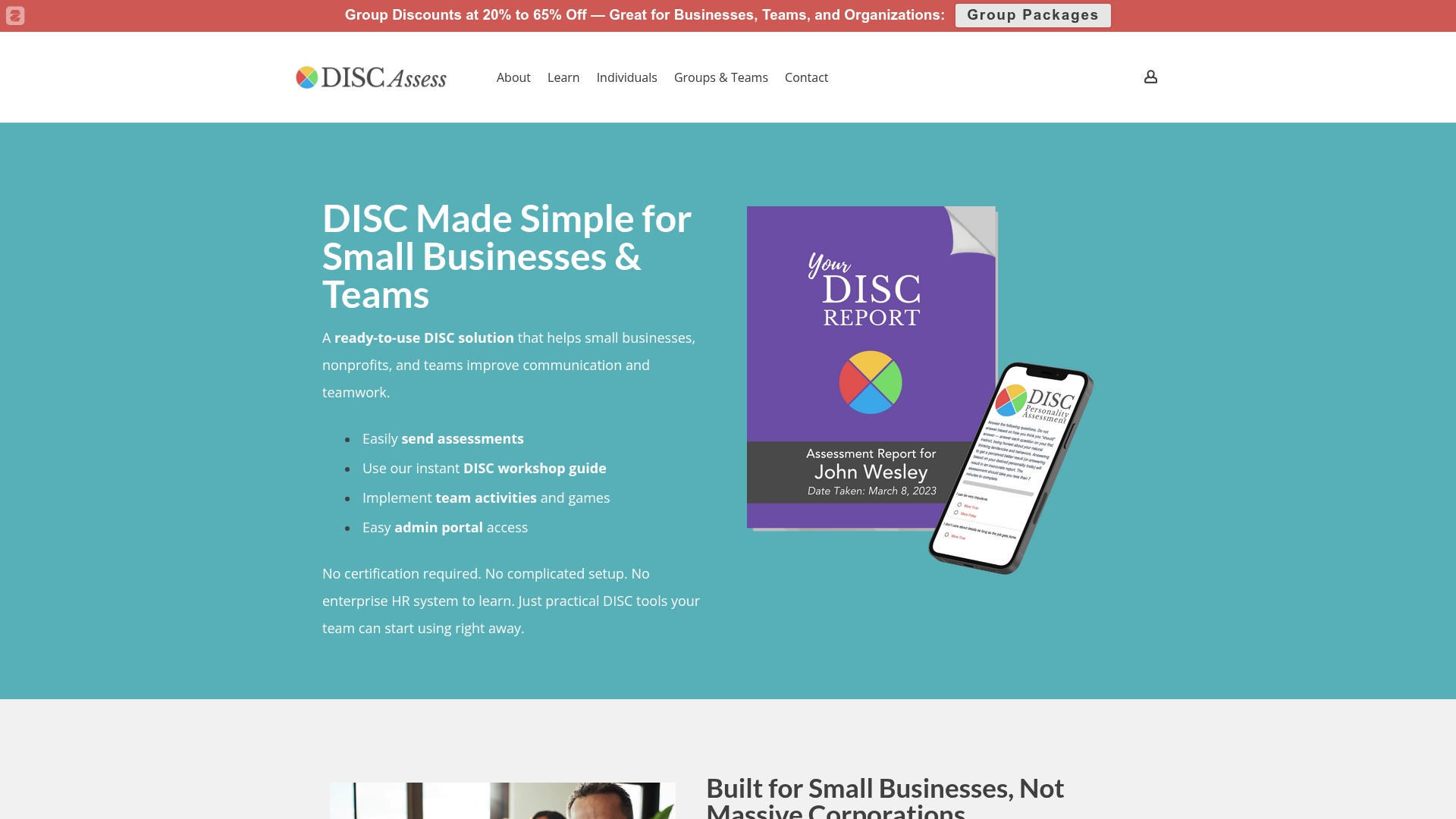
Understanding your team's communication styles and conflict tendencies is the foundation of everything covered in this guide. Discassess makes that understanding accessible for small teams without the complexity or cost of enterprise HR platforms. Through the DISC Group Package, your team receives individual assessments and detailed reports that reveal how each person processes conflict, communicates under pressure, and responds to feedback.
For teams that want a faith-integrated approach, the Christian DISC® Admin Account brings those same practical insights into a framework grounded in character and growth. Backed by Prism Counseling & Coaching with over a decade of experience, Discassess is built specifically for small teams, nonprofits, and leaders who want real results without a steep learning curve.
Key Takeaways
Most workplace conflict in small teams is structural, not personal, and the most durable resolution comes from fixing the system gaps that create it in the first place.
| Point | Details |
|---|---|
| Structural causes dominate | Most small team conflict traces to unclear roles and communication norms, not personality clashes. |
| Prevention beats mediation | Spending 1–2 hours per role on clear documentation prevents far more time in future dispute resolution. |
| Collaboration style wins long-term | The collaborating conflict style builds the most durable agreements and protects team relationships. |
| Mediation takes real time | Structured workplace mediation typically requires 4–6 hours of mediator time over 2–4 weeks. |
| Measure what shifts | Track manager dispute time, meeting participation, and delivery rates to gauge whether resolution efforts are working. |