

Communication style assessment coaching is the process of diagnosing behavioral communication patterns and applying targeted coaching to improve how leaders interact with their teams. Unlike personality tests, this approach maps specific behaviors like clarity, confidence, and how a leader responds under pressure. Typical assessments cover about 38 items and take just 7 minutes to complete, with coaching programs running 8–12 weeks to produce lasting behavior change. For managers who want real results, not just self-awareness, the role of communication style assessment coaching is to turn data into daily practice.
What are the core communication styles and behavioral dimensions assessed in coaching?
Workplace communication falls into four core styles: passive, assertive, aggressive, and passive-aggressive. Each style shapes how a leader delivers feedback, runs meetings, and handles conflict. Knowing which style dominates your default behavior is the starting point for any meaningful coaching work.
Beyond style labels, effective coaching focuses on four behavioral dimensions: Clarity, Confidence, Conciseness, and Connection. These dimensions reduce subjectivity because they describe what a person actually does, not who they are. A leader can be naturally introverted and still score high on Clarity if they structure messages well.

| Communication style | Key characteristic | Common leadership risk |
|---|---|---|
| Passive | Avoids conflict, defers to others | Messages get lost; team lacks direction |
| Assertive | Direct, confident, open to feedback | Most effective default; still needs calibration |
| Aggressive | Dominates conversation, dismisses input | Erodes trust and psychological safety |
| Passive-aggressive | Indirect resistance, surface compliance | Creates confusion and hidden resentment |
Communication assessments map specific behaviors, not broad personality categories. That distinction matters because behaviors are changeable. A personality label like "introvert" tells a coach very little about how someone asks questions under deadline pressure. A behavioral score on Conciseness tells a coach exactly where to focus the next session.
This behavioral focus is what separates communication style evaluation from a standard Myers-Briggs or Enneagram exercise. Managers who understand this distinction get far more from their coaching investment.
How does communication style assessment coaching drive measurable changes?
The link between assessment data and real behavior change depends on how coaching sessions are structured. Effective coaching connects assessments to real-world tasks like board updates, stakeholder calls, or difficult one-on-one conversations. That connection creates accountability because the leader practices new behaviors in situations that actually matter.
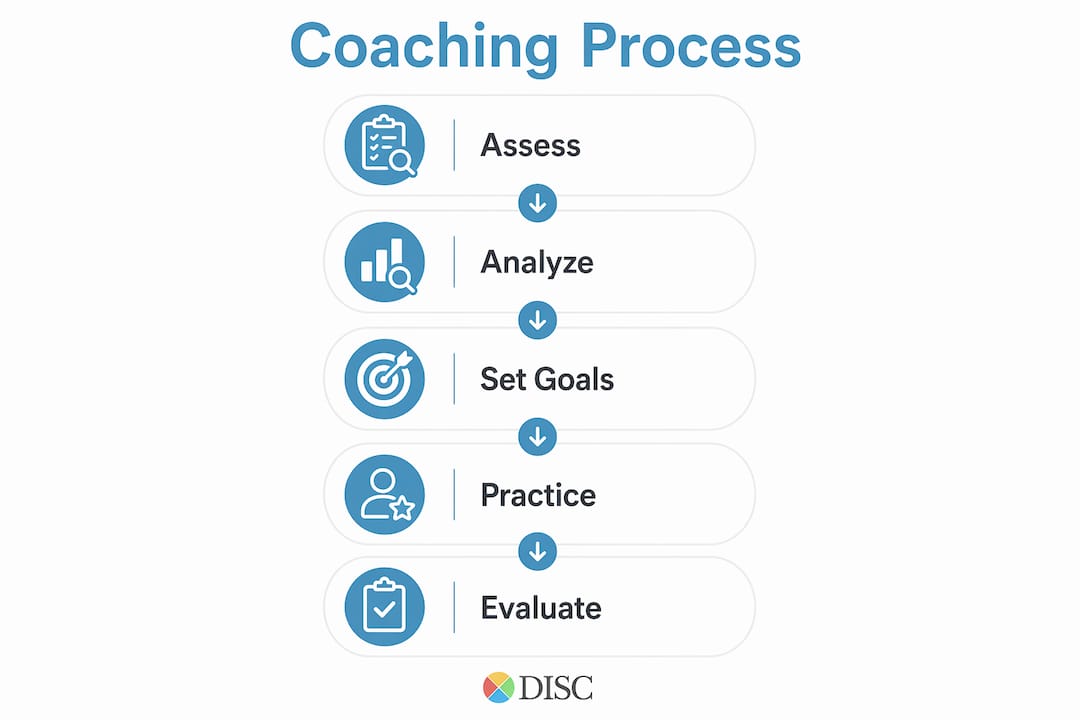
Coaching for communication skills works through feedback loops. A manager delivers a team update, receives structured feedback on Clarity and Conciseness, then adjusts before the next meeting. Over 8–12 weeks, those small adjustments compound into genuine habit change. Without the feedback loop, assessment results sit in a report and change nothing.
The benefits of communication coaching show up in measurable ways across teams:
- Reduced conflict: Teams with clearly calibrated communication norms spend less time resolving misunderstandings.
- Faster alignment: Leaders who adapt their message to the audience get buy-in more quickly.
- Higher trust: Consistent, clear communication builds psychological safety over time.
- Better retention: Team members who feel heard and understood stay longer.
Linking assessments to real business tasks is what separates coaching that produces results from coaching that produces insight without change. Insight alone does not move a team forward.
Pro Tip: Focus each coaching session on one small, repeatable communication habit. Trying to fix Clarity, Confidence, and Connection at the same time produces none of the three. Pick the dimension with the highest gap between self-perception and observer feedback, and practice it in a specific recurring context, like your weekly team standup.
What are common pitfalls leaders face with communication style assessments?
The most common mistake managers make is treating communication style differences as performance problems. A team member who communicates passively is not underperforming. They are operating from a different default style. Mislabeling style differences as competence deficits is a coaching failure, not a team failure. It shuts down growth instead of opening it.
A second pitfall is over-relying on personality frameworks instead of behavioral data. Personality tests describe tendencies. They do not tell you how a person communicates when they are stressed, rushed, or presenting to a skeptical audience. Behavioral assessments provide actionable blueprints that personality profiles simply cannot deliver.
Three other pitfalls worth watching for:
- Uniform style enforcement: Coaching every leader toward the same "ideal" communication style ignores context and audience. A style that works in a board room may alienate a frontline team.
- Skipping multi-source feedback: Self-assessment alone misses blind spots. Comparing self-perception with observer feedback reveals the gaps that matter most for coaching.
- One-and-done assessments: A single assessment with no follow-up coaching produces awareness without change. Assessment is the beginning of the process, not the end.
Pro Tip: After receiving assessment results, choose one blind spot revealed by observer feedback and practice a specific behavioral response for two weeks. For example, if observers rate your Conciseness lower than you rate yourself, set a rule: no team update longer than three sentences. Track whether feedback shifts over the following month.
How can managers implement communication style assessment coaching effectively?
A structured approach produces far better outcomes than an informal one. The following steps give managers a practical path from assessment to sustained behavior change.
-
Run the assessment first. Use a behavioral communication assessment, not a personality test. Aim for a tool that covers dimensions like Clarity, Confidence, Conciseness, and Connection. A well-designed assessment takes under 10 minutes and gives you a behavioral baseline.
-
Collect multi-source feedback. Ask two or three colleagues or direct reports to rate the same dimensions. The gap between self-scores and observer scores is where coaching begins. You can explore DISC-based assessment tools that support this kind of group feedback process.
-
Prioritize one dimension per coaching cycle. Do not try to improve everything at once. Pick the dimension with the largest gap and build a coaching plan around it for the next 4–6 weeks.
-
Anchor coaching to real work scenarios. Schedule a coaching conversation before and after a high-stakes communication event, like a performance review, a project kickoff, or a difficult client call. Use the actual event as the practice ground.
-
Build in a feedback loop. After each real-world application, gather brief structured feedback. A simple three-question check works well: What landed well? What was unclear? What would you change? This loop is what turns a single event into a learning pattern.
-
Reassess at the end of the coaching cycle. Run the same assessment after 8–12 weeks. Compare scores to the baseline. Visible progress reinforces the habit and motivates the next cycle of growth.
-
Calibrate, do not correct. Shifting from message control to message calibration reduces organizational drag. The goal is not to make every leader communicate the same way. The goal is to help each leader adapt their natural style to the needs of the audience and the moment.
Managers who follow this process consistently report stronger team alignment and fewer recurring miscommunications. The structure itself is part of the benefit. When team members see their leader taking communication seriously enough to measure and practice it, the culture shifts.
Key takeaways
Communication style assessment coaching produces lasting behavior change only when assessment data is connected to real-world practice, structured feedback, and consistent coaching cycles.
| Point | Details |
|---|---|
| Behaviors, not personality | Assess specific communication behaviors like Clarity and Conciseness, not broad personality traits. |
| Short assessments, long coaching | A 7-minute assessment starts the process; real change takes 8–12 weeks of structured coaching. |
| Calibrate, do not correct | Adapt communication style to the audience rather than enforcing one uniform style across the team. |
| Multi-source feedback reveals blind spots | Self-perception gaps identified by observer feedback are the most productive coaching targets. |
| Anchor coaching to real work | Practice new communication habits in actual high-stakes scenarios, not just in coaching sessions. |
What I have learned about communication style assessment coaching
Most leaders believe they communicate clearly. Their teams often disagree. That gap is not a character flaw. It is a calibration problem, and it is exactly what structured assessment coaching is designed to solve.
What I have seen repeatedly is that the leaders who grow fastest are not the ones who score highest on their initial assessment. They are the ones who take observer feedback seriously and commit to one small behavioral change at a time. The leader who decides to pause before responding in meetings, or to cut every written update by half, makes more progress in six weeks than the leader who tries to overhaul their entire communication approach at once.
The spiritual dimension of this work is real, too. Growing in self-awareness, learning to listen more deeply, and choosing words that build others up rather than diminish them, these are not just professional skills. They reflect the kind of character growth that matters far beyond the workplace. When a leader learns to communicate with genuine care and clarity, the whole team feels it.
The most underused part of any assessment is the observer data. Most leaders glance at it and move on. The ones who sit with it, who ask "Why do three people rate my Conciseness this low when I think I am clear?" are the ones who make real breakthroughs. Start there. The answers are already in the data.
— Tres
Discassess makes communication assessment coaching accessible
Managers who want to move from insight to real behavior change need tools that are practical and easy to deploy. Discassess, backed by Prism Counseling & Coaching, offers professional DISC-based communication style assessments designed specifically for small business leaders, nonprofit teams, and individual managers who want results without a complex implementation process.
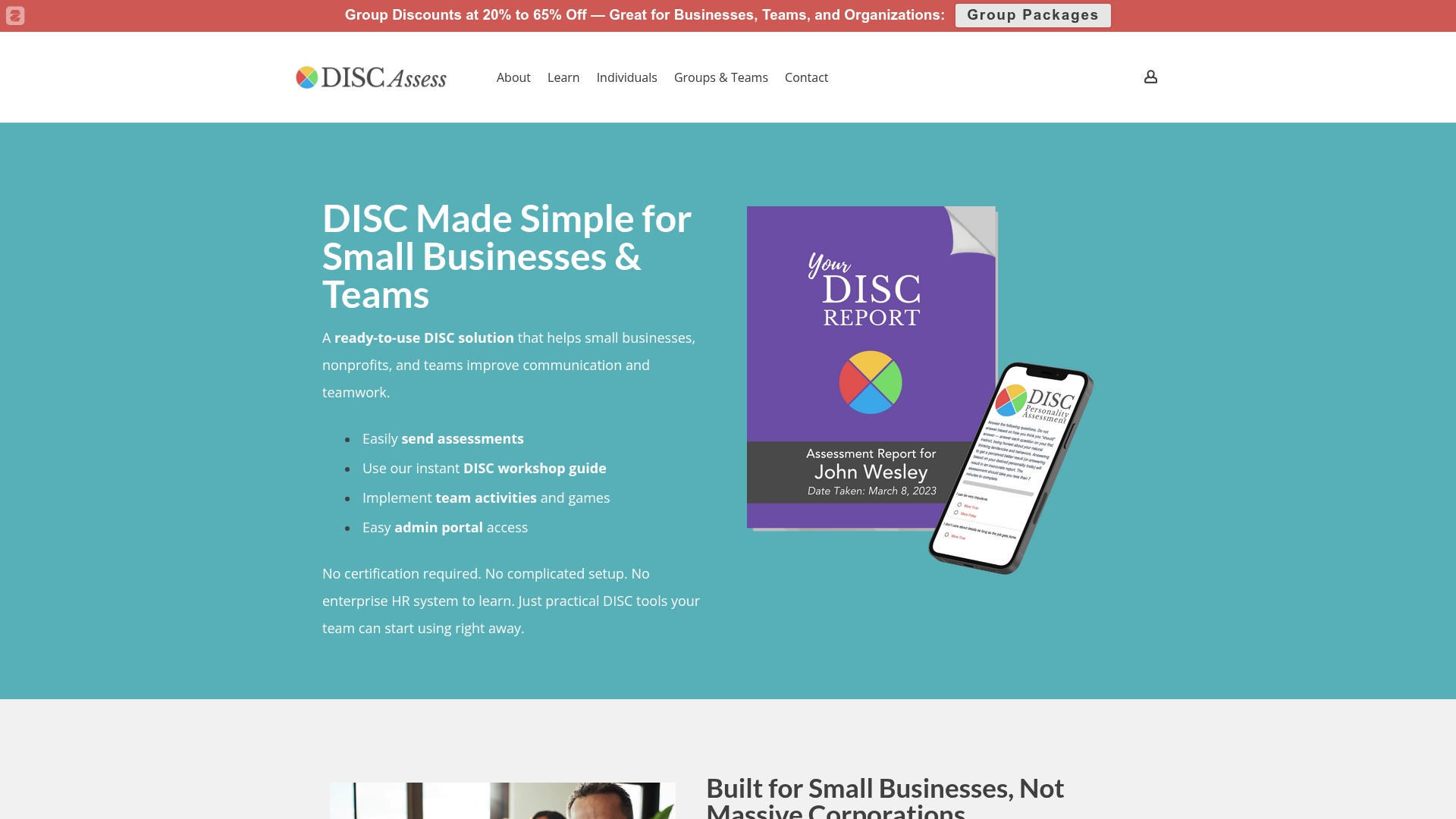
The platform includes group assessment management, detailed behavioral reports, and resources that connect directly to coaching conversations. Whether you are running a team of five or fifty, Discassess gives you a clear starting point. Explore the admin demo to see how the assessment and coaching tools work together, and take the first step toward building a team that communicates with clarity and purpose.
FAQ
What is communication style assessment coaching?
Communication style assessment coaching is the process of measuring a leader's behavioral communication patterns and using that data to guide targeted coaching. The goal is to improve specific behaviors like Clarity, Confidence, and Conciseness through structured practice and feedback.
How long does communication style coaching take to work?
Coaching programs typically run 8–12 weeks to produce measurable behavior change. Shorter engagements can build awareness, but sustained habit change requires consistent practice over multiple weeks.
Why use a communication assessment instead of a personality test?
Communication assessments map specific behaviors, not fixed traits, making them far more useful for coaching. A behavioral score tells a coach exactly which skill to target, while a personality label offers no clear path to improvement.
How do managers identify communication blind spots?
Comparing self-assessment scores with observer feedback reveals the gaps between how leaders think they communicate and how their teams actually experience them. Those gaps are the most productive starting points for coaching.
What is the most common mistake in communication style coaching?
Mislabeling communication style differences as performance deficits is the most common error. Effective coaching focuses on calibration and adaptation, not correction or conformity.
Recommended
- Individual Coaching - DISC Assess | Affordable, Professional DISC Assessments for Small Businesses
- The Appeal of DISC: Why People Love Using This Popular Personality Assessment - DISC Assess | Affordable, Professional DISC Assessments for Small Businesses
- How to Use the DISC Personality Assessment with Employees - DISC Assess | Affordable, Professional DISC Assessments for Small Businesses
- How Political Campaigns Can Use the DISC with Staff and Volunteers - DISC Assess | Affordable, Professional DISC Assessments for Small Businesses