
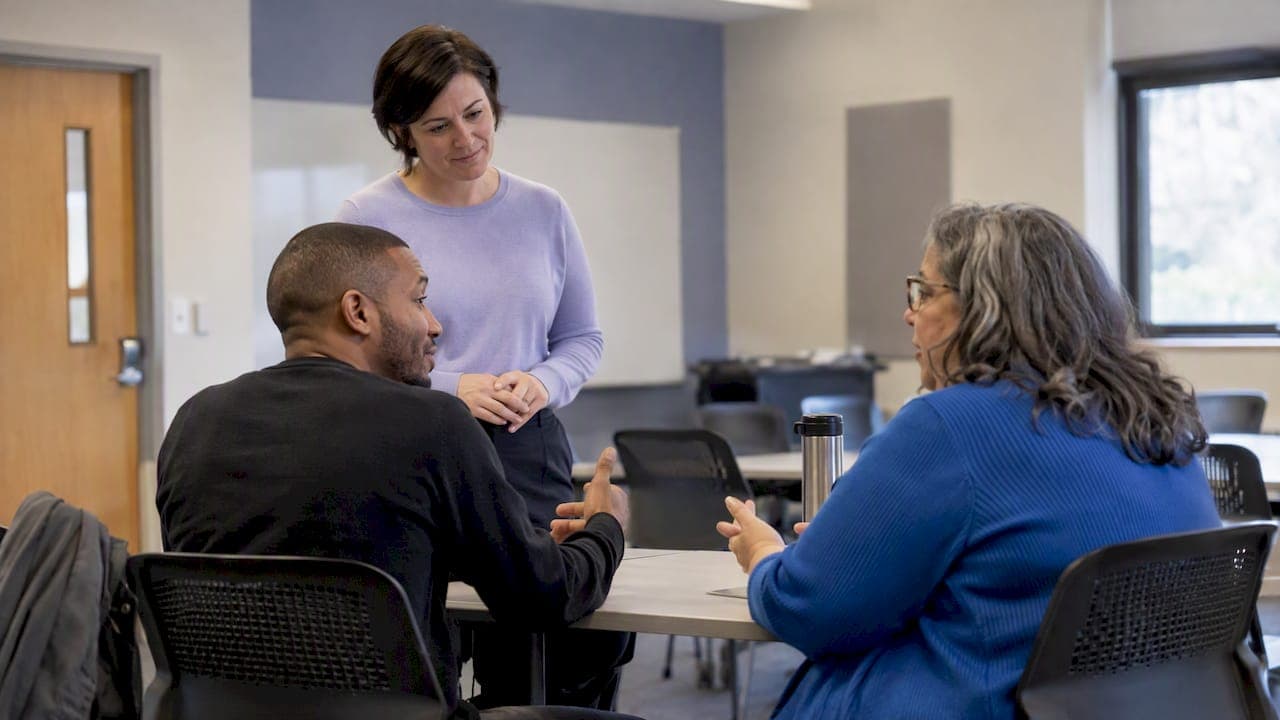
Live DISC training is a facilitated session, in a room or on video, where a team completes DISC assessments beforehand, then spends a few hours learning to read the four styles (Dominance, Influence, Steadiness, Conscientiousness) and practicing how to adapt to one another. The best sessions are short, tied to a real team challenge, and followed by a plan. This guide covers the agenda, the preparation, the pitfalls and the costs, so you can decide whether to hire a facilitator, run it yourself or take a hybrid route.
TL;DR
- Assess first. Have everyone finish the assessment at least a week before the session so the facilitator can tailor the content to your team.
- Practice beats lecture. Use real, low-stakes team friction as your exercises instead of generic role-plays.
- Styles are preferences, not labels. Frame results as flexible and confidential, or the training can backfire.
- Half a day is enough for most small teams, if you build in a follow-up.
- Start small. A single assessment for 29 USD lets a leader experience the report before committing a whole team.
Table of Contents
- What live DISC training actually is
- Before the session: pre-work that decides the outcome
- A sample live DISC workshop agenda
- Running it in person or virtually
- Mistakes that turn good training into a problem
- Special settings: nonprofits, churches and volunteers
- Our perspective on live DISC training
- Costs and options at a glance
- Ready to plan your session?
- After the session: making it stick
- FAQ
- Sources
What live DISC training actually is
DISC assessments measure behavioral preferences in the workplace. A Wiley publication hosted by UC Berkeley HR traces the model back to William Moulton Marston and reports median test-retest stability around 0.86 for its own assessments. That same document is a reminder that DISC is a behavioral tool, not a full diagnosis of personality, and that is the right way to hold it in a training room.
A live session adds what a report alone cannot: conversation. People hear how a colleague experiences a meeting, ask questions, and try new approaches while someone guides them. That is why many leaders choose live training over simply emailing reports and hoping people read them.
Live can mean two things:
- In person: everyone in one room, usually a half day or a full day. Best for small offices, church staffs, retreats and leadership teams that want relationship-building as a side benefit.
- Virtual live: a facilitator on video with real-time breakout discussions. Best for distributed teams, volunteers who cannot travel, or tight schedules.
Both are different from self-guided training, where your group works through materials at its own pace. Self-guided is flexible and low cost. Live is better when you have a specific tension to work through, or when the team needs a shared moment.
Before the session: pre-work that decides the outcome
The single biggest predictor of a good session is what happens the week before. Practitioners who run team workshops, such as the Unicorn Labs team workshop guide, recommend that participants finish their assessments at least a week ahead. That gives the facilitator time to see the team's overall pattern, spot the styles that are over- or under-represented, and shape examples around your actual work.
A practical pre-work checklist:
- Name the goal in one sentence. For example: "We want fewer misunderstandings between program staff and the finance office." A vague goal like "better teamwork" produces a vague day.
- Set up the group. Decide who is attending and gather email addresses. If you are managing results yourself, our guide on administering DISC assessments walks through the tools.
- Send a short note explaining the purpose. Say that results are developmental, confidential to the group, and not used for hiring or performance reviews.
- Ask everyone to read their own report once and bring one thing that surprised them and one thing that felt accurate.
- Collect one or two real examples of communication friction, with names removed.
The idea of pairing an assessment with a clear picture of capacity is not unique to DISC. If you want to see how another profession thinks about it, this article on workforce assessments for clinicians offers a useful contrast.
Small teams do not need an HR department for any of this. Our walkthrough for running DISC assessments with 10 to 20 people without HR covers the logistics.
A sample live DISC workshop agenda
Here is a half-day agenda (about four hours) that works for teams of 8 to 20. Adjust the timing to your group, and shorten it to two hours by trimming the practice blocks.
| Time | Segment | Purpose |
|---|---|---|
| 0:00 to 0:20 | Welcome and ground rules | State the goal, confidentiality, and that styles are preferences, not boxes |
| 0:20 to 0:50 | The four styles in plain language | Quick overview of D, I, S and C with everyday examples |
| 0:50 to 1:20 | Personal results | Pairs discuss what rang true in their reports |
| 1:20 to 1:30 | Break | |
| 1:30 to 2:15 | Team map | Place the team's styles on a shared chart and discuss strengths and blind spots |
| 2:15 to 3:15 | Practice with real friction | Small groups rework an actual communication problem using other styles' needs |
| 3:15 to 3:45 | Adaptation commitments | Each person picks one behavior to adjust and tells a partner |
| 3:45 to 4:00 | Follow-up plan | Schedule a 30-minute check-in in two to four weeks |
A few notes on why this structure works.
Keep the lecture short
Facilitators who run many team workshops tend to agree that sessions stick when they are tied to a real challenge, include practice rather than only theory, and have a follow-up built in, as the Unicorn Labs guide puts it. If participants spend most of the day listening, they leave with vocabulary but no new habits.
Use real, low-stakes friction
Generic role-plays ("you are a manager and your employee is late") invite performance and defensiveness. Better to take a real past disagreement, such as a missed handoff or a confusing email, and ask: "What did each person need? How could the message have been shaped for them?" Pick low-stakes cases, not a live conflict between two people in the room.

End with commitments, not insights
Insight fades by Monday. A specific commitment, like "I will give my C-style teammate the agenda a day ahead," survives longer, especially when someone checks on it.
Running it in person or virtually
| Factor | In person | Virtual live |
|---|---|---|
| Energy and connection | Strongest, with informal conversation | Good if the group is small and cameras are on |
| Length | Half day to full day | Two or three shorter blocks work better than one long one |
| Logistics | Room, materials, travel | Reliable video platform, breakout rooms |
| Best for | Local teams, retreats, leadership days | Remote staff, volunteers, multi-site organizations |
If you go virtual, split the agenda into two 90-minute blocks on different days. Attention drops faster on video, and the gap gives people time to try something between sessions.
Mistakes that turn good training into a problem
The academic literature here is thin. A study of trainer perspectives on personality-based group training notes that despite how common these programs are, little systematic research has looked at their outcomes. So much of what we know comes from practitioners, and they agree on a few cautions.
- Treating styles as fixed traits. If someone leaves thinking "I'm just a high D," the training has done harm. Everyone adapts, and the point is to do that more deliberately.
- Weaponizing labels. Dismissing a colleague as "just a difficult D" is the clearest warning sign. Set a ground rule on day one: no one assigns a style to someone else.
- Skipping confidentiality. Personal reports belong to the individual. Share team-level patterns freely, but let people choose what to reveal about their own results.
- Using DISC for hiring or discipline. It describes behavioral preferences, not competence or character. Keep it developmental.
- No follow-up. One day without reinforcement is a pleasant memory, not a change.
Special settings: nonprofits, churches and volunteers
Nonprofit teams often have a mix of paid staff, volunteers and board members, and each group meets at different times. A single live session may need two versions: a longer one for staff and a shorter one for volunteers. Our guide to onboarding volunteers with one-page DISC cheat sheets shows a lighter format, and the piece on DISC for nonprofit boards covers how to pilot it with a small group first. For a broader view of applying DISC across staff, volunteers and boards without sliding into stereotypes, this article on getting staff buy-in is a useful read on how to win over skeptical colleagues, which applies in any organization.
For ministries, a faith-based version of the assessment helps connect results with service, relationships and growth. We think of it as a way to understand how each person is wired and how the body learns to grow together.
Our perspective on live DISC training
We built DISC Assess for small businesses, nonprofits, coaches and church teams who do not have a corporate training budget or a certified facilitator on staff. Backed by Prism Counseling & Coaching and more than a decade of experience, we have seen the same pattern: the assessment is the easy part. The conversation afterward is where the value lives.

That is why we offer live group training alongside self-guided options, and why we encourage leaders to start with their own results before bringing in a team. When you have read your own report and felt that mix of recognition and mild discomfort, you facilitate with more humility. And humility is what keeps a session from turning into a sorting exercise.
We also avoid certification-heavy models. You do not need a credential to lead a good team conversation about communication, but you do need honest framing: styles are tendencies, growth is possible, and everyone in the room is both a learner and a teacher. Our proprietary model integrates temperament and character, which gives groups more to discuss than a four-letter label alone.
— Tres
Costs and options at a glance
Prices vary widely across the market, so compare what is included: the assessment, the report, facilitator time and any follow-up. Here are our published prices for the pieces you might need:
- Individual Assessment: 29 USD, one-time
- Classic DISC Assessment (non-faith version) with report: 49 USD, one-time
- Christian DISC® Assessment (faith version) with report: 49 USD, one-time
- Group Admin Account: 299 USD, one-time
- Extended Pro Membership (6 months), for facilitators only: 894 USD, one-time
Live group training, self-guided group training, individual coaching and the unlimited membership do not have published prices, so contact us for details.
Ready to plan your session?
If you lead a small team, the simplest path is to take the assessment yourself, read the report, then decide how you want to bring everyone together. You can order an individual assessment or set up a Group Admin Account to manage results, or browse the Classic and Christian assessments directly. If you plan to lead sessions for others, the Extended Pro Membership for facilitators is built for that. Ministry leaders can also look at the Pro Group Package.

After the session: making it stick
Schedule these before people leave the room:
- A 30-minute check-in within two to four weeks. Ask what each person tried and what happened.
- A team communication page. One shared document with how each person likes to receive information (only what they choose to share).
- A refresher in meetings. Before a big decision, ask: "Who might need more time, more data, more discussion or a faster pace?"
- Leadership follow-through. If leaders model the adaptations, the team will too. Our resources on DISC and leadership growth and using DISC with employees can help.
FAQ
How long should live DISC training be?
For most small teams, two to four hours is enough to cover the styles, a team map and one practice exercise. A full day suits leadership retreats or groups that want deeper work. Virtual sessions work best split into shorter blocks.
Do participants need to take the assessment before the session?
Yes, ideally at least a week ahead. Completed reports let the facilitator tailor examples to your team and save session time for discussion rather than test-taking.
Do I need to be certified to lead DISC training?
Not to lead a team conversation using reports from a platform designed for that. Certification programs exist and may suit full-time trainers who sell workshops to others. If you are a leader, coach or ministry staff member working with your own people, a simple, well-framed session is often enough.
What is the difference between in-person and virtual live training?
In-person sessions build stronger connection and suit local teams. Virtual sessions reduce travel and fit distributed groups, but work better in shorter blocks with smaller breakout discussions.
Sources
- Science Behind DISC (Wiley, hosted by UC Berkeley HR)
- DISC Workshop for Teams: Agenda, Outcomes, and What to Expect (Unicorn Labs)
- Trainer Perspectives on Personality-Based Group Training