

Fear of rejection is a strong, anticipatory dread of being excluded, turned down, or found unworthy by others. It is one of the most common emotional struggles people carry, and the good news is that it has predictable mechanisms you can work with starting today.
Here are three moves you can try right now:
- Ground yourself physically. Press your feet flat on the floor, take a slow breath in for four counts, hold for four, and exhale for six. This activates the parasympathetic nervous system and interrupts the anxiety spiral before it builds.
- Run a quick cognitive check. Ask yourself: "What am I actually predicting will happen, and how likely is that, really?" Writing it down in one sentence often reveals that the feared outcome is far less certain than it feels.
- Try one micro-behavioral test. Send a low-stakes message, make a small request, or say hello to someone you would normally avoid. Notice what actually happens versus what you feared.
Pro Tip: If a grounding move makes you feel more anxious rather than less, that is normal for some people. Try shifting to a sensory anchor instead: hold something cold or textured, name five things you can see, or hum a single note. These alternatives interrupt the loop without requiring stillness.
Key Takeaways
Fear of rejection is a biologically rooted, learned pattern that responds well to consistent cognitive work, behavioral experiments, and, when needed, professional support through CBT or related therapies.
| Point | Details |
|---|---|
| Fear is anticipatory, not fixed | Rejection anxiety lives in predictions about the future; testing those predictions with small actions breaks the cycle. |
| The brain treats social pain as real pain | Neural overlap between physical and social pain explains why rejection feels so sharp, and why it deserves real care. |
| CBT and exposure work | Structured CBT produces clinically meaningful improvements for social anxiety; consistent practice matters more than intensity. |
| Emotion differentiation reduces reactivity | Naming specific emotions (hurt, shame, anger) rather than a general "bad feeling" lowers the chance of self-defeating reactions. |
| Discassess supports self-awareness | A DISC assessment from Discassess can reveal your natural stress patterns and communication style as part of a broader growth plan. |
Table of Contents
- Why Does Fear of Rejection Hurt So Much?
- How Fear of Rejection Shows Up in Your Life
- Evidence-Based Ways to Manage and Reduce Rejection Anxiety
- When Should You Seek Professional Help?
- Exercises You Can Try This Week
- What Research Says About Rejection and How to Treat It
- A Practitioner's Perspective on Fear of Rejection
- Discassess Can Support Your Self-Awareness Work
- Sources
Why Does Fear of Rejection Hurt So Much?
The pain of social rejection is not just metaphorical. Research on social pain shows that the brain regions activated by physical pain overlap substantially with those triggered by social exclusion, which is why being left out can feel as sharp as a physical injury. This is not weakness; it is neurobiology.
From an evolutionary standpoint, belonging to a group was a survival requirement. Being cast out meant real danger. The brain developed a sensitive alarm system for social threats, and that system is still running in modern life, even when the "threat" is a slow text reply or a colleague who did not smile in the hallway.
Common developmental and neurobiological contributors include:
- Early caregiver experiences. Inconsistent, critical, or emotionally unavailable parenting is a well-documented pathway to heightened rejection sensitivity in adulthood. The child learns that connection is unpredictable, so the nervous system stays on alert.
- Learned thinking patterns. Anticipatory rehearsal, mentally playing out rejection scenarios before they happen, trains the brain to treat the feared outcome as probable. This mental rehearsal produces real emotional pain and reinforces avoidance.
- Rejection Sensitive Dysphoria (RSD). This term describes an intense, often overwhelming emotional response to perceived or actual rejection. RSD is frequently discussed alongside ADHD because differences in emotional regulation can make rejection-related reactions far more intense and harder to manage than they are for the general population.
Research note: Recognizing that fear of rejection is rooted in a normal need for belonging is itself a therapeutic move. It shifts the internal narrative from "something is wrong with me" to "my brain is doing what brains do," which opens the door to self-compassion and change.
Pro Tip: If you notice that rejection reactions feel disproportionately intense, lasting hours or days and affecting your ability to function, mention RSD specifically when you speak with a mental health professional. It changes the treatment conversation.
How Fear of Rejection Shows Up in Your Life
Rejection anxiety rarely announces itself plainly. It tends to disguise itself as other behaviors, some of which look like virtues from the outside.
Signs to watch for:
- Avoiding asking for what you need in relationships or at work
- Over-apologizing or agreeing with others to prevent conflict
- Perfectionism driven by fear that any flaw will cause others to leave
- Interpreting neutral or ambiguous social cues as disapproval (rejection sensitivity produces this attention bias)
- Withdrawing from friendships or romantic relationships before the other person can leave first
- Anger or irritability after perceived slights, sometimes disproportionate to the situation
- Chronic people-pleasing that leaves you exhausted and resentful
One important distinction: fear of rejection is the anticipatory anxiety before a social event, while actual rejection is the experience of being turned down or excluded. The two feel similar in the body, but they require different responses. Fear lives in the future; actual rejection lives in the present and calls for grief and processing, not avoidance.
Cultural and social context matters here. In cultures that emphasize collective harmony, expressing disagreement can carry higher social stakes, which can amplify rejection sensitivity. In highly individualistic settings, the pressure to project confidence may cause people to mask rejection fear rather than address it. Neither context makes the fear more or less valid; both shape how it is expressed and how much support is available.
How rejection anxiety plays out across settings:
| Setting | Common Pattern | Relationship Cost |
|---|---|---|
| Romantic relationships | Avoiding vulnerability, testing partners, jealousy | Emotional distance, conflict cycles |
| Workplace | Not sharing ideas, over-delivering to stay "safe" | Missed opportunities, burnout |
| Friendships | Canceling plans, not initiating contact | Gradual isolation, loneliness |
Evidence-Based Ways to Manage and Reduce Rejection Anxiety
The strategies below are drawn from Cognitive Behavioral Therapy (CBT), exposure-based approaches, and self-compassion work. You do not need to use all of them. Pick one or two that fit your situation and practice them consistently.
Cognitive work: identifying and challenging automatic thoughts
- Catch the thought. When you feel rejection anxiety rising, write down the specific prediction: "If I ask for help, they will think I am incompetent."
- Examine the evidence. List what actually supports that prediction and what contradicts it. Most catastrophic predictions have far less evidence than they feel like they do.
- Reframe. Replace the prediction with a more accurate, balanced statement: "Asking for help is something capable people do. The outcome is uncertain, not predetermined."
- Track outcomes. After the interaction, note what actually happened. Over time, this record becomes your evidence base against catastrophic thinking.
CBT-based approaches produce clinically meaningful improvements for social anxiety across multiple trials. The key is consistent practice, not a single insight.
Exposure-style behavioral experiments
Rather than rehearsing rejection mentally, test your predictions with small behavioral experiments. Here is a simple hierarchy to build from:
- Level 1: Make eye contact and smile at a stranger.
- Level 2: Ask a coworker a small favor.
- Level 3: Share a personal opinion in a group setting.
- Level 4: Ask someone out or propose a social plan.
- Level 5: Assert a need or boundary in a close relationship.
Work through each level until the anxiety drops to a manageable level before moving up. Frequency matters more than duration: brief, repeated exposures work better than one long, intense attempt.
Self-compassion and values-based self-worth
The goal is not to stop caring about connection. It is to make your sense of self-worth stable regardless of any single social outcome. Ask yourself: "What do I value about who I am, independent of whether this person approves of me?" Anchoring self-worth to values rather than performance removes the all-or-nothing stakes that make rejection feel catastrophic.
Emotion differentiation
Naming your emotions precisely reduces their intensity. Instead of "I feel terrible," try: "I feel hurt because I expected warmth and did not get it, and ashamed because part of me believes that means I am not enough." Emotion differentiation prevents the emotional pile-up that leads to reactive, self-defeating behavior.
Practical micro-scripts to try in real conversations:
- "I would love to hear your honest reaction to this idea."
- "I am not sure how you feel about this, and I would rather ask than assume."
- "This matters to me, so I want to bring it up even though it feels uncomfortable."
- "I can sit with not knowing the answer right now."
- "I am going to try this and see what happens, rather than talk myself out of it."
Pro Tip: Pair each behavioral experiment with a simple tracking metric: rate your predicted anxiety (0–10) before, and your actual distress (0–10) after. Most people find the actual distress is consistently lower than the prediction. That gap is your evidence against avoidance.
When Should You Seek Professional Help?
Self-help strategies are genuinely useful, but some situations call for professional support. Seek help promptly if you notice:
- Rejection fear is interfering with your ability to work, maintain relationships, or leave the house
- You are experiencing suicidal thoughts or urges to harm yourself or others
- Emotional reactions to perceived rejection last for days and feel impossible to regulate
- Anger following rejection is becoming aggressive or frightening to people around you
- You suspect RSD or ADHD is involved and have never had a formal evaluation
Therapy types that help:
- CBT (Cognitive Behavioral Therapy): The most researched approach for social anxiety and rejection sensitivity; focuses on thought patterns and gradual exposure.
- REBT (Rational Emotive Behavior Therapy): Targets the core beliefs ("I must be liked by everyone") that fuel rejection fear.
- Exposure therapy: A structured, step-by-step approach to tolerating feared social situations.
- DBT (Dialectical Behavior Therapy) skills: Particularly useful for emotion regulation when reactions feel overwhelming.
When rejection fear is part of broader anxiety, depression, or ADHD, medication may be worth discussing with a clinician. This is not a decision to make alone; a psychiatrist or your primary care physician can assess whether it fits your situation.
Finding a therapist: Search Psychology Today's therapist directory using terms like "social anxiety," "rejection sensitivity," or "ADHD emotional dysregulation." Teletherapy platforms such as Telehealth.HHS.gov can connect you with licensed providers if local options are limited. When you contact a therapist, ask directly: "Do you have experience treating rejection sensitivity or social anxiety?"
Pro Tip: Before your first appointment, write down three specific situations where rejection fear has cost you something, such as a relationship, an opportunity, or your peace of mind. Concrete examples help a therapist understand your pattern quickly and design treatment that fits.
Exercises You Can Try This Week
Three daily practices
- 4-6 breathing (2 minutes, morning or evening). Inhale for four counts, exhale for six. This ratio activates the calming branch of your nervous system and is useful before any anxiety-provoking social situation.
- Mindful anchor (3 minutes). Sit quietly and name one thing you can feel, one you can hear, and one you can see. This interrupts anticipatory rumination without requiring you to "think positive."
- Values check-in (1 minute). Ask: "What kind of person do I want to be today, regardless of how others respond?" Write one word. Return to it when anxiety spikes.
Two micro-exposure drills
- The small ask. Once a day for one week, ask for something minor: a recommendation, a favor, a preference. Track the outcome. Most requests are met with neutrality or warmth, not rejection.
- The opinion share. In one conversation per day, offer a genuine opinion rather than defaulting to agreement. Notice that disagreement rarely ends relationships.
Journaling prompt set
Use these prompts after a situation that triggered rejection anxiety:
- "What did I predict would happen?"
- "What actually happened?"
- "What does that gap tell me about my predictions?"
- "What would I tell a close friend who had this same fear?"
A Wheel of Emotions worksheet can help you name emotions precisely during journaling, which supports the emotion differentiation work described earlier.
Using a personality assessment as a readiness checkpoint. Understanding your natural communication style and stress responses can reveal where rejection sensitivity is most likely to show up for you. Personal growth assessment tools, including DISC-based assessments, help you see your tendencies clearly so you can target your practice where it matters most. Discassess offers individual assessments that pair well with this kind of self-awareness work.

Pro Tip: Do not wait until you feel "ready" to try an exposure drill. Readiness follows action, not the other way around. Start with the smallest item on your list and let the evidence accumulate.
What Research Says About Rejection and How to Treat It
The clinical evidence base for treating rejection-related anxiety is solid, though some areas are still developing.
- CBT produces meaningful results for social anxiety. A peer-reviewed meta-analysis found that CBT-based approaches yield clinically meaningful improvements across multiple trials, with moderate effect sizes. The evidence is strongest for structured, therapist-guided CBT.
- Social pain and physical pain share neural pathways. Neuroimaging studies have shown that the brain regions involved in physical pain are also active during social exclusion, which explains why rejection can feel visceral and not merely emotional.
- Emotion regulation skills reduce social stress. Interventions teaching emotion-regulation and graded exposure to feared social situations tend to improve tolerance for social stress in controlled studies.
- RSD is clinically discussed but not a formal diagnosis. Rejection Sensitive Dysphoria is widely recognized in ADHD clinical communities and describes a real, intense pattern of emotional pain. It does not yet appear as a standalone diagnosis in the DSM-5-TR, which means research is still catching up to clinical observation.
- Mental rehearsal maintains fear. Testing predictions with behavioral experiments, rather than rehearsing feared outcomes, is an evidence-informed way to break the self-perpetuating cycle of anticipatory anxiety.
"Rejection sensitivity leads people to misinterpret neutral or ambiguous social signals as rejection; self-regulation and cognitive work reduce these attention biases and improve relationship outcomes." — Verywell Mind
A Practitioner's Perspective on Fear of Rejection
What I find most striking, working with people who carry a deep fear of rejection, is how rarely they recognize it as fear. It shows up as perfectionism, as silence, as chronic over-giving, as a hair-trigger anger that confuses everyone including the person feeling it. The fear is doing its job: keeping the person safe from a pain the nervous system has decided is unbearable.
The shift that tends to matter most is not a single insight or a clever reframe. It is the slow accumulation of evidence from small, real-world tests that the feared outcome is survivable, and often does not happen at all. That is why behavioral experiments, done consistently and tracked honestly, tend to move people further than any amount of talking about the fear.
Personality tools like DISC assessments can play a genuinely useful supporting role here. Understanding whether you tend toward a high-C caution style or a high-S harmony-seeking style, for example, helps you see why certain social situations feel especially threatening and where your natural strengths already lie. Discassess offers an Individual Classic DISC Personality Assessment that pairs well with this kind of self-awareness work, and a DISC Group Package for teams working through communication and belonging together. These are not substitutes for therapy when therapy is needed, but they are honest, practical tools for the self-awareness work that supports healing.

Discassess Can Support Your Self-Awareness Work
Understanding your personality style is one of the most practical first steps you can take when working through rejection anxiety. Discassess, backed by Prism Counseling & Coaching, gives you clear, affordable access to DISC-based self-awareness tools without requiring a corporate HR budget or a certification.
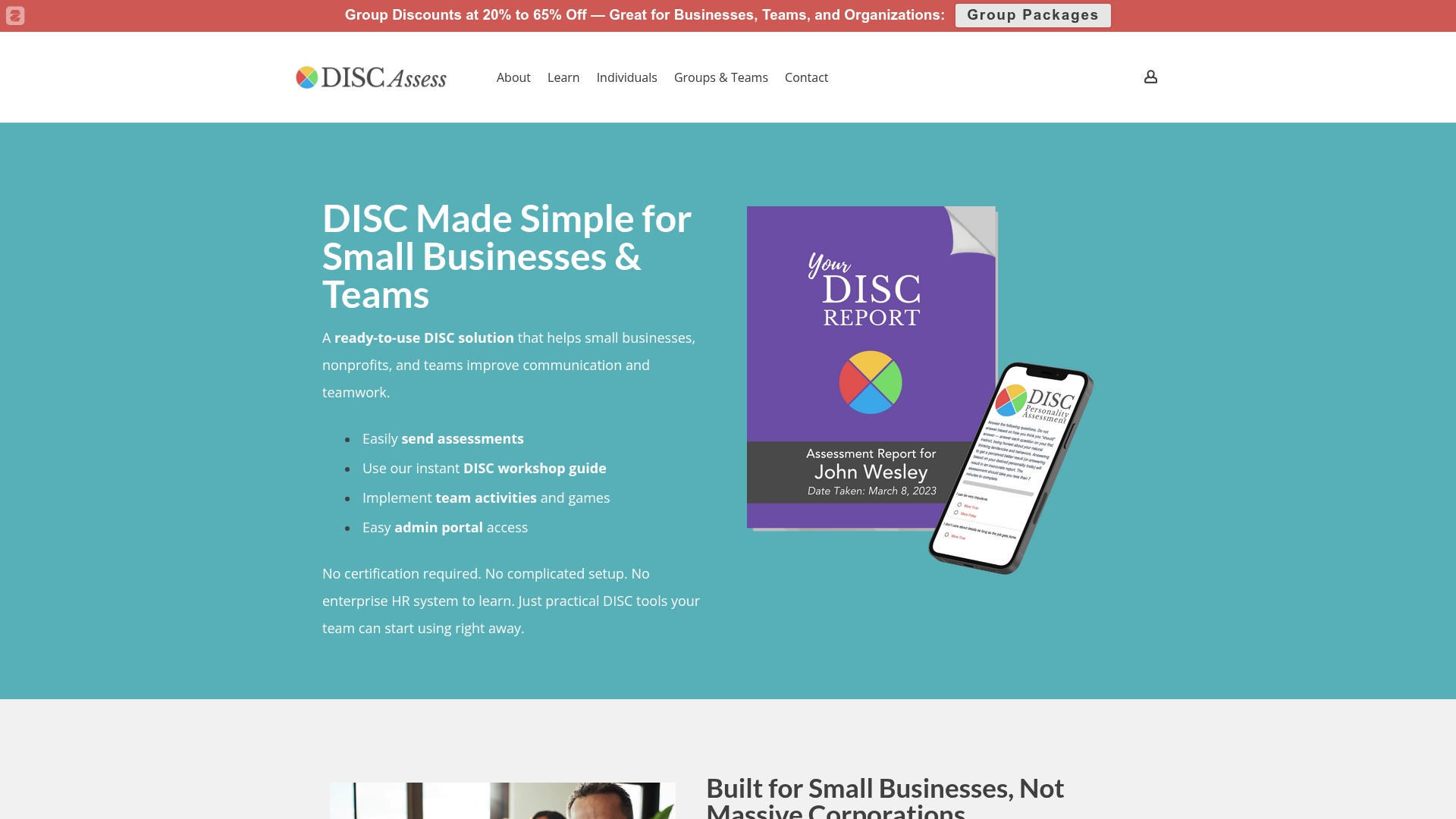
For individuals, the Classic DISC Personality Assessment delivers an instant, detailed report that shows your natural communication tendencies, stress responses, and relational patterns. For teams and organizations, the DISC Group Package makes it easy to run assessments across a whole group and compare results. Coaches and faith-based organizations can explore the White Label DISC System for a fully branded experience. Visit Discassess to choose the option that fits your situation and get started today.
Sources
These sources are reliable starting points for deeper reading on rejection sensitivity, treatment options, and the research behind the strategies in this article:
- Fear of rejection: How to overcome it
- Rejection Sensitive Dysphoria (RSD): Symptoms & Treatment
- Don't Take It Personally: How to Overcome Rejection Sensitivity | Psychology Today
- Rejection sensitivity: What it is and how it affects relationships
- Fear of Rejection and the Mind That Prepares for It
This article is general information, not a substitute for advice from a qualified doctor. Consult a qualified healthcare professional about your own circumstances before acting on anything here.