

Personal growth assessment tools are structured instruments designed to measure key personal attributes, behaviors, and life domains so you can identify strengths and target areas for development. The most widely used frameworks include the Big Five personality inventory, the DISC model, the Wheel of Life, and CliftonStrengths. Each serves a different purpose, from broad self-understanding to team communication. Choosing the right tool depends on your goal, your available time, and whether you need individual insight or group-level feedback. This guide covers the top tools, what makes them reliable, and how to turn results into real change.
What are the best personal growth assessment tools?
The most effective self-assessment frameworks share three qualities: scientific validity, clear feedback, and practical next steps. Without all three, a tool may feel insightful but produce no lasting change. Test-retest reliability is the key psychometric standard to check. Tools that lack published reliability data may give you different results each time you take them, which limits their usefulness for tracking growth.
When evaluating any self-improvement tool, look for these features:
- Speed and ease of use. Most assessments take between 90 seconds and 10 minutes to complete. Shorter tools work well for quick snapshots; longer ones suit deeper developmental work.
- Scientific validation. Peer-reviewed backing separates reliable tools from popular but unproven quizzes.
- Actionable feedback. Results should point toward specific behaviors, not just personality labels.
- Cost and access. Free tools exist with solid science behind them. Paid tools often add depth, coaching integration, or group reporting.
- Individual vs. group fit. Some tools work best for solo reflection; others are built for team development and improving team collaboration.
Pro Tip: Before selecting a tool, write down one specific growth question you want answered. The right assessment is the one that speaks directly to that question.
Top self-assessment frameworks: types and use cases

The following tools represent the most widely used and validated options across individual, professional, and team contexts.
1. Big Five personality inventory
Big Five is the most scientifically valid personality framework available today. It measures Openness, Conscientiousness, Extraversion, Agreeableness, and Neuroticism across decades of cross-cultural research. Free versions are available through platforms like IPIP-NEO. This makes it the best starting point for anyone who wants a research-backed baseline of their personality traits.
2. DISC assessment
The DISC model measures four behavioral tendencies: Dominance, Influence, Steadiness, and Conscientiousness. It is widely used in workplaces, coaching programs, and ministry settings because it focuses on observable behavior rather than fixed personality traits. Personality assessments like DISC help small business teams and nonprofits understand how each person communicates and contributes. Discassess offers an accessible, affordable DISC platform built specifically for individuals, small teams, and faith-based organizations.
3. Wheel of Life
The Wheel of Life maps your satisfaction across eight life areas onto a radar chart in about 90 seconds. It requires no signup and no cost. Coaches and HR professionals use it to reveal imbalances quickly and provide tailored next-step advice. It is the best tool for a fast, visual snapshot of where your life feels out of balance.
4. CliftonStrengths
CliftonStrengths identifies your top talent themes from a list of 34 strengths. It shifts the focus from fixing weaknesses to building on what you already do well. The full assessment costs around $20–$50 depending on the report tier. It is especially useful for career development and leadership growth.
5. Personal Mindset Assessment
The Personal Mindset Assessment by Ryan Gottfredson measures four core mindset dimensions and takes 5–10 minutes to complete. Results are immediate and include personalized insights on how your thinking patterns affect your behavior. Individuals and groups use it to track mindset shifts over time. It is one of the few growth mindset evaluation tools with a clear retesting protocol.
6. 360-degree feedback
360-degree feedback collects input from peers, managers, and direct reports to reveal blind spots you cannot see through self-reflection alone. It is the most thorough external perception tool available. Enterprise versions can exceed $5,000 for full group deployment. Smaller teams can access lighter versions through coaching platforms at a fraction of that cost.
7. VIA Character Strengths
The VIA Survey measures 24 universal character strengths rooted in positive psychology research. It is free, takes about 15 minutes, and produces a ranked list of your core virtues. For faith-oriented readers, the VIA framework aligns closely with the fruit of the Spirit, making it a natural complement to spiritual growth work.
8. RIASEC career interest assessment
The RIASEC model (also called Holland Codes) categorizes career interests into six types: Realistic, Investigative, Artistic, Social, Enterprising, and Conventional. It is most useful when you are evaluating career fit or considering a professional pivot. Free versions are available through the O*NET Interest Profiler from the U.S. Department of Labor.
Pro Tip: Pair a personality tool like DISC or Big Five with a life balance tool like the Wheel of Life. One tells you who you are; the other shows you where you are. Together, they give you a fuller picture.
How to interpret results and turn them into real growth
Assessment results are snapshots, not fixed labels. Retaking assessments every 6–12 months gives you comparative data on how your mindset and behaviors have shifted. That comparison is where real growth becomes visible.
The most common mistake is treating a score as an identity. A low score in conscientiousness does not mean you are disorganized forever. It means that right now, structure is an area worth developing. Approach results with curiosity, not judgment.
Translating scores into growth requires these steps:
- Identify your top one or two priority areas. Do not try to improve everything at once. Focus narrows effort.
- Set specific, measurable goals. Converting a low score into a behavior is the key step most people skip. For example, a low communication score becomes a goal of giving deliberate feedback in three conversations per week.
- Build an accountability system. Coaching check-ins, peer accountability partners, or structured journaling all support follow-through.
- Retest and compare. Schedule your next assessment before you close the current report. Growth without measurement is just hope.
Honesty during the assessment matters more than most people realize. Answering based on who you want to be rather than who you are today produces results that feel good but guide you nowhere.
Free vs. paid personal growth assessment tools
Assessment costs range from free to over $500, and price does not always predict quality. The Big Five is free and backed by more research than most paid tools. The Wheel of Life costs nothing and takes 90 seconds. Both deliver genuine insight.
| Tool type | Cost range | Best for | Depth of report |
|---|---|---|---|
| Free personality inventories | $0 | Individual self-reflection | Moderate |
| Paid strengths tools | $20–$50 | Career and leadership growth | High |
| Executive assessments (e.g., Hogan) | $100–$500 | Senior leadership development | Very high |
| 360-degree feedback platforms | $500–$5,000+ | Team and organizational growth | Very high |
| DISC group packages | Varies | Small teams and nonprofits | High |
Paid tools earn their cost when you need tailored reports, coaching integration, or group-level data. Free tools are the right starting point for individuals exploring self-improvement for the first time. The decision should follow your purpose, not your budget alone.
Choosing the right tool for your growth stage
The right assessment depends on where you are and what you need next. A first-time self-assessor benefits most from a free, simple tool. A leader preparing for a promotion needs deeper behavioral data.
Use these guidelines to match your situation to the right tool:
- Self-directed individual growth. Start with the Big Five or Wheel of Life. Both are free, fast, and grounded in solid research.
- Coaching or spiritual development. DISC and VIA Character Strengths work well in coaching relationships and faith-based discipleship contexts.
- Leadership and career progression. CliftonStrengths or a 360-degree feedback process gives you the external perspective that self-report tools cannot provide.
- Team culture and communication. DISC is the most practical tool for group assessment settings, especially for small businesses and nonprofits.
- Ongoing progress tracking. The Personal Mindset Assessment and DISC both support retesting, making them strong choices for structured accountability programs.
Sustained personal growth requires more than a single assessment. Combining diagnostic tools with regular check-ins produces the behavioral change that one-time results rarely achieve on their own.
Key Takeaways
The most effective personal growth assessment tools combine scientific validity, clear feedback, and a structured plan for turning results into specific behavior changes.
| Point | Details |
|---|---|
| Reliability matters most | Choose tools with published test-retest reliability data for consistent, trustworthy results. |
| Free tools can be excellent | Big Five and Wheel of Life are free, fast, and backed by strong research. |
| Results are snapshots | Retest every 6–12 months to measure real shifts in mindset and behavior. |
| Specificity drives growth | Convert scores into measurable behavior goals, not just self-knowledge. |
| Match tool to context | Individual reflection, team development, and leadership growth each call for different tools. |
What I have learned from years of watching people use these tools
The tools themselves are rarely the problem. The follow-through is.
I have seen individuals take a beautifully validated assessment, receive a detailed report, and then file it away and never look at it again. The insight was real. The application was absent. Simple, immediate feedback is more useful than a complex report that takes three sessions to decode. The goal is not to understand yourself perfectly. The goal is to understand yourself well enough to act differently.
The other pattern I consistently notice is over-identification with results. Someone scores high in Dominance on DISC and starts introducing themselves that way at meetings. A label becomes a ceiling. The best assessments are mirrors, not cages. They show you where you are today so you can decide where to go tomorrow.
What actually works is pairing any assessment with a 90-day accountability structure. Write down two behaviors you will change. Find one person who will ask you about them monthly. Retest in six months. That simple loop produces more growth than any single tool ever will on its own.
If you are faith-oriented, the growth process carries even deeper meaning. Assessments can reveal the tendencies that God is already at work refining in you. They are not a replacement for prayer and community. They are a practical lens that helps you see yourself more clearly so you can cooperate with that work more intentionally.
— Tres
Discassess makes professional DISC assessments accessible for everyone
Discassess is a Phoenix-based DISC assessment platform built for individuals, small teams, nonprofits, and faith communities who want professional-grade insight without the complexity or cost of enterprise systems.
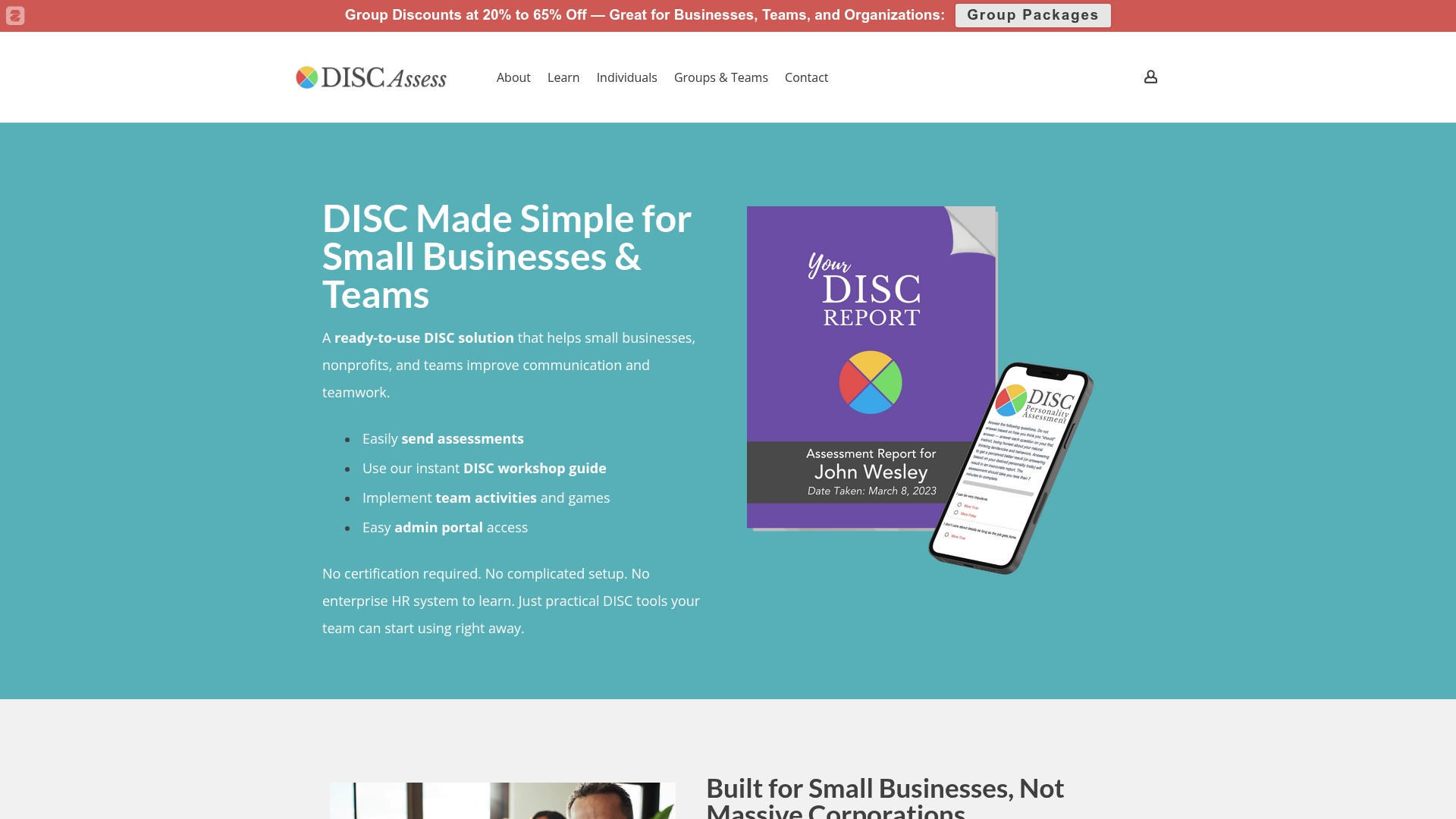
Whether you are a coach working with a single client or a team leader managing a group of volunteers, Discassess offers flexible options that fit your context. The platform provides individual assessments, group packages, and an admin portal that makes managing multiple participants straightforward. Reports are clear, practical, and designed for people without HR backgrounds. You can also access a classic DISC assessment or a faith-integrated version depending on your community's needs. Backed by over a decade of counseling and coaching experience through Prism Counseling & Coaching, Discassess gives you a reliable starting point for meaningful personal and team growth.
FAQ
What is the most scientifically valid personal growth assessment?
The Big Five personality inventory holds the strongest scientific backing, validated across decades of cross-cultural research and available for free through platforms like IPIP-NEO.
How long do personal growth assessments take to complete?
Most assessments take between 90 seconds and 10 minutes. The Wheel of Life takes about 90 seconds; detailed mindset assessments like the Personal Mindset Assessment take 5–10 minutes.
How often should I retake a personal growth assessment?
Experts recommend retaking assessments every 6–12 months. That interval gives enough time for real behavioral change to occur and shows up clearly in comparative results.
Are free personal development quizzes reliable?
Free tools like the Big Five and Wheel of Life are reliable and research-backed. Many popular online quizzes, however, lack published test-retest reliability data, which limits their usefulness for serious development work.
Can DISC assessments work for small teams and nonprofits?
Yes. DISC is one of the most practical tools for group settings. Discassess offers group packages and nonprofit-friendly pricing that make professional DISC assessments accessible without a large budget.