

Here is the checklist in one sentence: intake the client and sponsor, run one multi-rater assessment plus one individual instrument matched to the coaching question, debrief within two weeks, build a 3-5 item Individual Development Plan (IDP), and re-measure at three to six months. Every one of those steps matters, but leave one out and your data stays scattered instead of building toward a real development picture.
The essential elements, at a glance:
- Intake: a short client and sponsor conversation defining the coaching question before any instrument is chosen.
- Core assessments: typically one 360-style multi-rater tool plus one individual instrument (personality, strengths, or EQ).
- Who's involved: the client, the coach, a sponsor or manager, and an admin contact who manages logistics.
- Timing: two to four weeks for rater completion, a debrief within two weeks of results, re-measure at three to six months.
- Debrief and IDP: a focused conversation that converts scores into three to five measurable behaviors.
- Follow-up: a re-assessment window built into the coaching contract from day one.
Copy this into your next engagement plan: intake, assess, debrief, plan, coach, re-measure.
Key Takeaways
Running a rigorous executive coaching assessment requires pairing one multi-rater instrument with one individual assessment, then converting results into a measurable IDP within two weeks.
| Point | Details |
|---|---|
| Two instruments, not five | Combine one multi-rater tool with one individual assessment to avoid report fatigue. |
| Assessment takes about a quarter of engagement time | Budget roughly 25% of a multimonth coaching program for assessment and goal-setting. |
| Vet the psychometrics | Request validity, reliability, and adverse-impact documentation before choosing a vendor. |
| Re-measure at 3 to 6 months | Build a follow-up assessment window into the contract to prove behavior change. |
| DISC Assess for small teams | Discassess offers individual and group DISC packages with instant reports for coaches working without HR infrastructure. |
Table of Contents
- Your Executive Coaching Assessment Checklist at a Glance
- Why Formal Assessments Matter in Executive Coaching
- Which Types of Coaching Assessments Should You Use?
- How Do You Choose the Right Assessment Instrument?
- How Do You Run the Assessment Without Disrupting the Client's Team?
- How Do You Turn Assessment Results Into a Coaching Plan?
- The Full Step-by-Step Assessment Checklist for Coaches
- Which Tools Fit Each Assessment Category?
- What Trade-Offs Should You Expect With Coaching Assessments?
- Run Your Team's DISC Assessment in Days, Not Weeks
- Frequently Asked Questions
- Sources
Your Executive Coaching Assessment Checklist at a Glance
Print this and hand it to your client or HR partner during the first intake meeting.
- Intake and goal alignment (client, sponsor, coach) — one 30 to 45 minute call to define the coaching question.
- Choose instruments (coach, with client input) — pick one multi-rater tool and, if needed, one individual instrument.
- Rater selection (client, sponsor sign-off) — identify 6 to 10 raters across manager, peers, and direct reports.
- Launch and completion window (admin) — typically 2 to 3 weeks for raters to respond.
- Debrief (coach, client) — scheduled within 2 weeks of receiving the final report.
- Build the IDP (coach, client) — 3 to 5 focused goals tied to measurable behaviors.
- Coaching cycle (coach, client) — usually 3 to 6 months of applied work between debrief and re-measure.
- Re-assessment (coach, sponsor) — repeat the core instrument at 3 to 6 months to document change.
Assessment and goal-setting together typically account for about 25% of a multimonth coaching engagement, with the remaining time devoted to implementation and review. That ratio is worth protecting. Rushing the assessment phase to get to "real coaching" faster usually means weaker goals later.
Why Formal Assessments Matter in Executive Coaching
Assessments do something a coaching conversation alone cannot: they create shared, external data that both the client and the sponsor can point to. Instead of "my manager thinks I'm too controlling," the client sees a pattern across six raters, which is much harder to dismiss and much easier to build a goal around.
Peer-reviewed research supports that structured coaching interventions, when paired with assessment, can produce measurable improvements in targeted leadership behaviors rather than vague self-reported gains. That evidence matters because it separates assessment-driven coaching from coaching that runs on instinct and rapport alone.
What formal assessment data tends to unlock:
- IDPs with specific, observable behavior targets instead of general themes like "communicate better."
- A common reference point for coach, client, and sponsor conversations.
- A baseline you can actually re-measure, which is the only real way to prove the coaching worked.
Which Types of Coaching Assessments Should You Use?
Different assessment categories answer different coaching questions, and picking the wrong one wastes both the client's time and the engagement's momentum.
- 360-degree feedback measures how others experience the client's behavior across managers, peers, and direct reports. It answers "what does my leadership actually look like to the people around me?" and works best as the near-universal starting point for developmental coaching, since it provides multi-perspective behavioral evidence the coach can translate into goals.
- Personality assessments (DISC, Big Five, MBTI-style tools) describe behavioral tendencies and communication style. They answer "why do I default to this approach under pressure?" and take 15 to 30 minutes as self-report instruments.
- Strengths assessments (like CliftonStrengths) identify talents to build development around rather than weaknesses to fix.
- Emotional intelligence tools (EQ-i 2.0 and similar) measure self-regulation and relationship management, useful when interpersonal friction is the presenting issue.
- Cognitive assessments measure problem-solving capacity and are typically reserved for selection or succession decisions rather than routine development coaching.
- Values assessments surface what motivates a client, useful when career alignment or engagement is the underlying question.
- Team assessments diagnose group dynamics rather than individual behavior, and require a different administration approach entirely.
360s and behavioral suites like DISC in leadership development pair especially well because one shows external perception and the other explains the internal pattern driving it.
How Do You Choose the Right Assessment Instrument?
Vendor marketing rarely tells you what you actually need to know. Three terms should govern every purchasing decision: validity (does it measure what it claims to?), reliability (does it produce consistent results over time?), and adverse impact (does it disadvantage any protected group?). Selecting appropriate assessments based on these criteria is what separates a defensible coaching process from a guess dressed up in a fancy report.
Before buying, request:
- The technical manual, including reliability coefficients and validation study details.
- Any published adverse-impact analysis, especially if the tool will inform promotion or succession decisions.
- Certification or training requirements for administering and interpreting the instrument.
- The vendor's re-assessment process and whether normative data updates over time.
Pro Tip: Resist the urge to stack four instruments into one intake. Two well-chosen assessments, one multi-rater and one individual, produce clearer, more actionable data than a folder of overlapping reports the client never fully absorbs.
Guidance from practitioners in the field consistently points toward using no more than two instruments per coaching decision and building re-measurement into the contract from the start. Psychometric quality is not a technicality reserved for HR departments. A coach who cannot answer a client's question about how the instrument was validated is asking that client to trust a black box.
How Do You Run the Assessment Without Disrupting the Client's Team?
Rater selection shapes everything downstream. For a 360, six to ten raters spanning manager, three to five peers, and three to five direct reports gives you enough range without overwhelming anyone's calendar. Fewer than five raters risks identifiable comments; more than twelve usually adds noise rather than insight.
Anonymity protects honesty. Aggregate peer and direct report comments so no single rater's wording is traceable, and tell raters upfront exactly how their input will be used. That transparency is what makes people answer candidly instead of defensively.
- Multi-rater tools: 2 to 3 weeks for rater completion, moderate cost per participant.
- Individual instruments: 15 to 30 minutes to complete, lower cost, near-instant scoring.
- Team assessments: longer lead time due to scheduling group sessions.
For a typical six-month engagement: assessment and debrief in month one, coaching cycles through months two to five, re-assessment in month six.
Pro Tip: Space the individual instrument and the 360 launch a week apart rather than sending both at once. Clients absorb feedback better when it arrives in stages instead of all at once.
How Do You Turn Assessment Results Into a Coaching Plan?
Raw scores mean nothing until you convert them into behavior. The debrief conversation should do three things in order.
- Listen first. Let the client react to the data before you interpret it for them; their initial response often reveals more than the report itself.
- Prioritize ruthlessly. Pull no more than three to five themes from what is often twenty or thirty data points.
- Translate into behavior. Turn "collaboration score is low" into "solicit input from at least two team members before finalizing decisions."
A workable IDP stub looks like this: objective, specific behavior to change, how you will measure it, a coaching experiment or homework assignment, and a timeline. Competency-style reports work best as a starting point for this conversation rather than a final verdict; corroborating the findings with the client before locking in goals prevents the plan from resting on one flawed data point.
Share aggregated themes with the sponsor. Keep verbatim rater comments and any personality-specific detail confidential to the coaching relationship unless the client explicitly agrees otherwise.
The Full Step-by-Step Assessment Checklist for Coaches
This is the version to build directly into your engagement packet.
- Intake call (coach, client, sponsor): define the coaching question in one sentence. Decision point: is this development, succession, or performance-remediation coaching? That answer determines instrument rigor.
- Select instruments (coach proposes, client and sponsor approve): choose one multi-rater tool and, if warranted, one individual instrument.
- Rater list approval (client selects, sponsor confirms): 6 to 10 names spanning manager, peers, direct reports.
- Launch assessments (admin manages logistics, distribution, reminders).
- Monitor completion (admin): typical window 2 to 3 weeks; send one reminder at the halfway mark.
- Compile and quality-check the report (coach reviews before the client sees it).
- Debrief session (coach, client): scheduled within 2 weeks of report completion.
- Draft the IDP (coach and client together): 3 to 5 items, each with a measure and a timeline.
- Sponsor alignment meeting (coach, client, sponsor): share themes, not raw data.
- Coaching cycle (coach, client): typically 3 to 6 months of focused work on IDP items.
- Re-assessment (coach schedules, sponsor approves): repeat the core instrument to document movement.
- Close-out review (coach, client, sponsor): compare baseline to re-measure and decide on next steps.
Assessment inputs commonly include self-assessment, 360 feedback, psychological profiles, and organizational data like performance reviews, so the coach's job in step 2 is picking which combination actually answers the coaching question rather than defaulting to whatever the coach happens to be certified in.
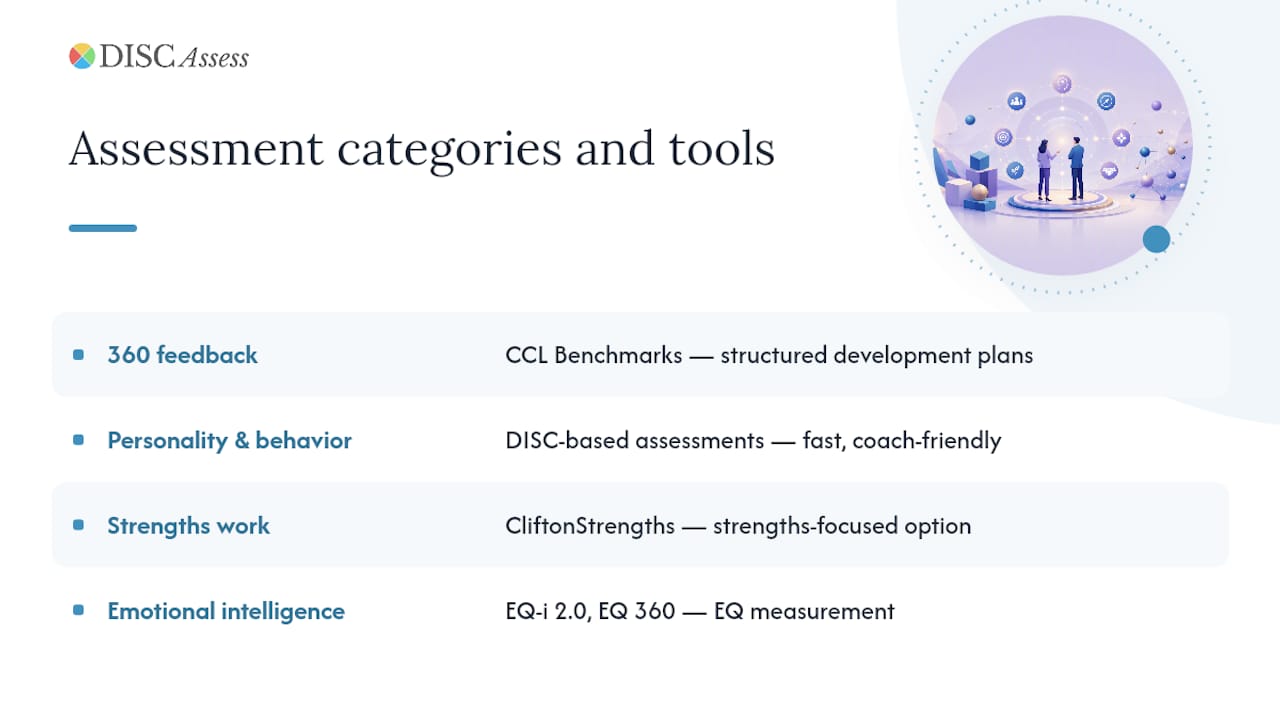
Which Tools Fit Each Assessment Category?
For 360 feedback, tools like CCL's Benchmarks suite are widely used to convert multi-rater data into structured development plans. For personality and behavioral tendencies, DISC-based assessments remain a common choice because they are fast to administer and easy for non-HR coaches to interpret. For strengths work, CliftonStrengths is a familiar option; for emotional intelligence, EQ-i 2.0 and EQ 360 are commonly cited, since personality, strengths, EQ, and behavioral suites each serve distinct coaching purposes.
Here's a real-world shape of how this plays out for a small team. A nonprofit executive director with a six-person leadership team wants better cross-functional communication before a major restructuring. Rather than commissioning a full 360 for six people, the coach runs a group DISC assessment through DISC Assess, using the admin portal to distribute assessments and generate a group report in days rather than weeks. The team gets a shared behavioral map, the coach builds individual IDPs off it, and the group re-takes a shorter pulse check three months later to track change. Total setup time: under a week.
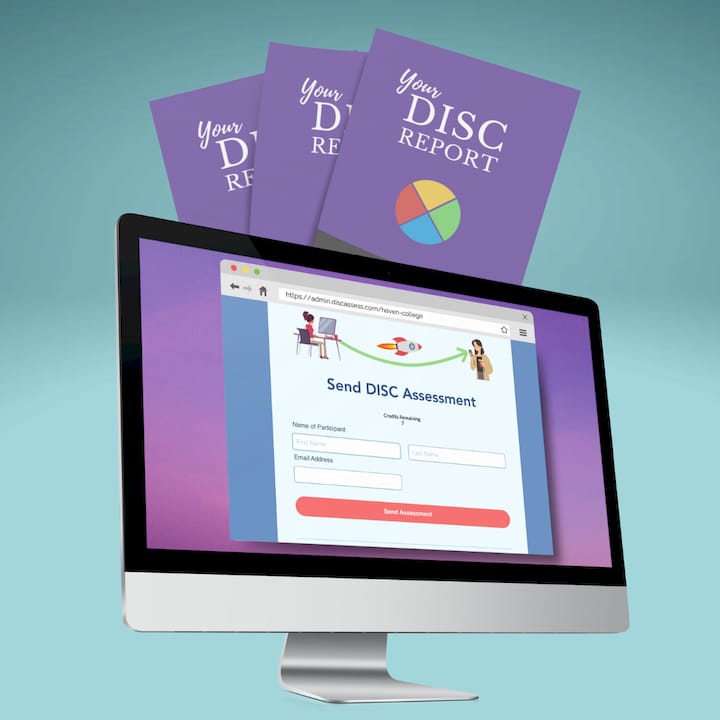
Pro Tip: For small teams without dedicated HR infrastructure, group-level DISC reporting gives you a fast baseline you can act on immediately, instead of waiting weeks for a full multi-rater cycle to close.
What Trade-Offs Should You Expect With Coaching Assessments?
Every assessment decision trades depth for speed somewhere. A full 360 with published validation studies gives you more defensible data than a quick personality profile, but it also costs more rater time and calendar coordination than most six-month engagements can absorb twice.
The trade-off that actually matters is knowing when to spend that time. Succession planning and high-stakes selection decisions justify the rigor of full psychometric batteries with adverse-impact documentation. Routine development coaching for a mid-level manager usually does not, and forcing that rigor onto a low-stakes engagement just slows everyone down without adding proportional insight.
Pro Tip: Escalate to heavier psychometrics only when the decision itself is heavy. Match the instrument to the coaching question, never to whichever brand you happen to be certified in.
Run Your Team's DISC Assessment in Days, Not Weeks
For coaches working with small businesses, nonprofits, or lean leadership teams, waiting weeks for a full multi-rater cycle to close often costs more momentum than it's worth. Discassess gives you an instant-report alternative that fits directly into the checklist above: individual assessments for one-on-one coaching, group packages for team engagements, and an admin portal that lets you manage rater lists and pull reports without HR software or certification requirements.
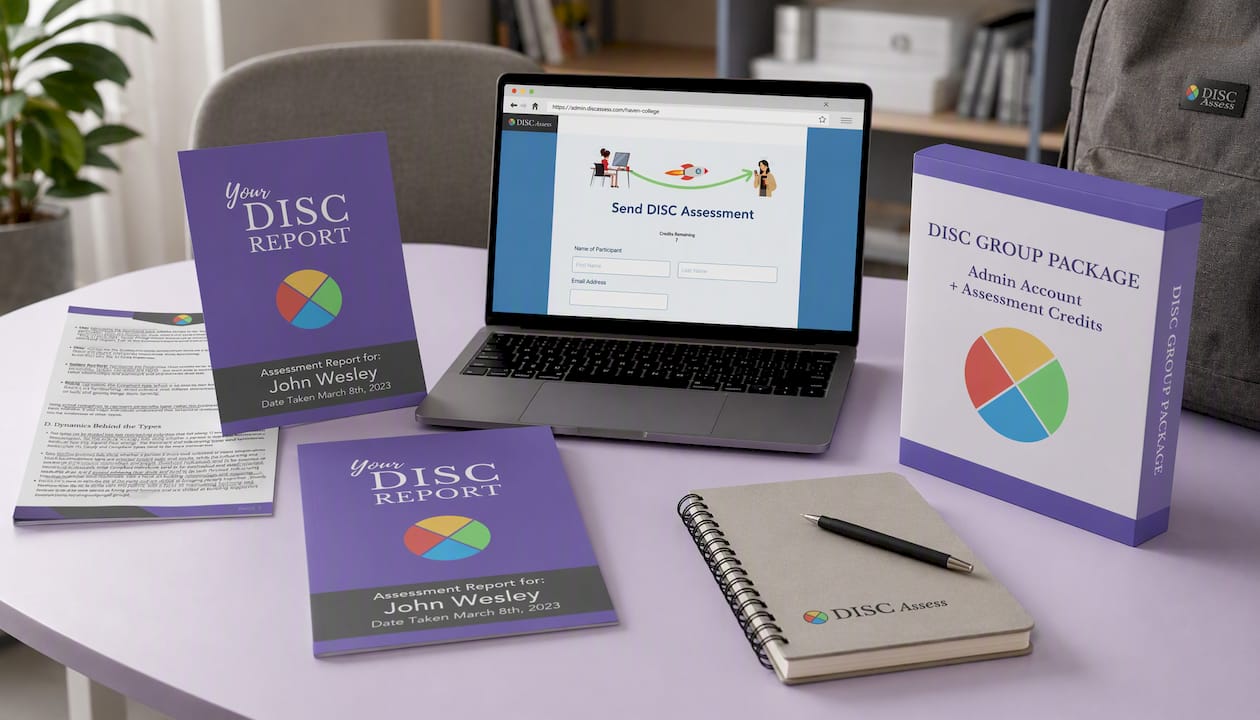
Slot it into step 2 of your checklist as the individual instrument, or use the DISC Group Package to run a full leadership team through baseline and follow-up reporting in the same week. For one-on-one client work, the Individual Classic DISC Personality Assessment delivers a complete report the same day the client completes it, and the standard DISC Personality Assessment and Report works well as a lower-cost entry point for smaller engagements. Set up your admin account, add your client roster, and send your first assessment invitation today.
Frequently Asked Questions
What should be on an executive coaching assessment checklist? At minimum: client and sponsor intake, one multi-rater instrument, one individual assessment matched to the coaching question, a debrief within two weeks, a 3 to 5 item IDP, and a re-assessment window at three to six months.
How many assessments should a coach run per client? Two is usually the practical ceiling. One multi-rater tool plus one individual instrument gives enough data without overwhelming the client or diluting focus in the debrief.
How long does an executive coaching assessment take to complete? Individual instruments typically take 15 to 30 minutes. Multi-rater assessments need a 2 to 3 week completion window for raters, plus time to compile and debrief the report.
How do you know if a coaching assessment tool is valid? Ask the vendor for the technical manual, published reliability coefficients, and any adverse-impact analysis. A credible provider will have this documentation ready without hesitation.
How often should executives be re-assessed during coaching? Most engagements re-measure the core instrument at three to six months, which is enough time for behavior change to show up without losing the thread of the original baseline.
Is DISC a good fit for executive coaching assessments? DISC works well as the individual instrument in a two-tool combination, particularly for coaches working with small teams who need fast, interpretable results without certification overhead.
Sources
- The Executive Coaching Playbook (sample PDF)
- Accelerate coaching outcomes with assessments — TD Magazine
- Leadership assessments & leadership assessment tools — CCL
- PubMed listing — related coaching study