

This page gives you a categorized bank of DISC debrief questions and facilitation templates for both one-on-one and group sessions, covering everything from pre-session prep to handling a participant who insists their report is wrong. You will find sample scripts, timing guides, and follow-up frameworks drawn from established DISC facilitation practice. Group package options are available to support these debrief workflows when running sessions at scale.
TL;DR:
- Debriefs should be prepared by clearly communicating purpose and confidentiality, and by having participants review their report and mark statements before the session.
- Effective one-on-one debriefs follow a structured flow, beginning with accuracy checks and ending with an actionable behavior plan, lasting typically 45 to 90 minutes.
- Group debriefs require setting ground rules for confidentiality, using team maps and structured activities, and concluding with specific commitments assigned to team members.
- When participants push back on their report, facilitators should ask for examples rather than argue, and consider follow-up if defensiveness persists.
- Using appropriate facilitation assets, such as permission scripts, timing templates, and highlighting key report sections, helps ensure a smooth and productive session.
Table of Contents
- Preparing Before the Assessment and the Debrief Session
- Running a One-on-One DISC Debrief
- Facilitating a Group DISC Debrief
- Ready-to-Use DISC Discussion Questions by Purpose
- When Someone Says "This Isn't Me"
- Facilitation Assets Worth Having on Hand
- Turning the Conversation Into Real Follow-Through
- Why a Question-First Approach Fits Small Teams
- Group Packages That Support Your Debrief Workflow
- Sources
Preparing Before the Assessment and the Debrief Session
Good debriefs are decided before anyone opens a report. Tell participants why the assessment matters, how long the session will run, and who will see the results. Clear pre-communication about purpose and confidentiality raises engagement once the conversation starts, according to DiSC facilitation guidance.
Before the session, ask each person to skim their report and mark statements they strongly agree or disagree with. This single step turns a passive read into active reflection, and it gives you a natural entry point once you sit down together.
- Send the report at least 24 to 48 hours ahead, with a short note on purpose and confidentiality.
- Ask participants to flag two or three statements they agree with and one they question.
- Choose your format (in-person, video, or hybrid) and set a firm time budget.
- Prep a flipchart or shared screen, plus a simple action-plan template for the close.
Running a One-on-One DISC Debrief
Individual debriefs work best as a guided walk, not a lecture. Start by asking permission to explore the report together and state your purpose in one sentence, something like: "I want to help you see where this report fits and where it might miss you, then land on one or two things you can try this month." Sample facilitation worksheets built for 45 to 90-minute sessions follow a similar arc, moving from accuracy checks to a written action plan.
- Accuracy check. "Reading through this, what feels true? What feels off?"
- Examples. "Can you think of a recent situation where this showed up?"
- Strengths. "Which of these strengths do you rely on most at work?"
- Stretches. "Where has this tendency worked against you?"
- Motivators and stressors. "What drains you fastest, and what recharges you?"
- Action plan. "What is one behavior you want to adjust in the next two weeks?"
Keep each step to a few minutes so the whole flow fits within a typical session, and jot down direct quotes. Participants remember their own words better than your paraphrase.
Pro Tip: Ask participants to bring one specific workplace situation to the session, a tense meeting, a missed deadline, a good collaboration. Anchoring the debrief to a real event makes abstract DISC language click faster than any diagram.
Facilitating a Group DISC Debrief
Group sessions carry more risk and more payoff. People are sharing personal data in front of coworkers, so set ground rules early: no ranking styles as "better," confidentiality outside the room, and permission to disagree with your own report out loud. Decide your time limit before you start, whether that is a tight 30-minute team huddle or a fuller 90-minute workshop, and have flipchart paper or a shared doc ready.
Team maps, where everyone plots their style on a shared board, work well because they make the group's mix visible quickly. Round-robin sharing, where each person names one strength and one stretch, keeps the pace moving without anyone dominating. Facilitators who run structured group activities like these report they help teams turn insight into concrete team-level actions rather than a one-off "that was interesting" conversation.
- "How do our different styles show up when we're under deadline pressure?"
- "Where does our style mix help us make faster decisions, and where does it slow us down?"
- "What's one thing this team should start doing differently based on what we just heard?"
Close by assigning each commitment an owner and a date. A team map without a follow-up owner is just a poster.
Ready-to-Use DISC Discussion Questions by Purpose
A categorized bank of prompts speeds up prep for repeat facilitators. These groupings mirror the discovery, strengths, stretch, and motivator language used in published DISC debrief question sets, and you can paste them directly into a session agenda or worksheet.
- Discovery and accuracy: "Is this accurate for you? Can you give an example from the last month?" "What surprised you most when you read this?"
- Strengths: "What strength do you bring to this team that others might not see right away?" "When has this style helped you win over a skeptical client or colleague?"
- Stretches and blind spots: "When does this style cause friction with others?" "What feedback have you gotten before that connects to this pattern?"
- Motivators and stressors: "What kind of environment brings out your best work?" "What situation drains you fastest, and how do you usually cope?" "How do you recover after a stressful week?"
- Action planning: "What is one behavior you'll try differently in the next two weeks?" "Who needs to know about this change for it to stick?" "What would tell you, honestly, that this is working?"
These categories map closely to the structure used in published DISC debrief question banks, and you can rotate through them across multiple sessions without repeating yourself. For leadership coaching specifically, pairing these prompts with a broader leadership development framework helps connect a single debrief to a longer growth arc.
When Someone Says "This Isn't Me"
Resistance is common, and it usually means the participant felt reduced to a label rather than described. Do not argue the report is right. Get curious instead.
- Ask for a specific counterexample: "Tell me about a time this didn't fit. What was different about that situation?"
- Invite an outside check: "Would a coworker who knows you well agree or push back on this?"
- Assign light observational homework: ask them to notice, without judgment, when the described pattern does or doesn't show up over the next two weeks.
- If defensiveness persists past a few minutes, pause the debrief and offer a follow-up session once they've had time to sit with it.
Practitioners generally favor open-ended, evidence-seeking questions over head-on rebuttals when a report meets pushback, since confrontation tends to harden resistance rather than dissolve it.
Pro Tip: A short script that works well: "That's fair, and reports are a starting point, not a verdict. Can you walk me through a moment where you felt most like yourself at work?" This shifts the conversation from defending the tool to exploring the person.
Facilitation Assets Worth Having on Hand
A few prepared assets separate a smooth debrief from one that stalls out mid-session.
- An opener script for permission: "Before we start, is it okay if I ask some direct questions about how this shows up for you day to day?" Session guides for structured debriefs commonly recommend this kind of upfront permission-seeking before diving into feedback.
- Timing templates: budget 45 to 60 minutes for individual sessions, 30 minutes for a quick team conversation-starter, or up to 90 minutes for a full group workshop.
- Report pages to prioritize: the style summary and the "tendencies under stress" section tend to generate the most discussion.
- Ask participants to physically highlight agreement and disagreement on their printed or digital report before you talk through it together.
DISC facilitation snapshot: A workable one-on-one debrief runs 45 to 90 minutes and moves through accuracy check, example discussion, strengths, stretches, and a written action plan, according to a published DISC debrief worksheet. Group management tools and an admin portal can support this kind of structured, repeatable session for teams of various sizes.
Turning the Conversation Into Real Follow-Through
A debrief without follow-up is just a nice conversation. Close every session, individual or group, by writing down one or two specific, observable actions per person, each with a named owner and a deadline.
- Limit commitments to one or two behaviors rather than a long wish list.
- Schedule a check-in two to four weeks out to review what stuck and what didn't.
- Fold these actions into ongoing coaching notes or a team development plan so they don't disappear after the meeting ends.
Knowing when to step in and coach further versus letting the team work through friction on its own is its own skill, and guidance on that balance is worth a look for facilitators managing multiple team debriefs at once.
Why a Question-First Approach Fits Small Teams
Small teams and independent coaches rarely have a full HR department behind them, which is why some DISC platforms build around simple, repeatable questions rather than heavy certification requirements. This approach favors clarity over jargon. Adapt every question here to your group's language and pace. The bank works because you make it yours.
— Tres
Group Packages That Support Your Debrief Workflow
Running debriefs well gets easier when your assessment platform and your question bank work together instead of against each other. Some platforms design their group tools around facilitation flows that help facilitators focus on asking good questions rather than managing logins and report exports.
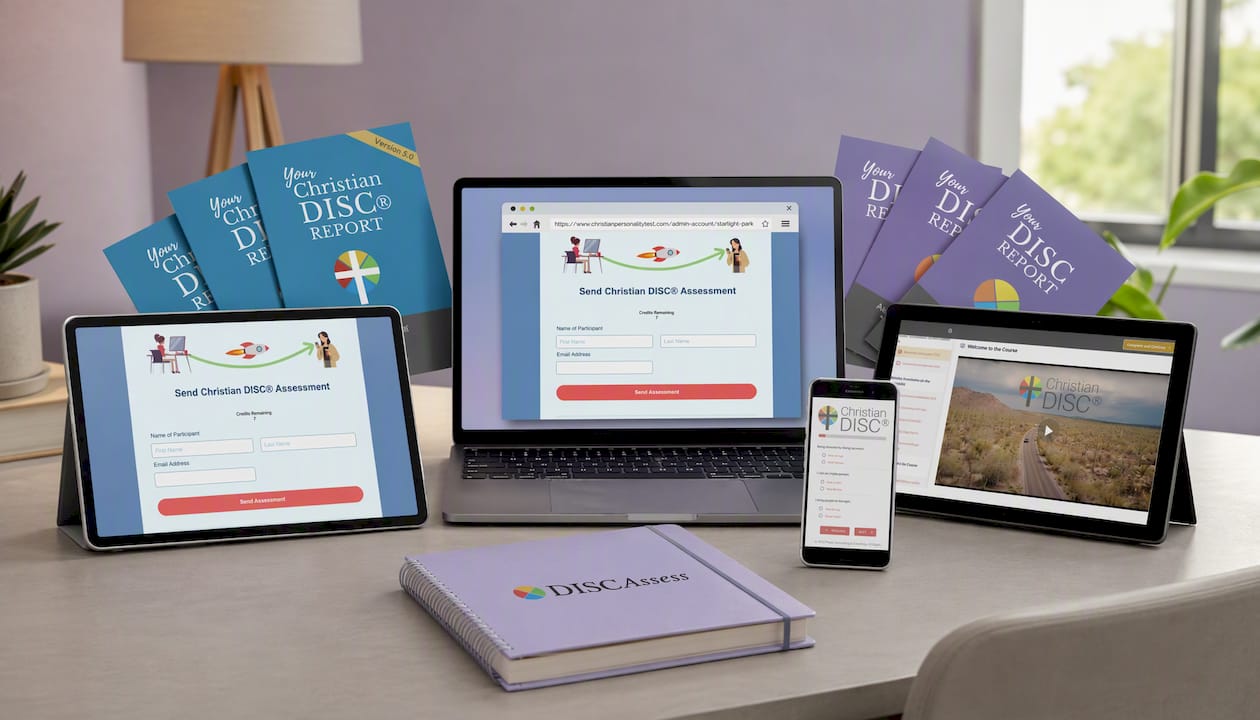
If you coach individuals or small client groups occasionally, the Starter Group Package gives you enough assessment credits to run a handful of debriefs without committing to a larger admin setup. Facilitators managing recurring team workshops or a growing client roster tend to outgrow that quickly and move to the Pro Group Package, which adds more room to scale sessions across multiple teams. For organizations that need a dedicated admin account to track completions, assign credits, and manage reports across departments, the DISC Group Package with Admin Account and Assessment Credits is built for that exact job. Pick the tier that matches how many people you're debriefing this quarter, not how many you might debrief someday, and you'll spend less time managing logistics and more time in the actual conversation.