
Yes, a faith-integrated DISC assessment can help pastors place volunteers well, reduce staff friction, and grow future leaders, but only if you take it yourself first. The reason is simple: church-tuned language and ready-made workshop materials make people far more willing to participate than a corporate personality test ever will. That leader-first approach is well documented, and it's exactly where the rest of this guide starts.
TL;DR:
- Churches should start with the pastor completing their own DISC assessment to model transparency and better interpret team results.
- Faith-integrated DISC descriptions focus on scripture and ministry roles, making them more engaging and relevant than secular versions.
- Pairing DISC with spiritual gifts inventories enhances volunteer placement by clarifying both behavior and calling.
- A successful DISC rollout hinges on ready-made workshop materials, group reporting capabilities, and clear privacy communication.
- Costs and provider quality vary, but selecting a faith-based DISC platform with group and facilitator resources ensures better integration into church culture.
Table of Contents
- What Is Christian DISC and How Does It Map to Ministry Roles?
- Why Does DISC Matter for Ministry Teams?
- How Do You Roll Out DISC in Your Church?
- How Do You Choose a Faith-Integrated DISC Provider?
- Why Discassess Is a Practical Starting Point for Pastors
- What I've Learned Watching Churches Roll Out DISC
- Get Started With Faith-Version Assessments and Resources
- Sources
- FAQ
What Is Christian DISC and How Does It Map to Ministry Roles?
DISC measures four behavioral tendencies: Dominance, Influence, Steadiness, and Conscientiousness. A faith-integrated version keeps that same framework but reframes the descriptions, scripture references, and workshop language so they speak to discipleship and calling rather than sales quotas or corporate KPIs.
In a church context, the four dimensions tend to show up like this:
- Dominant (D): Task-driven, decisive, comfortable leading building campaigns, missions launches, or hard conversations with staff.
- Influential (I): Relational and expressive, often the greeter, worship leader, or small-group host who draws people in.
- Steady (S): Loyal and consistent, the backbone of children's ministry, hospitality teams, and long-term care committees.
- Conscientious (C): Detail-oriented and careful, well suited to finance committees, facilities, and administrative oversight.
The practical difference between a secular DISC report and a church-tuned one isn't the underlying psychology. It's whether the language, examples, and group discussion guides are ready for a Sunday school classroom instead of a corporate boardroom. Ministry-focused write-ups on faith-integrated DISC adoption confirm that this shift in wording, not the model itself, is what drives congregational buy-in.
Why Does DISC Matter for Ministry Teams?
Placement is where most churches lose good volunteers. A high-D leader forced into quiet, repetitive administrative work will burn out fast. A high-S caregiver thrown into public conflict resolution will freeze. DISC gives you a fast, structured way to catch those mismatches before they cost you a volunteer.
Four outcomes tend to follow a well-run DISC rollout:
- Better role fit. Volunteers land in positions that match their natural tendencies, which raises satisfaction and retention.
- Fewer recurring misunderstandings. Staff learn why a Conscientious deacon needs more lead time than an Influential worship leader, and stop taking the difference personally.
- Stronger succession planning. Pastors can spot complementary pairs (a visionary D and a detail-focused C) and build them into future elder or staff teams.
- Sharper discipleship conversations. DISC gives you behavioral language to sit alongside spiritual growth conversations, not instead of them.
DISC doesn't replace a spiritual gifts inventory. It complements one. Gifts assessments answer "what has God called you to do," while DISC answers "how do you naturally do it." Pairing the two produces sharper, more specific volunteer placements than either tool alone.
Pro Tip: Run your spiritual gifts inventory and your DISC assessment in the same season, then place both results side by side for each volunteer before making any team assignments.
How Do You Roll Out DISC in Your Church?
Start with yourself, not your staff. Taking a DISC assessment yourself before you ask anyone else to participate does two things: it models vulnerability, and it gives you a personal reference point when you're interpreting someone else's report later.
- Complete your own assessment. Write down where your style shows up in staff meetings, budget decisions, and conflict. Be honest about your blind spots.
- Pilot with your core leadership team. Book a workshop lasting about an hour to an hour and a half, use prepared slides, and walk through group reports together rather than handing out individual PDFs with no context.
- Scale to volunteers and the wider congregation. Send a short communication explaining what the assessment is for, note that results stay confidential, and schedule the workshop around an existing gathering people already attend.
- Use an admin portal and downloadable guides. A portal that lets you assign, collect, and view group results in one place saves hours of manual tracking, especially with lay volunteers running the process.
- Track a few simple metrics. Watch for changes in role fit, volunteer retention over the following few months, and whether staff meetings run with less friction than before.
Two things separate a DISC rollout that sticks from one that fizzles after the first workshop: see examples of culture- and team-focused design work that highlight practical tools to support team culture and communication.
- Ready-made, downloadable workshop materials that don't require a pastor to build slides from scratch.
- A private, low-pressure setting for the pilot group before results ever reach the wider congregation.
Turnkey ministry kits, similar to the model behind Outreach's Back to Church campaign, prove the same principle applies here: ready-made materials shrink prep time and speed up adoption. A leadership development guide can help you translate the pilot's findings into a longer-term development plan for your staff.
How Do You Choose a Faith-Integrated DISC Provider?
Not every "Christian DISC" product on the market is built the same way. Some are little more than a secular report with a Bible verse pasted on top. Before you commit, run through this checklist.
- Faith-language options. Does the report use scripture-aligned descriptions, or is it a generic corporate report with a cross added to the cover?
- Group reporting. Can you see an entire team's results together, not just one profile at a time?
- Admin portal access. Can you assign assessments, track completions, and pull reports without emailing PDFs back and forth?
- Pricing flexibility. Does the provider offer per-assessment pricing, group packages, and unlimited memberships, or only one rigid tier?
- Ready workshop materials. Are slides, discussion guides, and facilitator notes included, or will you be building them yourself?
- Facilitator training availability. Some church-specific DISC products bundle certification or training for the person running the workshop.
Watch for red flags: complex, HR-only implementations built for enterprise onboarding, a total lack of group or workshop resources, and pricing pages that hide setup fees until checkout. If a provider can't show you a sample faith-version report before you buy, that's worth asking about directly.
Why Discassess Is a Practical Starting Point for Pastors
Discassess offers a faith-version assessment designed for churches, aiming to provide a tool suited for ministry contexts. The platform pairs the Christian DISC® assessment with an admin portal, group packages, and multiple purchase options to suit diverse team needs.
What that means in practice for a ministry team:
- An admin portal that lets you assign, track, and pull group reports efficiently.
- Workshop guides built for a session lasting about an hour to an hour and a half.
- Pricing options that accommodate different team sizes.
- Setup designed to be manageable for pastors or office administrators.
What I've Learned Watching Churches Roll Out DISC
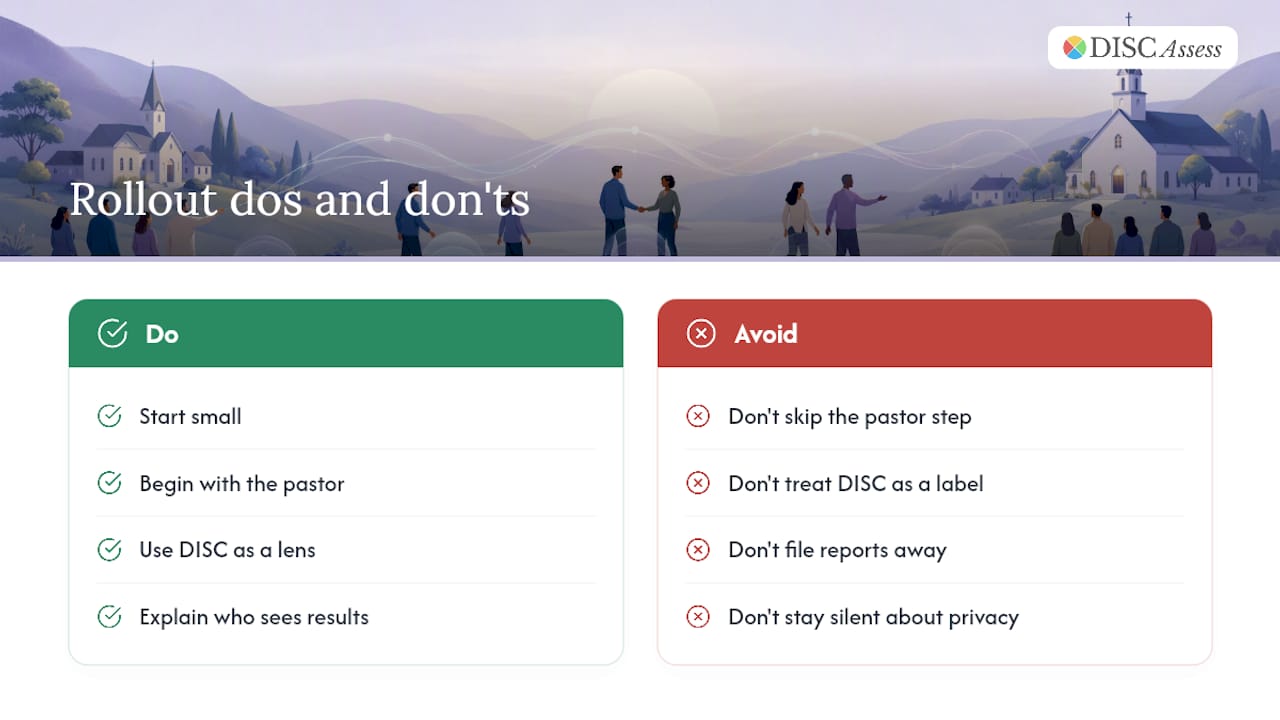
The churches that get this right start small and start with the pastor. Skip that step and the whole rollout feels top down, like one more program being imposed on volunteers who already feel stretched thin.
The mistake I see most often is treating DISC as a label instead of a lens. A profile describes a tendency on a given day, not a permanent identity, and pastors who tie results to specific role descriptions get far more value than those who just file the reports away. The other common failure is silence around privacy. Tell people upfront who sees their results and why, or you'll spend more time managing anxiety than building teams.
— Tres
Get Started With Faith-Version Assessments and Resources
Once you've decided a faith-integrated DISC fits your church, the fastest path forward is a small, well-resourced pilot rather than a churchwide rollout on day one. Discassess offers a few ways to begin, all built for pastors who need something workable without a steep learning curve.
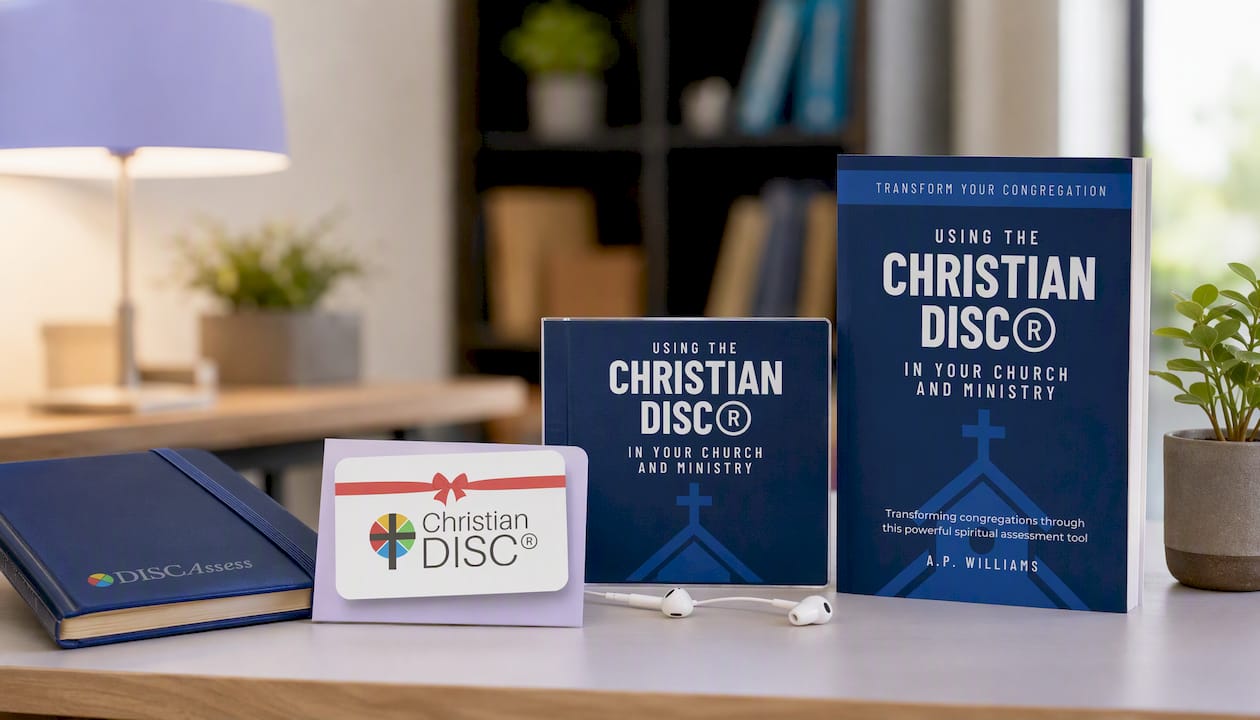
If you want a gift for a fellow pastor or a staff member starting their own leadership track, gift cards let them choose their own assessment. For deeper study on applying the model inside a congregation, Using the Christian DISC® in Your Church and Ministry is available in paperback, and the audio book edition works well for a commute or a staff retreat drive. To begin the pilot itself, take the Christian DISC® assessment with report yourself first, then set up your admin portal or reach out for a demo and live training session for your leadership team.
FAQ
Should the Pastor Take the DISC Assessment First?
Yes. Taking the assessment yourself before your staff or volunteers builds credibility, models openness, and gives you a personal reference point for interpreting other people's results.
How Is a Faith-Integrated DISC Different From a Standard One?
The underlying four-dimension model is the same, but a faith-integrated version like the Christian DISC® uses scripture-aligned descriptions and ministry-specific workshop language instead of corporate terminology.
Can DISC Replace a Spiritual Gifts Assessment?
No. DISC measures behavioral tendencies, while a spiritual gifts inventory measures calling, and pairing both gives you a fuller picture for volunteer placement.
How Much Does It Cost to Run DISC With a Small Church Team?
Costs vary by provider and format; for current pricing options, please visit the provider's website.
What's the First Practical Step to Start Using DISC?
Complete a faith-version assessment yourself, then pilot a workshop lasting about an hour to an hour and a half with your core leadership team before expanding to volunteers.