

Yes, DISC assessments are legal to use in U.S. hiring and team development, but only as a supplemental, job-related input rather than the sole basis for an employment decision. Follow the EEOC's guidance on employment tests, respect ADA limits on medical-style questions, and apply the tool consistently. If you're building a small-team process around this, a platform designed for exactly that use case, like Discassess, makes the guardrails easier to follow.
TL;DR:
- DISC assessments are legal for use in hiring when applied as a supplement, not as the sole decision-making factor, and must be used consistently across all candidates.
- The assessment must be clearly job-related, with documented links between traits measured and job performance, to avoid adverse impact claims or legal exposure.
- Pre-offer DISC testing that probes for mental health symptoms or diagnostically diagnostic questions can violate ADA restrictions on medical examinations.
- Employers should always validate that DISC tools measure observable, work-related behaviors and avoid clinical or symptom-based item content to remain compliant.
- Small organizations should focus on documenting procedures, applying the same assessment to all finalists, and combining DISC with objective measures to ensure defensibility.
Table of Contents
- Disc EEOC Rules: What the Federal Framework Actually Requires
- When Does a Personality Test Become a Medical Exam?
- How Should Small Employers Actually Use DISC?
- A Compliance Checklist Before You Buy or Deploy a DISC Tool
- A Small-Team DISC Option Built With These Guardrails in Mind
- Why Small Organizations Get This Right When They Slow Down
- Primary Sources Worth Bookmarking
- Sources
- FAQ
Disc EEOC Rules: What the Federal Framework Actually Requires
Federal law does not name DISC specifically. What it does regulate is any "selection procedure" an employer uses to make decisions about hiring, promotion, or placement, and a personality assessment counts. The EEOC's guidance on tests and selection procedures sets the standard: a test is permissible if it's job-related and consistent with business necessity. That phrase does a lot of work. It means you need a defensible connection between what the test measures and what the job actually demands.
This standard traces back to the Uniform Guidelines on Employee Selection Procedures (UGESP), the federal framework agencies use to judge whether a hiring tool creates unlawful disparate impact. UGESP introduces the four-fifths rule, often called the 80% rule, as a practical screening threshold.
Statistic: If the selection rate for any protected group falls below 80% of the rate for the highest-scoring group, the EEOC treats that as evidence of adverse impact, which shifts the burden to the employer to justify the tool's job-relatedness.
That threshold matters for DISC because behavioral assessments, unlike a skills test with an objectively correct answer, measure tendencies. If your DISC results happen to screen out members of a protected class at a disproportionate rate, and you can't show the traits you measured are tied to actual job performance, you have a legal exposure problem regardless of how well-intentioned the tool was.
A few practical implications follow from this:
- Vendor tools don't transfer liability. If you buy a DISC product and it produces adverse impact, you're still the responsible party under EEOC guidance, not the vendor.
- "It seemed helpful" is not a defense. Business necessity requires a documented link between the trait measured and the job's core functions.
- The 80% rule is a screening flag, not a legal verdict. Falling below it triggers scrutiny; it doesn't automatically mean you lose a claim, but it does mean you need validation evidence ready.
Some emerging state and local rules add another layer. New York City's Local Law 144 now requires bias audits for automated employment decision tools, and other jurisdictions are moving in the same direction. If your DISC vendor uses any algorithmic scoring or automated ranking, ask whether that tool has been audited for your state's requirements.
When Does a Personality Test Become a Medical Exam?
The Americans with Disabilities Act draws a firm line: employers cannot conduct medical examinations or ask disability-related questions before extending a conditional job offer. That distinction is where a lot of well-meaning DISC use runs into trouble.
The EEOC's enforcement guidance on the ADA and psychiatric disabilities treats any test designed to diagnose a mental health condition as a medical examination, subject to the same pre-offer restrictions as a physical exam. A behavioral style assessment isn't automatically medical, but certain features can push it into that category:
- Items that probe symptoms of anxiety, depression, or other clinical conditions rather than workplace behavior.
- Scoring frameworks built to flag or diagnose psychiatric disorders.
- Instruments like the MMPI, which were designed for clinical diagnosis, not workplace communication style.
DISC, as a model, was built to describe behavioral tendencies in dominance, influence, steadiness, and conscientiousness, not to diagnose anything. That's an important distinction from clinical instruments, and it's part of why DISC has stayed a common choice for team-building and coaching rather than clinical screening.
Pro Tip: Before you deploy any DISC tool company-wide, read through the actual item bank yourself. If a question sounds like it belongs on a mental health intake form rather than a workplace communication survey, that's a sign the vendor hasn't screened it for ADA risk.
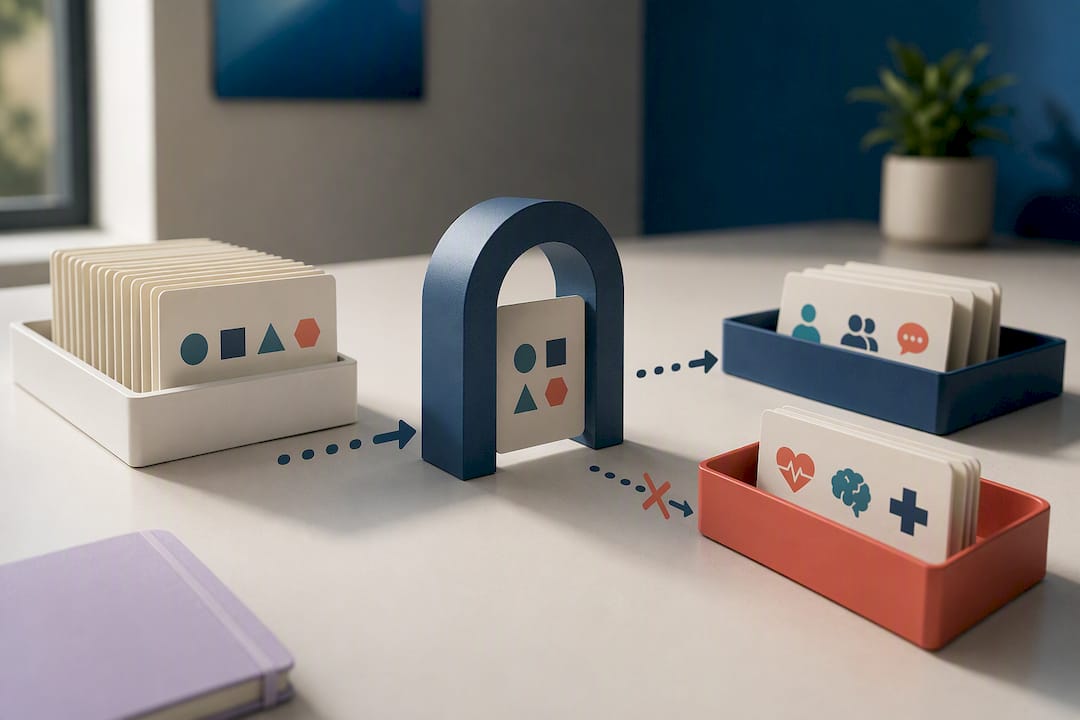
The safest rule of thumb: use DISC instruments that measure observable, work-related traits, and never as a pre-offer screening gate tied to pass or fail outcomes.
How Should Small Employers Actually Use DISC?
The legal framework matters less than the sequence you follow in practice. Here's the order that keeps most small employers on solid ground:
- Screen for competence first. Use skills tests, work samples, or structured interviews to narrow your candidate pool based on qualifications, not personality.
- Introduce DISC after the pool is narrowed, for team fit conversations, onboarding, and manager coaching, rather than as an early filter.
- Apply the same instrument to every finalist for a given role. Inconsistent administration, giving DISC to some candidates and not others, is one of the fastest ways to create a discrimination claim even without discriminatory intent.
- Document how the results informed the decision, without making them the decision. A hiring file that shows DISC as one input among several is far more defensible than one where it was the tiebreaker.
Practitioner guidance consistently points the same direction: DISC works best as a coaching and onboarding tool, not a hiring gate, and Discassess's own guidance on using DISC for hiring makes the same case for small teams weighing whether to add it to their process.
A few operational habits reduce risk further:
- Never use DISC as a sole pass or fail filter for any role.
- Keep individual results confidential and share only what's relevant to the hiring team.
- Offer reasonable accommodations under the ADA if a candidate requests an alternative format or additional time.
- Combine DISC with at least one objective measure, like a structured interview scorecard or a job-specific work sample.
Small nonprofits face the same rules, even for volunteer placement, though the stakes look different when no employment relationship exists. If you're matching volunteers to roles rather than making paid hiring decisions, the legal exposure shrinks, but consistent, documented use is still the safer habit. Discassess covers this scenario directly in its guide on how nonprofits use DISC with volunteers.
A Compliance Checklist Before You Buy or Deploy a DISC Tool
Before you sign up for any vendor's DISC product, run through a short due-diligence pass. It takes less than an hour and it's the difference between a defensible process and a guess.
Vendor documentation to request:
- Validity studies or technical reports showing the instrument was built and tested for workplace use.
- A sample of the actual item bank, so you can screen for clinical or symptom-based language.
- Any algorithmic scoring documentation, especially if the tool ranks or auto-filters candidates.
- Confirmation the vendor's items were screened against ADA medical-exam standards.
Validation basics: A proper validation study starts with job analysis, identifying which traits genuinely predict performance in the specific role, before testing whether the instrument measures those traits reliably. Content, criterion, and construct validity are the three recognized paths under UGESP, and larger organizations with legal exposure at scale often bring in an industrial-organizational psychologist to run this analysis. Smaller employers usually don't need that level of rigor for coaching-focused use, but it becomes important the moment DISC results influence a hiring outcome.
Monitoring: If you're running DISC across enough hires to calculate selection rates by group, periodically check your numbers against the 80% rule. If impact appears, pause and consider alternative selection methods before continuing.
Pro Tip: Keep a simple spreadsheet logging who took the assessment, when, and how the results were used in any decision. That single habit does more to protect a small employer than almost any other compliance step.
Alston & Bird's analysis of personality testing risks makes the same point: employers remain responsible for compliance even when the tool itself comes from a third-party vendor. Vendor claims of "EEOC compliant" software mean little without documentation behind them.
A Small-Team DISC Option Built With These Guardrails in Mind
Discassess is the practical alternative to enterprise DISC providers that require certifications, licensing fees, or corporate-scale contracts. It's built for the exact scenario this article covers: a small business, nonprofit, or coaching practice that wants to use DISC responsibly without hiring a psychometrician.
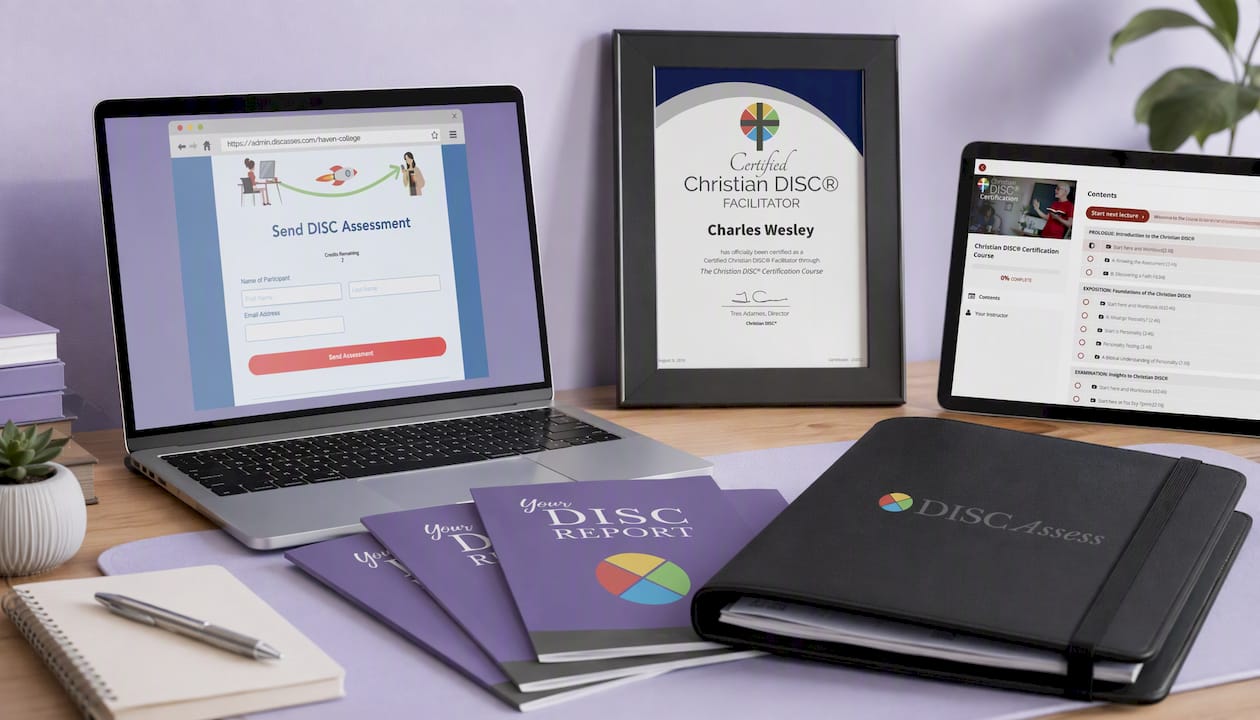
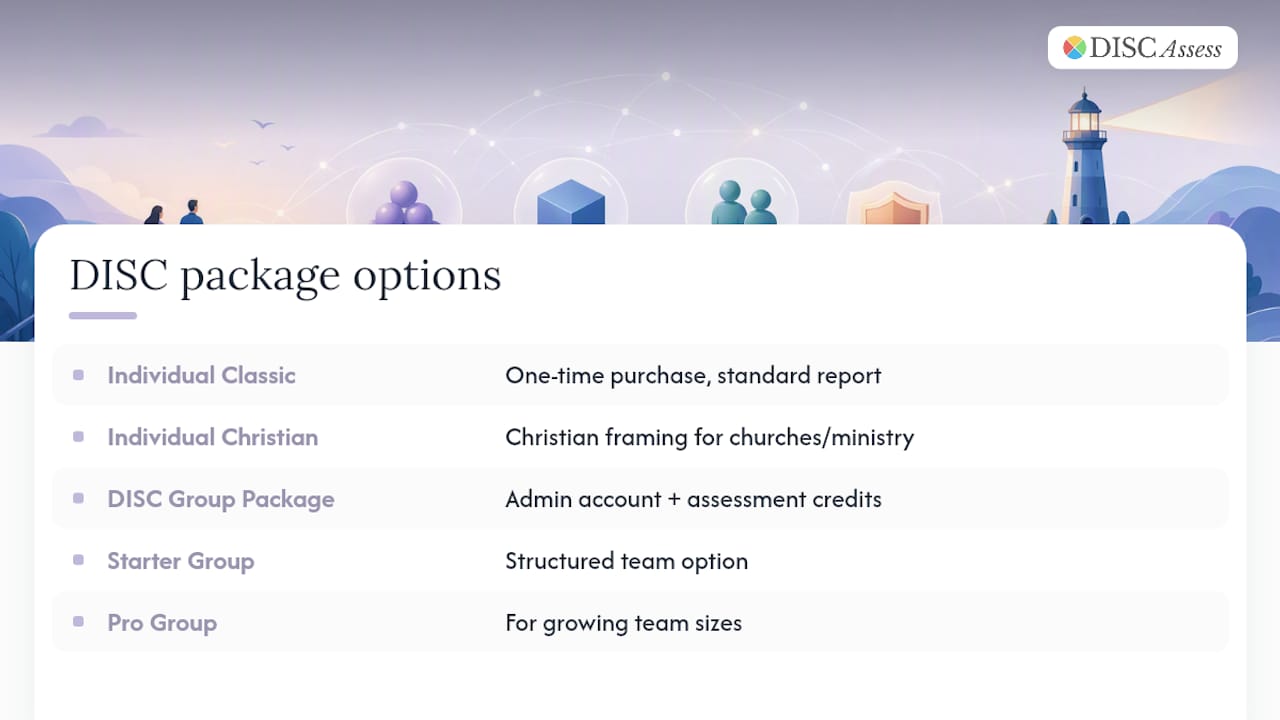
For an individual who wants a quick self-assessment, the Individual Classic DISC Personality Assessment delivers a standard report as a one-time purchase, no ongoing commitment required. Teams building out a hiring or coaching process at scale can use a DISC Group Package, which pairs an admin account with assessment credits, giving you the exact kind of consistent, documented administration this article recommends. Organizations that want more structure can look at the Starter Group Package or step up to the Pro Group Package as team size grows, and a Group Discount Package is available for larger rollouts. Faith-based organizations have a distinct option too: the Individual Christian DISC® Spiritual Personality Assessment frames the same behavioral model through a discipleship lens for churches and ministries that want that alignment.
The admin portal is where the compliance advice in this article actually becomes practical. It lets a single manager apply the same assessment to every finalist, export results for review, and keep a documented trail showing DISC informed a decision rather than dictated it. Discassess also offers Live Group Training sessions if your team wants guided interpretation rather than a self-serve report.
If you're ready to start, browse assessment options or set up a group admin account to trial a package with your leadership team before rolling it out further.
Why Small Organizations Get This Right When They Slow Down
Discassess exists because most small businesses and nonprofits don't have an HR department, let alone an in-house employment lawyer. We built the platform assuming the person setting it up is a team leader or office manager, not a certified test administrator, which is why the admin tools focus on consistency rather than complexity.
The honest limitation is this: no assessment, DISC or otherwise, replaces sound judgment in a hiring decision. The safest posture for a small employer is conservative and boring: document everything, apply the tool the same way to everyone, and treat DISC as one voice in the room rather than the deciding one. Organizations that follow that discipline rarely run into trouble. The ones that don't are usually the ones you read about in enforcement actions.
— Tres
Primary Sources Worth Bookmarking
Keep these on hand whenever you're documenting vendor due diligence or reviewing your own process:
- EEOC: Employment Tests and Selection Procedures
- EEOC: Enforcement Guidance on ADA and Psychiatric Disabilities
- OPM: Are We Allowed to Use Personality Tests to Assess Candidates?
- Penn State Law Review: Pre-Employment Personality Tests and the Law
This article is general information, not a substitute for advice from a qualified lawyer. Consult a qualified legal professional about your own circumstances before acting on anything here.
Sources
- Employment tests and selection procedures | U.S. Equal Employment Opportunity Commission
- Enforcement guidance: ADA and psychiatric disabilities
- Are we allowed to use personality tests to assess candidates? | U.S. Office of Personnel Management
- Pre-Employment Personality Tests and the Law | Penn State Law Review
FAQ
Is DISC Legal to Use in Hiring Under EEOC Rules?
Yes. The EEOC doesn't ban personality assessments; it requires that any selection procedure be job-related and consistent with business necessity. DISC is lawful when used as a supplemental input alongside skills-based screening, not as a standalone pass or fail filter.
Can DISC Results Be Used as the Only Hiring Criteria?
No. Using DISC as the sole basis for a hiring decision increases legal exposure, especially if the results produce adverse impact against a protected group. Best practice pairs DISC with structured interviews or work samples, documenting that it informed rather than decided the outcome.
Does the ADA Restrict When I Can Give a DISC Assessment?
Yes, if the test veers into medical or psychiatric territory. The ADA bars medical examinations before a conditional job offer, so any DISC-style tool with clinical item content needs the same pre-offer restrictions as a medical exam.
What Does the 80% Rule Mean for DISC Testing?
It's the adverse-impact threshold from the Uniform Guidelines on Employee Selection Procedures. If DISC results select one protected group at less than 80% of the rate of the highest-scoring group, that's a flag requiring you to show the test is validated for the job.
How Much Does a DISC Assessment Cost for a Small Team?
Discassess prices an individual assessment at $29 as a one-time purchase, with group packages and admin accounts available for teams that need to test multiple people consistently. Current pricing for larger memberships is listed directly on the Discassess site.