

Most nonprofits can equip a small team with DISC assessments for under $500 and a full staff rollout for a few hundred dollars more, with a group admin package or assessment-credit bundle typically the smartest first purchase. Facilitation, if you add it, runs separately, often reflecting the roughly $159 average hourly rate nonprofit consultants charge, and many organizations find professional options in team-building programs like those from Archers Battlefield; most vendors will negotiate scope or offer a sliding scale once you're transparent about your budget.
TL;DR:
- Most nonprofits can budget under $500 for a small team DISC assessment rollout, with additional facilitation costs averaging around $159 per hour.
- Group or bundle pricing, such as admin accounts and assessment credits, lowers per-person costs significantly compared to individual assessments.
- Membership plans are cost-effective only for organizations with continuous assessment needs, typically breaking even after assessing multiple staff or volunteers regularly.
- Facilitation expenses are separate and are optional, with many nonprofits opting for self-guided materials to reduce costs.
- Begin with a pilot assessment for a small team or department to gather concrete data before committing to larger, organization-wide investments.
Table of Contents
- How Nonprofit DISC Pricing Actually Breaks Down
- What Should You Actually Budget for DISC Assessments?
- Where Nonprofits Find the Money for DISC Purchases
- How Do You Evaluate a DISC Quote Before Buying?
- Which DISC Assess Package Fits Your Nonprofit?
- What a Careful Buyer Does Next
- Ready to Price Out Your Team's DISC Rollout?
- Where These Numbers Come From
- Sources
- FAQ
How Nonprofit DISC Pricing Actually Breaks Down
Nonprofit DISC pricing isn't one number. It's a stack of four separate decisions, and understanding each one keeps you from comparing a $29 quote against a $900 quote as though they cover the same thing.
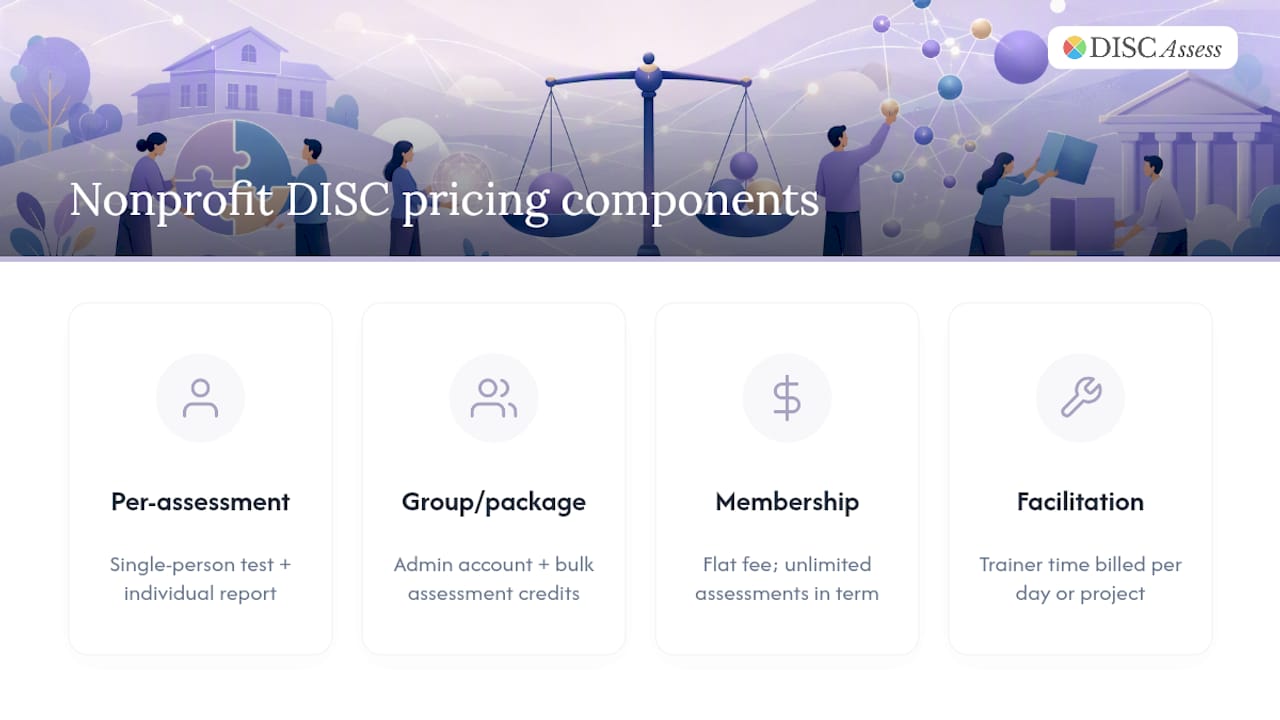
Per-assessment pricing covers a single person's test and their individual report. This is the base unit, and it usually includes an instant results page and a personalized breakdown of that person's style. It rarely includes group facilitation or a trainer walking your team through what the results mean.
Group or package pricing bundles an admin account with a batch of assessment credits, so one coordinator manages the whole rollout instead of buying assessments one at a time. This is where most nonprofits land, because it keeps per-person cost low while giving someone on staff the tools to track completion and pull reports.
Membership or unlimited plans flip the math: instead of paying per person, your organization pays once for a stretch of time and runs as many assessments as you need within it. These make sense once you cross a certain volume, which we'll size up in the next section.
Facilitation fees sit apart from all of the above. A trainer walking your staff through results, running exercises, and translating DISC language into daily communication habits is a separate line item, priced by the day or by the project, not folded into the assessment cost.
Pricing models across the nonprofit consulting world generally fall into hourly, flat project, day rate, and retainer structures, and packaged services tend to simplify the decision because you're comparing a fixed offer instead of guessing at hours. Digital, self-guided materials strip out facilitator time entirely, which is the single biggest lever nonprofits have for cutting cost without cutting the assessment itself.
What Should You Actually Budget for DISC Assessments?
Here's the concrete math, because vague ranges don't help a program manager building a line item.
- Single assessment: A standalone DISC assessment with report runs $49, whether you choose the classic version or the Christian DISC® faith-based version. An individual assessment without the full report option starts at $29.
- Small-group package: A group admin account runs $299 as a one-time purchase, which functions as the coordinator's dashboard for tracking a batch of assessment credits. Spread across a 15-person staff, that admin cost adds roughly $20 per person on top of whatever credits you buy, which is far leaner than paying a facilitator for the same rollout.
- Membership or unlimited access: An Extended Pro Membership built for facilitators runs $894 for six months. That number looks steep next to a single assessment, but it breaks even fast for an organization running assessments continuously across new hires, volunteer cohorts, and board retreats.
- Facilitation and workshop time: Expect day rates that echo the sector average of about $159 an hour for outside consultants, with half-day workshops typically priced lower than full-day sessions. Budget guides for nonprofit consulting put realistic project and workshop fee ranges well above the assessment cost alone, so treat facilitation as an optional add, not a default.
Pro Tip: Run the math per person before you commit to a package size. A 25-person rollout on assessment credits alone almost always beats booking a facilitator for a group that size, unless your team genuinely needs live coaching to apply the results.
Where Nonprofits Find the Money for DISC Purchases
Most organizations don't create a new budget line for this. They fold it into a category that already exists.
- Professional development funds: Many nonprofits already carry a training or professional development line that a DISC purchase fits without a special request.
- Program evaluation budgets: If the assessment supports a specific program's team effectiveness, program evaluation dollars can often absorb the cost.
- Board or funder sponsorship: A board member or funder focused on organizational capacity will often say yes to a request framed around retention and team efficiency rather than "personality testing."
- Grants for capacity building: Some capacity-building grants explicitly cover staff development tools, and DISC assessments qualify cleanly under that language.
When you pitch it, connect the cost to outcomes your board already tracks. Team cohesion directly affects program delivery and donor-facing consistency, and a coordinated team with a shared communication vocabulary tends to retain staff longer, which lowers your recruiting and onboarding costs down the line. Nonprofits commonly allocate 2 to 5 percent of their annual budget to outside expertise, and framing a DISC purchase within that existing guideline gives a board something concrete to approve rather than an unfamiliar new expense.
On payment terms, ask. Many vendors accept installment payments, purchase orders, or a sliding scale tied to your organization's budget size, and coaching and group programs in the nonprofit space commonly offer tiered pricing for exactly this reason.
How Do You Evaluate a DISC Quote Before Buying?
Before you sign off on any quote, ask three questions.
- What exactly is included? A quote should spell out whether you're getting individual reports only, or reports plus a facilitator session, or reports plus ongoing admin access.
- How does the learning transfer to daily work? A report nobody reads after week one is money wasted. Ask whether the package includes any follow-up material, cheat sheets, or team discussion guides.
- Are there per-participant fees hiding outside the sticker price? Some vendors quote a low base price, then charge extra per person once you exceed a threshold. Get that number in writing.
Self-guided materials make sense for volunteer cohorts, seasonal staff, or any group that needs the insight fast without a scheduling headache, and a one-page cheat sheet can onboard a new volunteer in fifteen minutes. Live facilitation earns its cost when you're resolving an actual team conflict or building a shared framework for a leadership team that will use it for years. If your budget is tight, a phased rollout, department by department, spreads the cost across two fiscal years instead of forcing one large ask. Providers will often adjust scope to match your available funds when you're upfront about the number you're working with, so don't be shy about naming it first.
Which DISC Assess Package Fits Your Nonprofit?
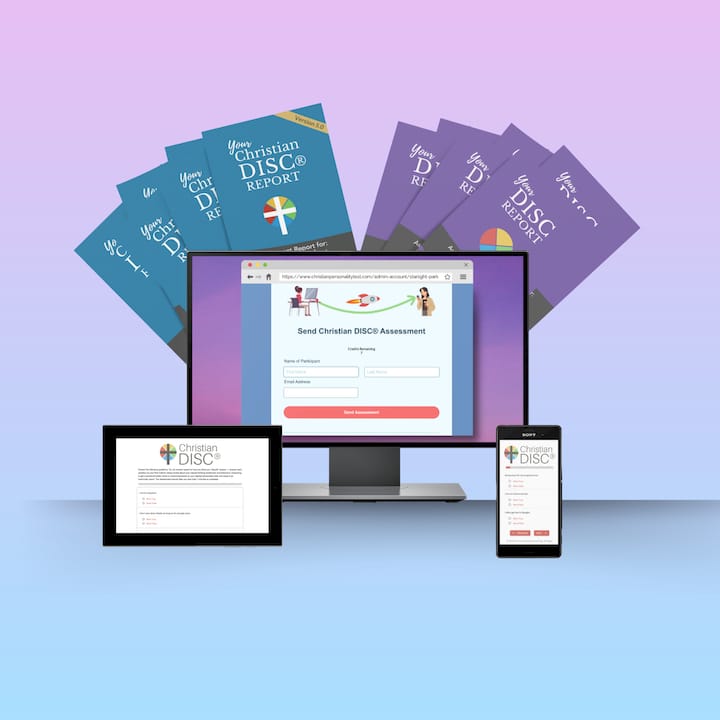
Three packages map onto three common nonprofit scenarios:
- Group Discount Package: fits a one-off training day or a single retreat where you need a batch of assessments completed at once.
- Assessment Credits: fits organizations with intermittent volunteers who rotate in throughout the year rather than starting all at once.
- DISC Group Package (Admin Account + Assessment Credits): fits ongoing team use, where staff turnover means you're regularly onboarding new people into the same DISC framework.
The admin portal itself does the heavy lifting that would otherwise require a paid facilitator's time, tracking who's completed their assessment and pulling reports without anyone booking a consultant's hour.
What a Careful Buyer Does Next
The nonprofits that get real value out of DISC don't buy the biggest package available. They start with an honest inventory of their training budget, request a pilot quote for one small team, and ask every vendor directly about sliding-scale or phased options before assuming the sticker price is fixed. Tie the purchase to something measurable, like onboarding time or a specific team's turnover, and negotiate the scope of delivery before you ever negotiate the price itself.
— Tres
Ready to Price Out Your Team's DISC Rollout?
Discassess skips the enterprise sales process entirely: no certification requirements, no consultant markup, no multi-week quote cycle. You can see per-package pricing on the site the same day you're building your budget request, which matters when a board meeting is two weeks out and you need real numbers now.
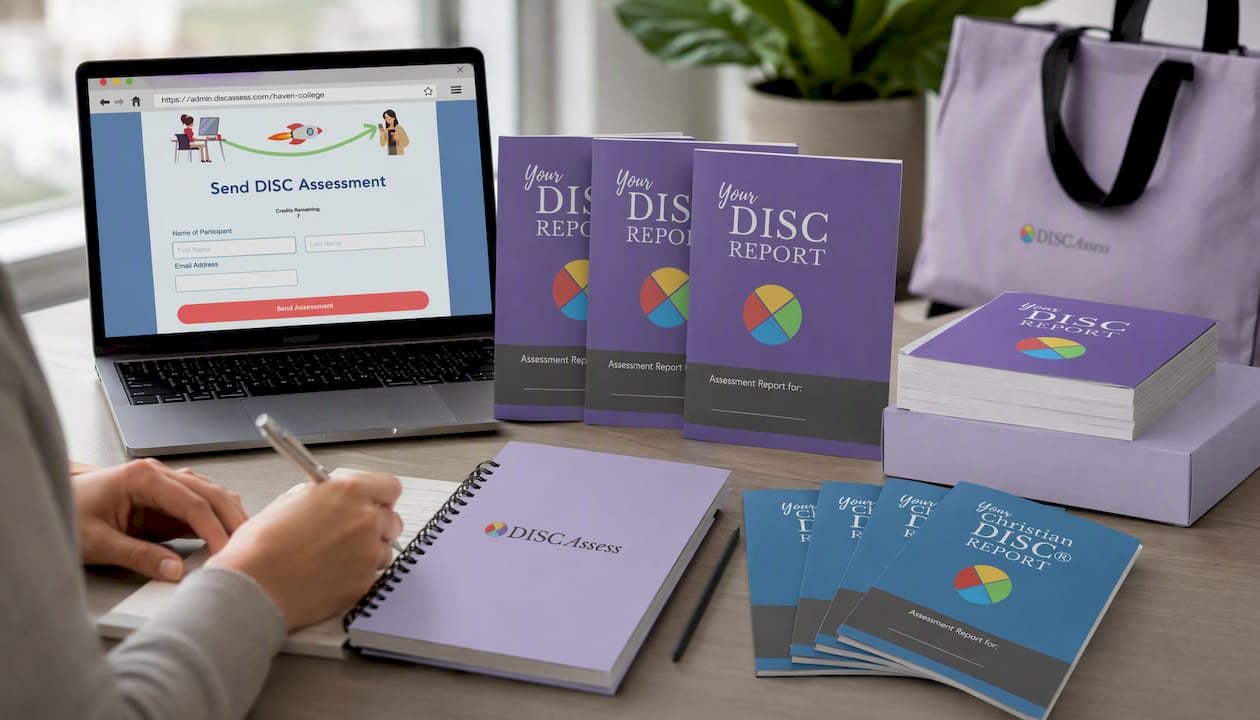
For a single department, the Group Admin Account plus a batch of credits is usually the fastest path from "we should do this" to "everyone's done." For an organization onboarding volunteers all year, Assessment Credits let you add people as they arrive instead of buying in one lump. And if your team is facilitating its own sessions rather than hiring outside help, the Extended Pro Membership covers six months of unlimited use for facilitators. Browse the assessment and report options directly on the site and request a nonprofit quote before your next budget cycle closes.
Where These Numbers Come From
The consultant rate benchmarks in this guide draw on nonprofit consulting rate trends and a detailed nonprofit consultant cost breakdown for facilitation day-rate context.
Sources
- Trends in nonprofit consulting
- Nonprofit consultant survey and practitioner insights
- How to price your services: A strategic guide for non-profit consultants
- Nonprofit consultant cost (2026): Rates & fees
FAQ
How Much Does a Single DISC Assessment Cost?
A standalone DISC assessment with a full report costs $49, and a basic individual assessment starts at $29. Neither includes facilitation, which is priced separately if you add it.
Is There a Discount for Buying DISC Assessments in Bulk?
Yes. Group packages that bundle an admin account with assessment credits bring the per-person cost down significantly compared to buying single assessments one at a time, and the Group Admin Account itself is a one-time $299 purchase.
Do Nonprofits Get Special Pricing on DISC Facilitation?
Facilitators commonly adjust their day rates and scope for nonprofit budgets when buyers are upfront about funding limits, and the sector average sits around $159 an hour. Many nonprofits skip live facilitation entirely and use self-guided materials to avoid that cost altogether.
Should We Buy a Membership or Pay Per Assessment?
Per-assessment or small-group packages usually make more financial sense unless your organization runs DISC continuously across new hires and volunteer cohorts. Once you're assessing people regularly throughout the year, a membership like the Extended Pro Membership can break even against repeated single purchases.
What's the Fastest Way to Pilot DISC Before Committing to a Full Budget?
Start with a single department or a small volunteer cohort using assessment credits rather than committing your whole staff at once. That pilot gives your board real numbers to evaluate before you request funding for a full rollout.