

Yes, unlimited DISC assessment licenses exist, and they're one of the most common ways small businesses and ministries manage growing teams. You pay one flat fee for a defined license period, usually a defined license period, and run as many reports as your team needs during that window. For organizations onboarding staff, training volunteers, or building leadership pipelines all year, that structure means predictable budgeting instead of a surprise invoice every time someone new joins the team.
TL;DR:
- Unlimited DISC licenses are typically billed on a yearly basis and include tools like admin panels, report libraries, and branding options, but often limit admin seats or integrations.
- Cost savings depend on assessment volume; licenses become more economical than per-report pricing when running hundreds of assessments annually, especially for ongoing hiring or leadership programs.
- A typical unlimited plan covers diverse reports such as individual, team, relationship, leadership, and sales assessments, with accessibility features like dyslexia-friendly fonts and WCAG compliance.
- Organizations should verify vendor transparency on pricing, admin capacity, report variety, training, renewal terms, and support services before committing to a plan.
- Implementation generally takes about a month, starting with purchase and setup in weeks one to three, followed by full deployment and routine assessment invites in week four.
Table of Contents
- What Does an Unlimited DISC License Actually Include?
- Is Unlimited Pricing Actually Cheaper Than Per-Report?
- What Features Should an Unlimited Plan Actually Include?
- How Do You Choose the Right Unlimited DISC Provider?
- How Discassess Structures Its Unlimited and Group Packages
- What Contract Terms Should You Expect on an Unlimited Plan?
- What Does the Rollout Timeline Actually Look Like?
- What's the Real Total Cost of an Unlimited DISC Plan?
- When Does Unlimited Licensing Actually Make Sense?
- Ready to See an Unlimited DISC Plan in Action?
- Sources
What Does an Unlimited DISC License Actually Include?
An unlimited DISC license is a term-based agreement, not a lifetime guarantee. "Unlimited" refers to how many assessments you can run within an active license period, commonly a typical license term, not forever. This distinction matters because vendors structure their offers this way across the industry, and understanding it up front keeps you from assuming "unlimited" means "permanent."
Within that active window, most providers bundle a consistent set of tools rather than charging you per feature. Here's what a typical unlimited plan includes:
- An admin panel for inviting participants and managing your roster
- A library of report types you can generate without added per-report cost
- White-label or co-branding options for organizations presenting results under their own name
- Training modules or self-study resources to help staff interpret results correctly
Before signing, check what falls outside the unlimited scope. Some vendors cap admin seats, meaning only one or two people can manage the account even though report generation itself is unlimited. Others restrict integrations or limit use to internal staff, which matters if you're a coach or consultant assessing external clients. For a hiring pipeline that runs candidates through DISC screening every month, or a nonprofit onboarding volunteers on a rolling basis, this structure removes the friction of requesting budget approval for every new batch.
Is Unlimited Pricing Actually Cheaper Than Per-Report?
The honest answer depends entirely on your volume, and the break-even point is easier to calculate than most buyers expect. Providers generally offer four pricing shapes, and each fits a different organizational size.
- Per-report pricing. You pay a set amount for each individual assessment, with no ongoing commitment. This works well for a one-time hire or a single team retreat.
- Credit bundles. You purchase a batch of assessment credits upfront at a discount over per-report pricing, then draw down as you use them.
- Annual flat-fee unlimited. One price covers unlimited assessments for the license term, regardless of how many you run.
- Site or organization licenses. A broader agreement, often used by larger nonprofits or multi-location businesses, that covers multiple departments or campuses under one contract.
Pro Tip: Run a quick math check before you commit. Divide the unlimited plan's annual price by your typical per-report cost to find your break-even number of assessments, then compare that to how many hires, team members, or volunteers you actually onboard each year.
Consider two organizations. A five-person leadership team running 50 assessments a year for occasional coaching and team-building will often come out ahead on a credit bundle or a smaller group package. A growing company or church running 500+ assessments a year across hiring, onboarding, and ongoing leadership development almost always saves money on an unlimited license, since the flat fee stops scaling once volume passes the break-even point. Watch for hidden charges too: some providers bill group or leadership reports separately, or charge per admin seat beyond the first one, which quietly erodes the "unlimited" promise.
What Features Should an Unlimited Plan Actually Include?
Unlimited access only pays off if the tools behind it are genuinely usable by the people running your program day to day. The admin portal is where this becomes obvious fast. Look for bulk invite capability so you can enroll an entire hiring cohort or volunteer group in minutes, pipeline tracking that shows who has completed their assessment and who hasn't, and straightforward report downloads that don't require a support ticket every time.
Report variety matters just as much as report volume. A useful unlimited plan typically includes:
- Individual assessments for personal development and self-awareness
- Pair or relationship reports for co-workers, ministry partners, or spouses
- Team and group reports that map how a whole staff or volunteer group interacts
- Leadership-specific reports geared toward management style and delegation
- Sales-oriented reports built around communication and persuasion tendencies
- White-label formatting for consultants and coaches presenting under their own brand
Group reporting and visual team-mapping tools deserve particular attention, since they turn individual data points into something a manager can actually act on in a staff meeting. Accessibility matters too. The Web Content Accessibility Guidelines set the industry standard for making online forms and interactive assessments usable by people with disabilities, and WCAG 2.1 specifically addresses the kind of form controls a DISC questionnaire relies on. Some platforms also offer a dyslexia-friendly font option for participants who find standard typefaces harder to read, which removes a real barrier for volunteer-heavy or non-profit audiences. None of this matters, though, without solid support and training behind it, since a feature-rich portal is only as good as your team's ability to use it.
How Do You Choose the Right Unlimited DISC Provider?
Start with a checklist before you ever get on a demo call, because vague promises are where "unlimited" plans quietly disappoint buyers.
- Confirm pricing clarity: is the flat fee truly all-inclusive, or are certain report types billed separately?
- Count admin seats: how many people on your team can manage the account simultaneously?
- Verify report types: does the plan include leadership, team, and sales reports, or just individual ones?
- Ask about training: is there a self-study program or live onboarding included, or is that an added cost?
- Check white-label options if you're a coach, consultant, or ministry presenting results under your own name.
- Read the renewal terms carefully, including what happens to your data and reports after the license lapses.
- Ask about support response time and whether there's a defined service level for troubleshooting.
During a demo or RFP conversation, ask specific questions rather than accepting general reassurances: "Can you show me the admin console live?" "What exactly happens if I need more than one admin login?" "Is training a one-time session or ongoing access?" Vendor pages that highlight admin console demos and transparent renewal terms tend to be the ones worth trusting, precisely because they're willing to show you the mechanics instead of just the marketing copy.
Red flags worth walking away from include vague "unlimited" language with no defined term length, per-report add-ons buried in the fine print, and no training or onboarding support included at all. Once you know your expected annual volume, match it against the pricing models above and let the math, not the sales pitch, make the decision.
How Discassess Structures Its Unlimited and Group Packages
Most organizations treat DISC as a decision-support tool rather than a clinical diagnostic, and that's exactly how Discassess frames its reports: practical, repeatable, and consistent across every hire or volunteer so results stay comparable year over year.
| Package | Best fit |
|---|---|
| DISC Group Package | Small teams starting their first rollout |
| Pro Group Package | Organizations with recurring hiring or review cycles |
| Christian DISC® Classroom Bundle | Schools and classroom or teaching environments |
| Camps & Retreats Package | Seasonal events with high one-time participant counts |
Every package includes admin access, downloadable reports, and training resources so your team can apply results to onboarding, volunteer placement, or leadership development without outside consulting help.
What Contract Terms Should You Expect on an Unlimited Plan?
Most unlimited DISC licenses run on a 12-month term, renewing automatically unless you cancel before the renewal date. Read the cancellation window carefully. Some providers require 30 days' notice before your renewal charges, while others allow cancellation any time with access continuing through the paid period.
Minimum commitment periods vary by package size. Smaller group packages sometimes allow month-to-month flexibility, while larger enterprise-style unlimited licenses often require a full annual commitment to unlock the flat-fee pricing. If you're testing DISC assessments for the first time, look for a provider that offers a smaller starter package or individual assessment option before committing to a full annual license.
Ask directly what happens to your historical reports and admin account data after cancellation. Some vendors archive your data for a grace period, others remove access immediately. If your organization plans to reference past assessments for long-term development tracking, this detail matters more than the sticker price. A transparent provider will spell out renewal pricing in writing rather than leaving it to be negotiated fresh each year, since locked-in renewal rates protect you from the kind of quiet price increases that erode the savings unlimited licensing is supposed to deliver in the first place.
What Does the Rollout Timeline Actually Look Like?
Implementation moves faster than most first-time buyers expect, largely because DISC assessments don't require the kind of IT integration heavier HR software demands. In week one, you'll typically complete purchase, receive admin credentials, and get access to your portal. This is the point to schedule a walkthrough of the admin console so your team understands invite flows and report generation before real participants are added.
Weeks two and three are usually dedicated to internal setup: importing your staff or volunteer list, customizing white-label branding if your plan includes it, and reviewing the included training modules so whoever manages the account day to day feels confident before launch. Many organizations run a small pilot group, five to ten people, during this window to catch any workflow issues before a full rollout.
By week four, most teams move into full deployment, inviting the remaining staff, candidates, or volunteers and generating their first batch of reports. From there, the process becomes routine: new hires or volunteers get invited as they join, rather than in one large batch. Organizations with ongoing turnover, like nonprofits managing seasonal volunteers, tend to reach full operational rhythm within the first month and then simply fold DISC into their standard onboarding checklist going forward.
What's the Real Total Cost of an Unlimited DISC Plan?
The advertised flat fee rarely tells the whole story, and understanding the full cost picture before you sign protects your budget down the road. Setup costs are usually minimal for DISC platforms since there's no complex software installation, but white-label customization or custom branding work can carry an added one-time fee depending on the provider.
Support tiers are where costs can quietly diverge between vendors. Basic email support is typically included in every plan, but live onboarding calls, dedicated account management, or priority response times sometimes sit behind a higher support tier. If your team is new to DISC methodology, factor training into your total cost calculation even when it's technically "included," since the value only materializes if staff actually use it.
Renewal pricing is the final piece buyers overlook most often. Some providers lock in your rate for multiple years, while others reserve the right to adjust pricing at each renewal. Ask this question before signing, not after your first renewal notice arrives. When you add setup, training utilization, support tier, and locked-in renewal pricing together, the true cost of an unlimited plan often looks different from the headline number, and that's the figure you should be comparing against per-report alternatives, not the sticker price alone.
When Does Unlimited Licensing Actually Make Sense?
Unlimited licensing earns its keep for small and mid-size organizations with recurring assessment needs, meaning ongoing hiring, regular onboarding cycles, or annual leadership development pushes. If your team runs DISC more than a handful of times a year, the flat fee almost always beats paying per report. The predictability alone is worth something to anyone managing a training budget.
Per-report or credit-based pricing still makes more sense for a one-off project: a single retreat, a small leadership cohort, or a church staff of four running assessments once. Don't let a sales conversation push you toward unlimited if your actual volume doesn't justify it.
For rollout, bring your admin team into the platform early and let them run a small pilot before a full launch. Buy-in comes faster when people see the reports work as promised, not from a slide deck.
— Tres
Ready to See an Unlimited DISC Plan in Action?
Discassess gives you unlimited access to reports for one flat annual fee, without the per-hire billing surprises that per-report pricing creates for growing teams. Where other providers nickel-and-dime you for leadership reports or extra admin seats, Discassess bundles those into its group packages from the start.
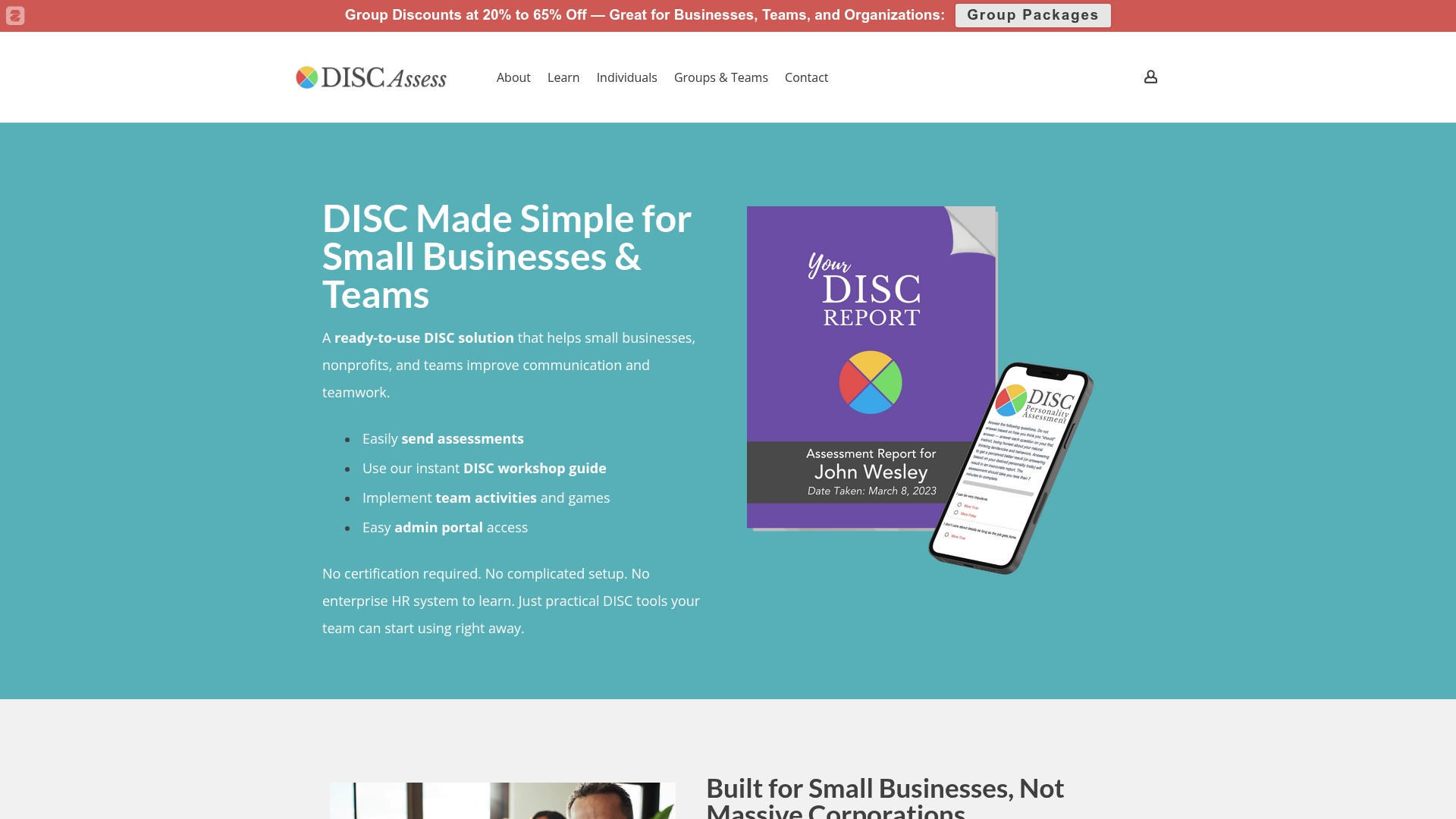
If you're running a small staff, the DISC Group Package gets you an admin account and assessment credits without a long-term commitment. Consultants and ministries that want their own branding on every report should look at the White Label DISC System. Schools and classroom settings fit well with the Christian DISC® Classroom Bundle, while seasonal events find a natural home in the Camps & Retreats Package. Smaller teams just getting started can begin with the Starter Group Package, and organizations wanting deeper reporting can explore the Pro Group Package.
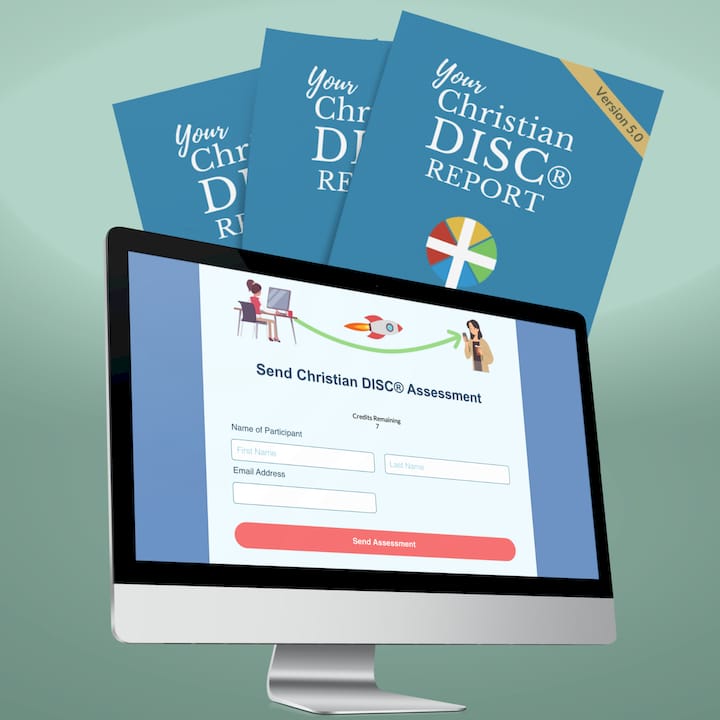
Before you commit to any plan, request a walkthrough of the admin portal and ask to see export options and training materials firsthand. That's the fastest way to know whether a package fits how your team actually works.
Sources
For accessible assessment design, consult the WCAG guidelines and the WCAG 2.1 technical recommendation. Teams supporting participants with dyslexia can explore OpenDyslexic as an alternative font option. For turning DISC results into practical group exercises, this collection of ready-to-run team building activities offers a solid starting point.