

Behavioral data is defined as the observable actions, communication patterns, and decision tendencies that reveal how people actually perform under pressure, not just how they describe themselves. Understanding why behavioral data matters for leadership decisions is the difference between guessing and knowing when you build a team, assign a role, or execute a strategy. For small business leaders and nonprofit executives, this distinction carries real weight. Frameworks like the DISC Personality Model and the field of industrial-organizational psychology have long established that behavior predicts outcomes far better than credentials or gut instinct alone. The leaders who grow strong, aligned teams are the ones who learn to read behavior as data.
What role does behavioral data play in predicting team performance?
Behavioral data predicts team performance in ways that resumes and interviews simply cannot. Structured hiring processes that integrate behavioral assessments improve job performance prediction by 30–50% compared to traditional methods. That gap is not a minor refinement. It means nearly half of the performance uncertainty in a hire disappears when you add behavioral insight to the process.
The DISC Personality Model is one of the most practical frameworks for capturing this kind of insight. DISC measures four behavioral tendencies: Dominance, Influence, Steadiness, and Conscientiousness. Each profile reveals how a person communicates, handles conflict, responds to pace, and approaches rules. When you know these patterns before assigning a role, you can match people to environments where they are most likely to thrive.
Behavior-led hiring improves cultural alignment, collaboration, performance consistency, and reduces churn compared to credential-based hiring. Churn is expensive for any organization, but for a small nonprofit or a lean business team, losing a key person mid-project can derail months of work. Behavioral data gives you a way to see misalignment before it becomes a resignation.
- Performance consistency: Behavioral profiles reveal whether a person sustains effort under routine conditions or only performs in high-stakes moments.
- Role fit: Matching task demands to behavioral strengths reduces friction and speeds up onboarding.
- Churn signals: Behavioral misalignment between a person and their role is one of the earliest predictors of voluntary turnover.
- Team dynamics: Knowing the behavioral mix of your team helps you anticipate conflict points before they surface.
Pro Tip: Before your next hire, write down the behavioral demands of the role, not just the skills. Ask: does this job require high urgency and direct communication, or patience and process consistency? Then use a DISC assessment to see how candidates align.
How does behavioral data transform leadership decision-making?
Leadership decisions fail most often not because of bad strategy, but because of incomplete information about people. Relying on intuition over evidence contributes to a 50% failure rate in major business decisions. That statistic should stop every leader cold. Half of major decisions go wrong when gut feeling replaces behavioral intelligence.

Cognitive biases and groupthink are two of the most common culprits. A leader who surrounds themselves with people who share their behavioral style will consistently miss blind spots. Behavioral data provides a feedback loop that helps leaders recognize these patterns and improve judgment over time. The goal is not to eliminate instinct, but to give it better information to work with.
One of the most underused applications of behavioral data is early detection of execution drift. Behavioral data serves as an early warning system that allows leaders to detect and correct execution drift before KPI deterioration becomes visible. By the time a metric drops, the behavioral signals have usually been present for weeks. Leaders who monitor behavior patterns catch the warning signs first.
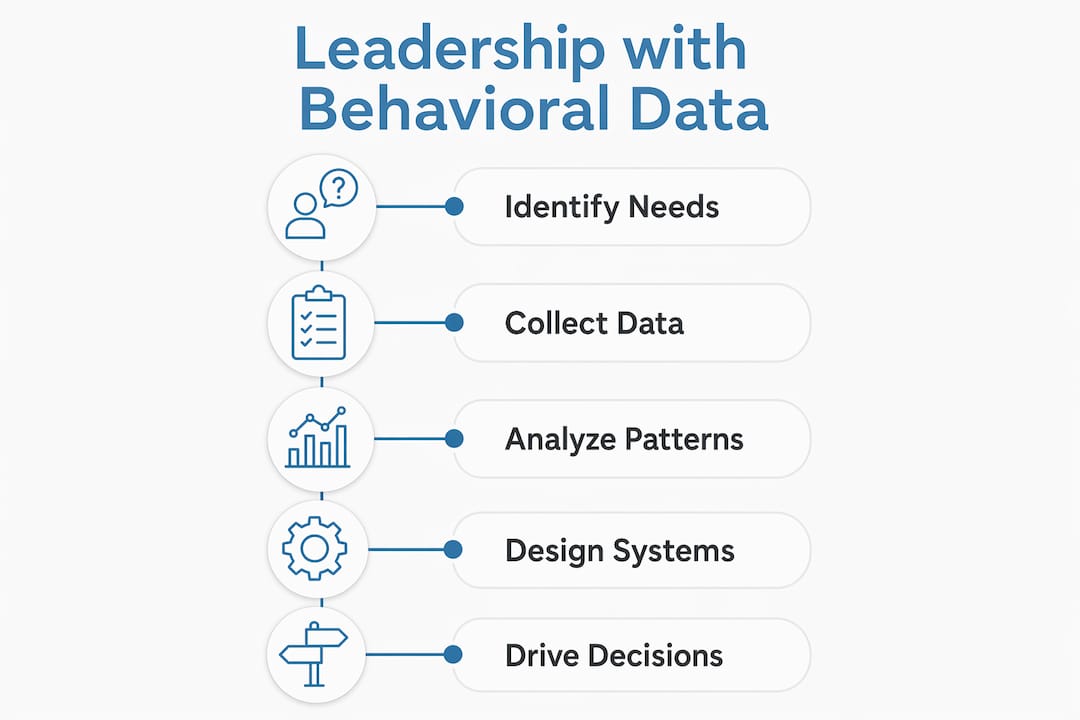
Here is a practical sequence for using behavioral data in leadership decisions:
- Map your team's behavioral profiles using a validated framework like DISC before assigning roles or launching a new initiative.
- Identify behavioral mismatches between role demands and individual tendencies early in the planning phase.
- Monitor behavioral signals during execution, not just output metrics, to catch drift before it becomes failure.
- Design systems and incentives that make good decisions easier, rather than relying solely on persuasion or authority.
- Review behavioral patterns after major decisions to build a feedback loop that sharpens future judgment.
"Effective leadership focuses on creating organizational environments that nudge members toward ethical, better decisions rather than relying on persuasion alone." — Harvard Program on Negotiation
Leaders who design systems based on behavioral data create conditions where good decisions happen more naturally. This shifts leadership from reactive correction to proactive design. For a nonprofit executive managing volunteers and a small staff, that shift is transformative.
How does behavioral data differ from traditional data sources?
Behavioral data captures real-time, observable actions rather than retrospective self-reports. This distinction matters because most traditional data sources, including surveys, performance reviews, and personality tests, ask people to describe themselves. Memory is imperfect, and people naturally present themselves favorably. Big data analytics capturing behavioral traces offer superior real-time approximations of actual psychology compared to surveys compromised by recall bias. The behavior you observe is more honest than the behavior people report.
| Data source | What it captures | Key limitation |
|---|---|---|
| Surveys and self-reports | Stated preferences and attitudes | Recall bias and social desirability |
| Performance reviews | Past output and manager perception | Retrospective and subjective |
| Credentials and resumes | Skills and experience history | No insight into behavior under pressure |
| Behavioral data (e.g., DISC) | Observable patterns and tendencies | Requires consistent, validated measurement |
Behavioral data also differs from personality testing in one critical way. Personality labels describe who someone is. Behavioral data describes how someone acts in a given context. A person's DISC profile does not define their character. It reveals their tendencies under specific conditions, which is far more useful for leadership decisions.
Pro Tip: Use behavioral data to design your team structure and workflows, not to judge individuals. Ask "does this environment bring out this person's best behavior?" rather than "is this person the right type?"
What are practical ways leaders can use behavioral data?
Small business and nonprofit leaders have more access to behavioral data tools than ever before, and the applications are concrete. The DISC Personality Model, for example, gives you a clear picture of how each team member communicates, handles stress, and approaches tasks. That picture is useful in hiring, team alignment, conflict resolution, and leadership development.
- Hiring with behavioral interviews: Ask candidates to describe specific past situations that reveal their natural tendencies. Questions like "Tell me about a time you had to change course quickly" reveal behavioral patterns that resumes never show.
- Role alignment: Aligning roles to behavioral strengths significantly raises execution success rates. Place high-Dominance individuals in roles requiring fast decisions. Place high-Conscientiousness individuals in roles requiring accuracy and process.
- Volunteer management for nonprofits: Behavioral profiles help nonprofit leaders match volunteers to tasks where they will stay engaged and contribute consistently. Discassess offers specific resources on using DISC with volunteers that address this directly.
- Conflict resolution: When two team members clash, behavioral data often reveals a style mismatch rather than a values conflict. That reframe changes the entire conversation.
- Leadership development: Leaders who understand their own behavioral profile make better decisions about when to delegate, when to slow down, and when to push forward.
Most leaders treat strategy execution as task management, ignoring behavioral alignment, which is the factor most likely to cause performance failure. A task list tells you what needs to happen. Behavioral data tells you whether your team is actually wired to make it happen.
| Application | Behavioral tool | Expected outcome |
|---|---|---|
| Hiring | Behavioral interview questions + DISC | Better role fit, lower churn |
| Team alignment | DISC group profiles | Reduced friction, faster execution |
| Volunteer management | DISC assessment | Higher engagement and retention |
| Leadership development | Individual DISC profile | Stronger self-awareness and delegation |
What challenges do leaders face when implementing behavioral data?
The most common mistake leaders make with behavioral data is treating it as a tool for fixing people. Behavioral data is an operational tool for system reinforcement, not personality correction. When leaders use behavioral profiles to label or limit employees, they undermine trust and reduce the data's usefulness entirely.
Here are the key challenges and how to address them:
- Misinterpretation: Leaders sometimes read a behavioral profile as a fixed verdict. Behavioral tendencies shift with context, stress, and growth. Treat profiles as starting points, not permanent labels.
- Privacy concerns: Team members may resist behavioral assessments if they fear the data will be used against them. Transparency about how data will be used, and who will see it, is non-negotiable.
- Lack of leadership buy-in: Behavioral data initiatives stall when only one person in the organization values them. Build shared understanding by involving the full leadership team in the assessment process first.
- Disconnection from goals: Behavioral data only produces results when it connects directly to a specific decision or outcome. Collecting profiles without a clear application plan wastes everyone's time.
- Overcomplication: Small organizations do not need enterprise-level analytics platforms. A validated DISC assessment and a clear framework for applying the results is enough to start generating real insight.
The goal is not to build a surveillance system. The goal is to build a team environment where the right people are in the right roles, doing work that matches their natural strengths.
Key Takeaways
Behavioral data is the most underused leadership tool available to small business and nonprofit leaders, and integrating it into hiring, role design, and execution monitoring produces measurably better team outcomes.
| Point | Details |
|---|---|
| Behavioral data predicts performance | Structured behavioral assessments improve job performance prediction by 30–50% over traditional methods. |
| Intuition alone is costly | Intuition-led decisions carry a 50% failure rate; behavioral intelligence reduces this risk significantly. |
| DISC is a practical starting point | The DISC Personality Model maps communication and decision tendencies to help leaders align roles and reduce friction. |
| Behavioral data beats surveys | Real-time behavioral observation is more accurate than retrospective self-reports affected by recall bias. |
| System design over people-fixing | Use behavioral data to build better environments and workflows, not to label or limit individuals. |
Behavioral data changed how I lead small teams
I spent years believing that good leadership meant reading people well in the room. I trusted my instincts about who was motivated, who was coasting, and who was about to quit. I was wrong more often than I want to admit.
The shift came when I started treating behavior as data rather than impression. When I mapped a team's DISC profiles before a major project, I stopped being surprised by conflict. I could see it coming. A high-Dominance leader paired with a high-Conscientiousness analyst will clash on pace every single time unless you design the workflow to accommodate both. That is not a personality problem. It is a systems problem, and behavioral data makes it visible.
What I have found is that small organizations benefit most from behavioral insight because every person carries more weight. One misaligned hire in a five-person nonprofit can fracture the entire culture. One leader who does not understand their own behavioral tendencies can create a team that is afraid to push back. The stakes are high precisely because the margins are thin.
My honest advice: start with yourself. Take a DISC assessment before you ask your team to. Understand your own tendencies under pressure, your default communication style, and the environments where you make your best decisions. That self-awareness is the foundation everything else builds on. Judgment, as one leadership researcher put it, is a system built deliberately over time where every decision acts as data to refine future thinking. Behavioral data accelerates that process considerably.
— Tres
Discassess makes behavioral data accessible for your team
Small business and nonprofit leaders do not need a corporate HR department to start using behavioral data well. Discassess, backed by Prism Counseling & Coaching with over a decade of experience, offers affordable, professional DISC assessments built specifically for teams like yours.
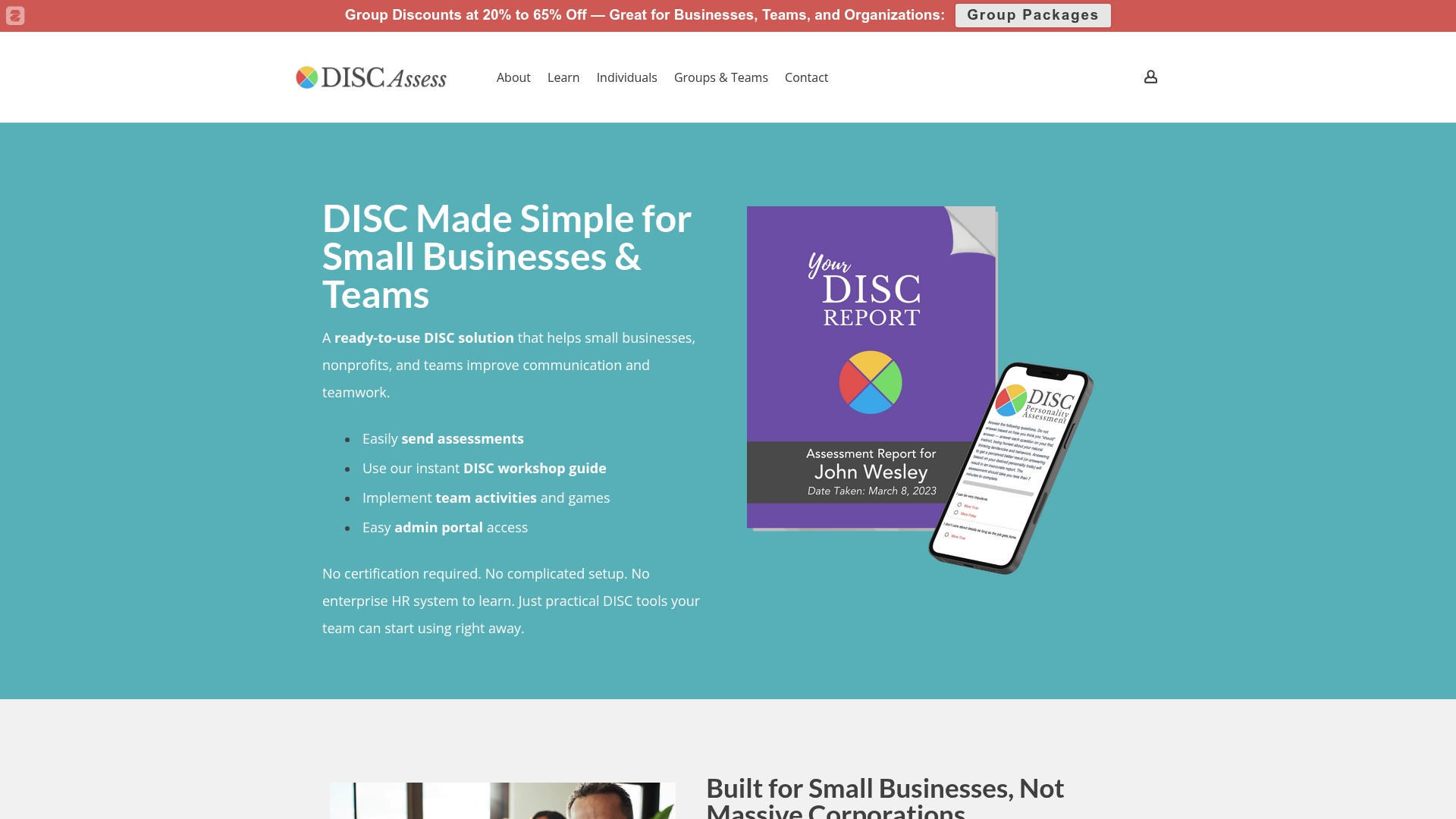
You can run group assessments for your team, access printable profiles, and use the admin portal to manage results without any technical background. Discassess also offers live group training to help your leadership team apply behavioral insights directly to real decisions. Whether you are hiring your next staff member, aligning a volunteer team, or working through a strategy execution challenge, the DISC Admin Account gives you everything you need to get started today.
FAQ
What is behavioral data in a leadership context?
Behavioral data refers to observable actions, communication patterns, and decision tendencies that reveal how people perform under real conditions. Leaders use it to make more objective hiring, alignment, and execution decisions.
How does the DISC model connect to behavioral data?
The DISC Personality Model is a validated behavioral framework that measures four tendencies: Dominance, Influence, Steadiness, and Conscientiousness. It gives leaders a structured way to capture and apply behavioral data across their teams.
Why is behavioral data more reliable than surveys?
Surveys rely on self-reported memory, which is affected by recall bias and social desirability. Behavioral data captures observable patterns in real time, making it a more accurate reflection of how people actually act.
Can small nonprofits realistically use behavioral data?
Yes. Tools like DISC assessments are affordable, require no technical expertise, and produce immediate, practical results. Nonprofits can use behavioral profiles to improve volunteer placement, reduce staff turnover, and strengthen leadership decisions.
How does behavioral data reduce leadership decision failures?
Behavioral intelligence helps leaders anticipate pushback, detect execution drift early, and avoid the cognitive biases that drive poor decisions. Research links intuition-only decision-making to a 50% failure rate in major business choices.
Recommended
- DISC Assess | Affordable, Professional DISC Assessments for Small Businesses - All Articles
- DISC Personality Assessment | Prism Counseling & Coaching - DISC Assess | Affordable, Professional DISC Assessments for Small Businesses
- The Appeal of DISC: Why People Love Using This Popular Personality Assessment - DISC Assess | Affordable, Professional DISC Assessments for Small Businesses
- Blog - DISC Assess | Affordable, Professional DISC Assessments for Small Businesses