

Personality-based leadership styles are leadership approaches shaped by inherent personality traits that influence how leaders motivate, communicate with, and manage their teams. The industry term for this field is trait-based leadership, and understanding it gives managers a concrete framework for self-development. A 2026 meta-analysis of over 200 data sets found that personality accounts for approximately 28% of the variance in leadership outcomes. That number tells us personality is foundational, but it also leaves room for learned skills and situational judgment to shape the rest.
What are personality-based leadership styles?
Personality-based leadership styles are patterns of leading that grow directly from a person's stable character traits. The Big Five personality model, which includes Extraversion, Conscientiousness, Openness to Experience, Agreeableness, and Neuroticism, is the most research-supported framework for predicting which style a leader will naturally gravitate toward. Two of the most studied leadership types map clearly onto these traits. Transformational leaders tend to score high in Openness and Emotional Intelligence, while Transactional leaders typically exhibit high Conscientiousness. Knowing where you fall on these dimensions is the first step toward leading with intention rather than habit.
The DISC model, which Discassess uses as its core framework, organizes personality into four behavioral tendencies: Dominance, Influence, Steadiness, and Conscientiousness. These tendencies map closely onto the Big Five and offer leaders a practical, accessible language for understanding their own style and the styles of their team members. Unlike abstract academic models, DISC gives you a working vocabulary you can apply in a Monday morning team meeting.
One of the most counterintuitive findings in this field involves Extraversion. Extraversion predicts leadership emergence most strongly, with a correlation of r=0.31, yet introverts often outperform extroverts in proactive team contexts. Organizations frequently confuse who looks like a leader with who is an effective one. A quieter manager who listens deeply and empowers team members may produce stronger results than a charismatic extrovert who dominates every conversation.
How do personality traits shape leadership behavior?
The Big Five traits do not operate in isolation. They interact with each other and with the demands of a specific role to produce a leadership style that feels natural to the leader and recognizable to the team.
| Trait | Associated leadership style | Practical impact on teams |
|---|---|---|
| High Extraversion | Charismatic, directive | Drives energy and momentum; risks drowning out quieter voices |
| High Conscientiousness | Transactional, detail-oriented | Builds reliability and structure; can resist creative risk-taking |
| High Openness | Transformational, visionary | Inspires innovation; may frustrate teams needing clear process |
| High Emotional Intelligence | Servant, coaching-oriented | Builds trust and psychological safety; requires strong boundaries |
| High Agreeableness | Collaborative, supportive | Reduces conflict; may avoid necessary difficult conversations |
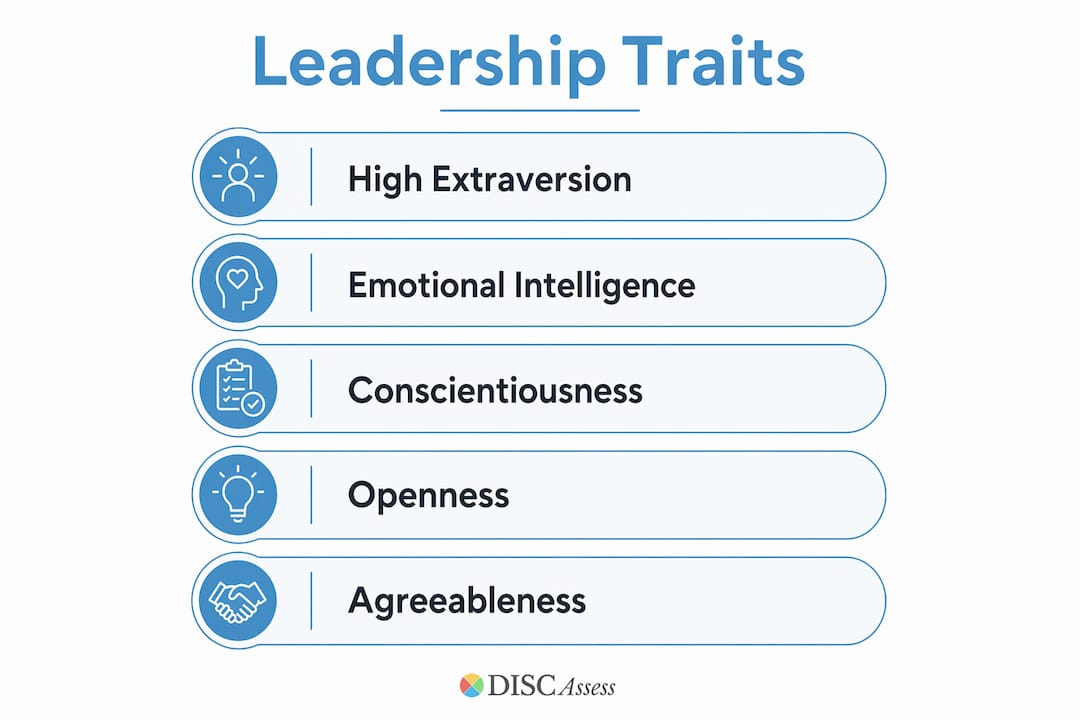
Emotional Intelligence deserves special attention because it functions as a multiplier. A leader with high Emotional Intelligence reads the room accurately, regulates their own reactions under pressure, and adjusts their communication style to meet each person where they are. This trait shows up across multiple effective leadership types, from servant leadership to transformational leadership, because it is less a style and more a core competency.
Pro Tip: If you are unsure which traits dominate your leadership behavior, ask three trusted colleagues to describe how you respond under pressure. Their answers will reveal your default style more accurately than any self-report alone.
Why self-awareness is the foundation of authentic leadership
Authentic leadership is defined as a style that aligns with your actual personality and core values rather than a performance of what you think a leader should look like. Leadership experts caution against "performing someone else's version of leadership," because inauthenticity leads directly to burnout and ineffective management. No single perfect personality type exists for leadership. What matters is knowing your own type well enough to lead from your strengths and manage your blind spots.
Self-awareness in leadership means knowing four things clearly:
- Your strengths: What you do naturally well under normal conditions
- Your weaknesses: Where your default style creates friction or blind spots
- Your communication preferences: How you process information and deliver feedback
- Your core values: What you care about most when making decisions under pressure
Core values serve as the engine that directs how personality manifests in leadership behavior. A leader who values fairness will make different decisions than one who values speed, even if both share the same personality profile. Starting leadership development conversations with "what do you care about?" produces more lasting change than starting with "what style should you adopt?"
The danger of skipping this self-awareness work is real. Leaders who adopt a style that conflicts with their personality spend enormous energy maintaining a performance. That energy drain shows up as shorter patience, poorer decisions, and reduced empathy toward team members. Sustainable leadership grows from the inside out.
Pro Tip: Write down your top three values and post them where you can see them before difficult conversations. Values-anchored decisions are more consistent and easier for your team to predict and trust.
When should leaders flex their style situationally?
Effective leaders adapt their style to team needs and context rather than relying on a single fixed approach. This is the core principle of situational leadership, a framework that asks leaders to match their level of direction and support to the readiness of each team member. Personality sets your default, but situational awareness determines your range.
Here is how that flexibility looks in practice:
- New team member, low confidence: Use a coaching style. Ask questions, explain reasoning, and check in frequently. A directive approach here builds skill but can undermine confidence if it feels controlling.
- Experienced team member, high autonomy: Use a delegating style. Set the outcome, step back, and trust the process. Micromanaging here signals distrust and reduces motivation.
- Crisis or deadline pressure: Use a commanding style. Clear, fast decisions reduce ambiguity when stakes are high. This style works in short bursts but damages trust if used as a default.
- Creative problem-solving phase: Use a democratic style. Invite input, surface disagreement, and let the best idea win. High-Openness leaders do this naturally; high-Conscientiousness leaders may need to practice it.
Leadership is a blend of innate dispositional traits and malleable proximal traits shaped by training. That distinction matters because it means your style is not fixed. You are not choosing between being yourself and being effective. You are learning to complement your natural traits with skills that expand your range.
The goal is not to suppress your personality. A naturally direct leader does not need to become soft-spoken. They need to learn when directness serves the team and when it shuts down conversation. That discernment is a skill, and it is learnable.
Practical steps to apply personality insights in your leadership
Knowing your personality type is only useful if it changes how you lead. These steps move insight into behavior.
- Take a structured personality assessment. The DISC model, the Big Five, or the Myers-Briggs Type Indicator each offer different lenses. Use one consistently rather than sampling all three without depth. Discassess offers accessible DISC personality assessments designed for leaders who want clear, practical results without a certification requirement.
- Create a Personal Leadership User Guide. Sharing a Personal Leadership User Guide with your team outlines your values, communication preferences, and blind spots. It reduces friction, sets expectations, and builds trust faster than any team-building exercise.
- Apply the 48-hour rule for difficult conversations. Address difficult topics within 48 hours of noticing them. Waiting longer allows resentment to build on both sides and makes the conversation harder.
- Ask one more question before giving advice. In one-on-one meetings, ask one additional question before offering a solution. This single habit shifts you from directive to coaching and dramatically increases the other person's ownership of the outcome.
- Seek feedback on your blind spots regularly. Use a simple quarterly check-in: ask two or three team members what you do that helps them most and what one thing you could do differently. Blind spots shrink when you name them out loud.
- Review your DISC assessment limitations honestly. No assessment captures the full complexity of a person. Use your results as a starting point for reflection, not a final verdict on who you are as a leader.
Key Takeaways
Personality shapes your leadership default, but self-awareness, core values, and situational flexibility determine whether that default serves your team or limits it.
| Point | Details |
|---|---|
| Personality explains part of leadership | Traits account for 28% of leadership outcomes; learned skills and context shape the rest. |
| Big Five traits map to specific styles | Transformational leaders score high in Openness; Transactional leaders score high in Conscientiousness. |
| Authenticity prevents burnout | Leading against your personality drains energy and reduces effectiveness over time. |
| Situational flexibility expands your range | Match your style to team readiness and context, not just your personality default. |
| Practical tools accelerate growth | A Personal Leadership User Guide and structured assessments turn insight into daily behavior change. |
Why I think most leaders skip the most important step
Most leadership development programs start with style frameworks and end with a personality label. That sequence gets it backward. In my experience working with leaders across organizational settings, the ones who grow fastest are not the ones who learn the most frameworks. They are the ones who get genuinely honest about their blind spots first.
A high-Conscientiousness leader I worked with knew she was detail-oriented. What she did not know was that her team experienced her thoroughness as distrust. She was not micromanaging intentionally. She was leading from her strength without realizing it had become a liability in that context. Once she saw that gap, she changed her behavior within weeks. The framework did not change her. The self-awareness did.
The appeal of DISC and similar tools is not that they tell you who you are. It is that they give you and your team a shared language for conversations that used to feel too personal to have. When a team member can say "I think I need more structure here because of how I process information," that is a gift to everyone in the room.
My honest recommendation: do not use a personality assessment to confirm what you already believe about yourself. Use it to find the one or two things you have been avoiding. That is where the real growth lives.
— Tres
How Discassess helps leaders put personality insights to work
Understanding your personality type is the beginning of better leadership, not the end. Discassess offers affordable, easy-to-use DISC assessments for leaders and their teams, with detailed reports that translate personality data into practical communication and management guidance.
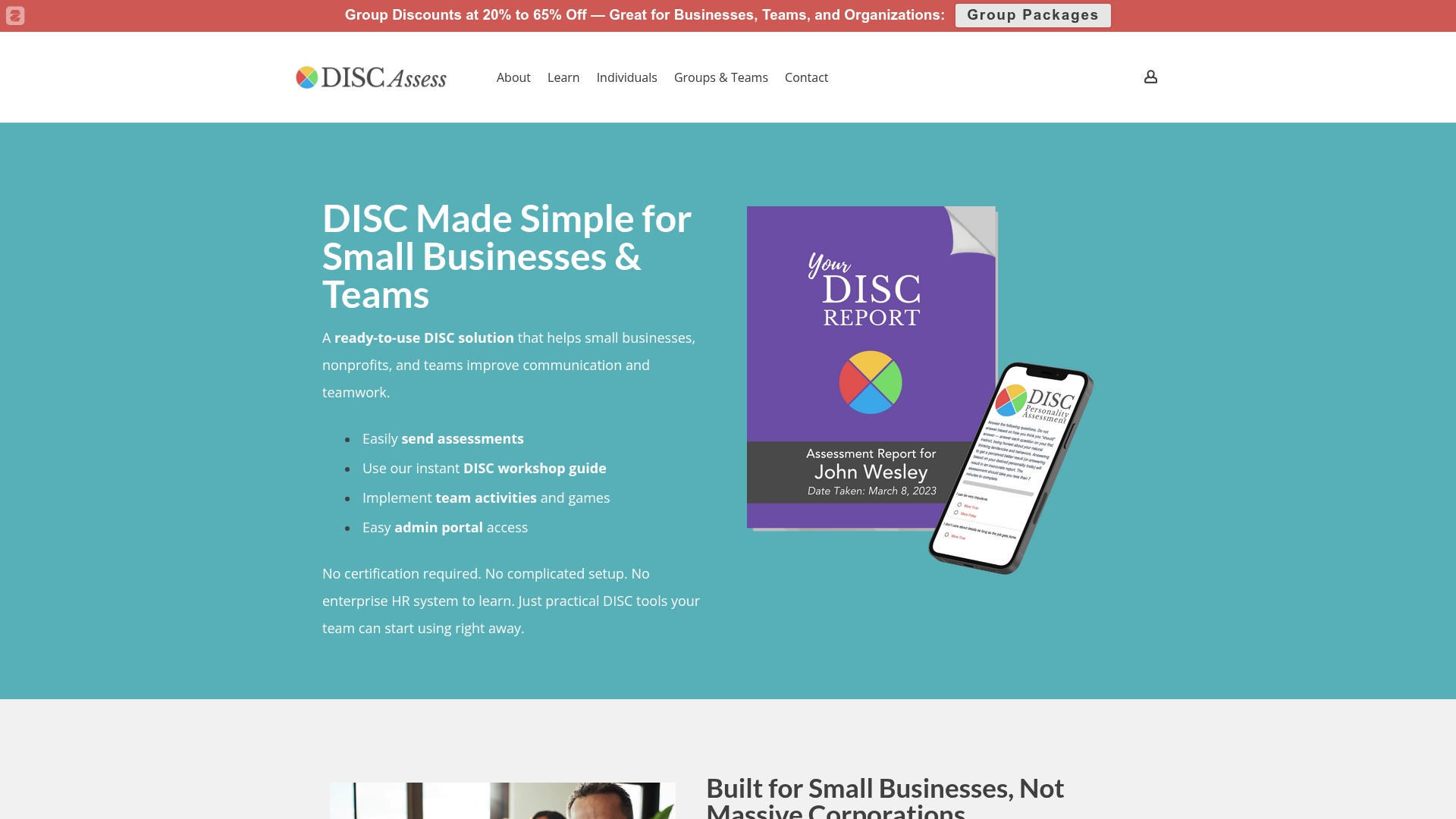
Whether you lead a small nonprofit, a growing business, or a ministry team, Discassess provides group assessment packages, a self-guided training program, and printable profiles your team can actually use. The platform is backed by Prism Counseling & Coaching, with over a decade of experience helping leaders grow in self-awareness and team effectiveness. You do not need a certification or an HR department to get started. You need a willingness to lead more intentionally, and Discassess gives you the tools to do exactly that.
FAQ
What are personality-based leadership styles?
Personality-based leadership styles are patterns of leading that grow from stable character traits, such as Extraversion, Conscientiousness, or Emotional Intelligence. They describe how a leader naturally motivates, communicates, and makes decisions based on who they are.
How does personality affect leadership effectiveness?
Personality accounts for approximately 28% of the variance in leadership outcomes, according to a 2026 meta-analysis. The remaining variance comes from learned skills, situational judgment, and organizational context.
Can introverts be effective leaders?
Yes. Extraversion predicts who emerges as a leader, but introverts often outperform extroverts in team contexts that require listening, empowering others, and building psychological safety.
What is a Personal Leadership User Guide?
A Personal Leadership User Guide is a document a leader shares with their team that outlines their values, communication preferences, and known blind spots. It reduces friction and helps teams work with their leader more effectively from day one.
How do I find my personal leadership style?
Start with a structured personality assessment such as DISC, then identify your core values and ask trusted colleagues for honest feedback on your blind spots. Discassess offers individual and group DISC assessments designed for leaders who want clear, practical results.
Recommended
- DISC Assess | Affordable, Professional DISC Assessments for Small Businesses - All Articles
- The Appeal of DISC: Why People Love Using This Popular Personality Assessment - DISC Assess | Affordable, Professional DISC Assessments for Small Businesses
- Blog - DISC Assess | Affordable, Professional DISC Assessments for Small Businesses
- DISC Personality Assessment | Prism Counseling & Coaching - DISC Assess | Affordable, Professional DISC Assessments for Small Businesses